

STRATEGIC PLAN | ENGAGING COMMUNITIES STUDENT CLUB
DeGroote student’s 85-year-old grandmother joins allyship panel
July 10, 2026 ·
Contributed by: Caelan Beard, McMaster Univeristy
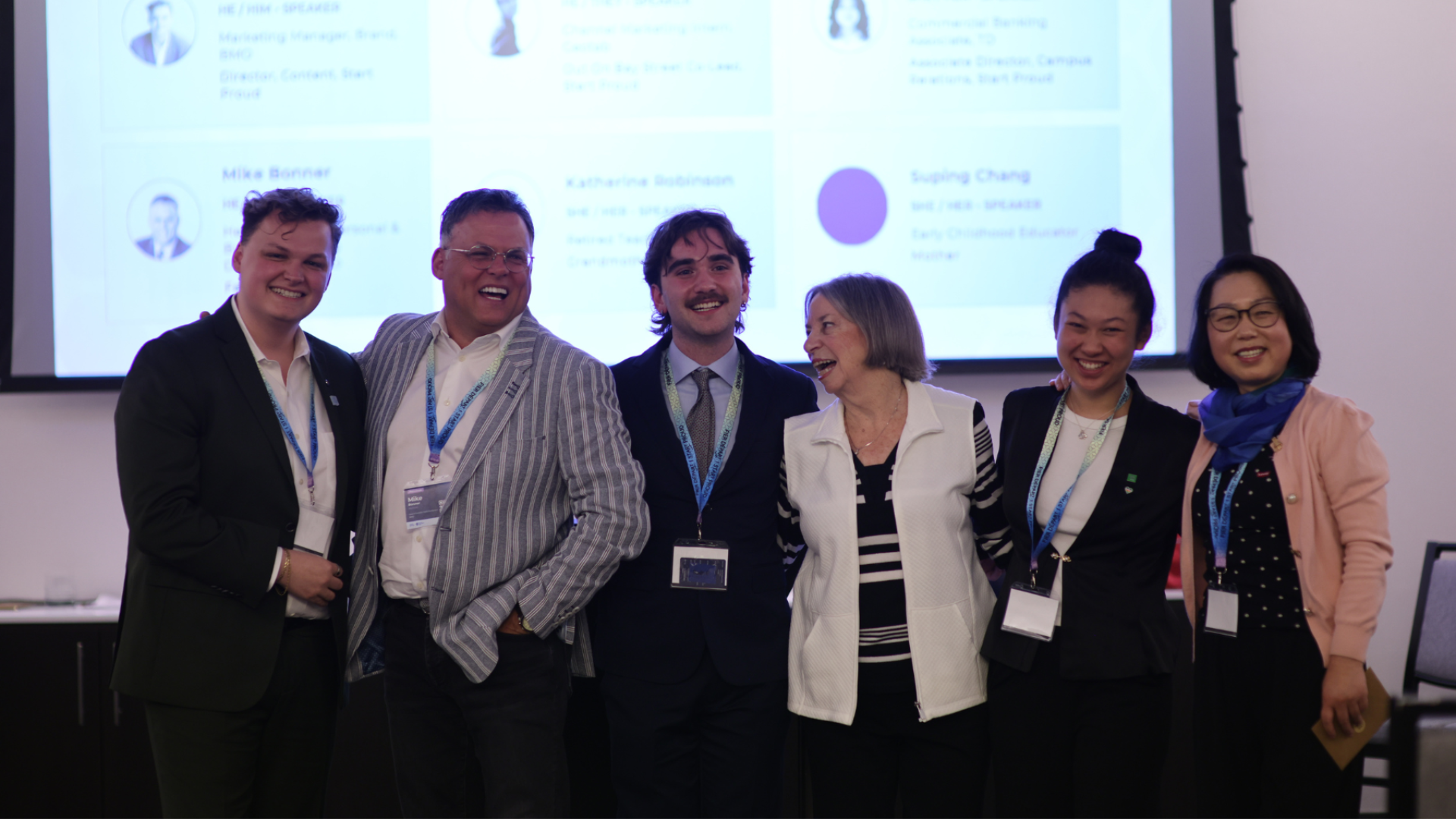
Matt Retera-Robinson and his grandmother, Katharine Robinson (centre) were part of an intergenerational panel on allyship at the annual Out on Bay Street conference.
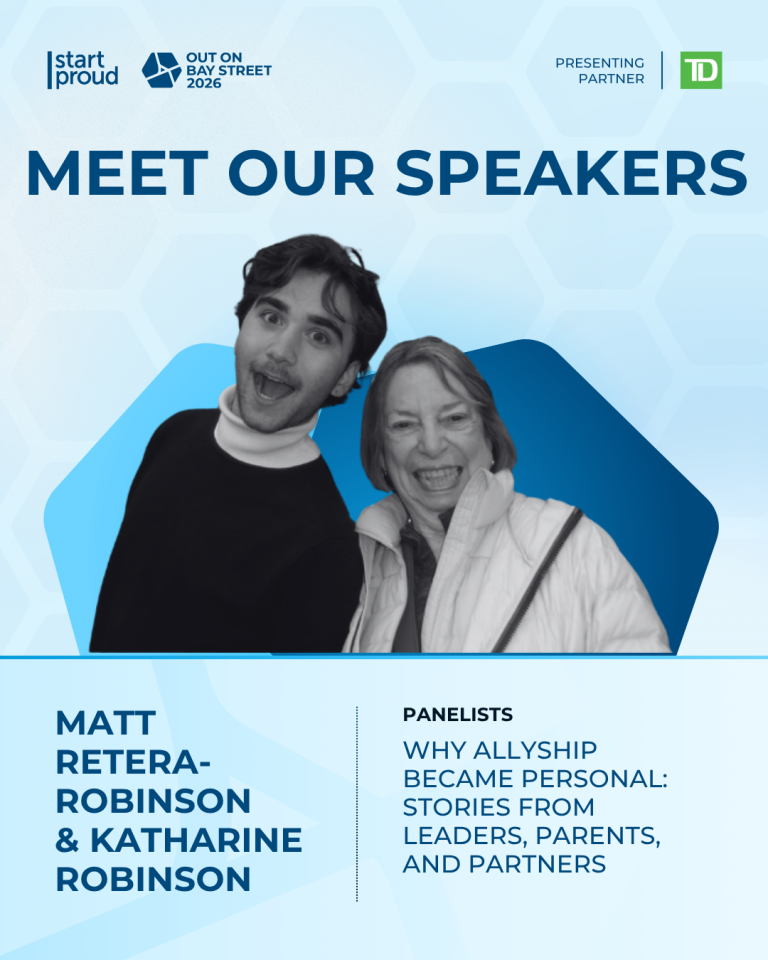
When Matt Retera-Robinson took the stage at Out on Bay Street for a panel discussion on allyship, he had an unexpected companion by his side: his grandmother.
Retera-Robinson, a fifth-year commerce student, is a part of the Start Proud team that organizes Out on Bay Street – a conference for 2SLGBTQIA+ professionals that aims to build supportive networks and enable better professional outcomes at every stage in their career.
One of the main pillars for this year’s conference was community. “I wanted to do a couple things that flipped the conference on its head,” Retera-Robinson said. “One of them being that it’s typically more for members of the community, but our community is also the people who surround us and support us and our allies.”
Retera-Robinson describes his grandmother as his best friend.
“We do everything together. Any event that I have, whether it’s singing or sports, she’s always been there. She’s my biggest supporter.”
Allyship in their lives
When he first pitched the panel idea to his grandmother, she was hesitant. “She’s never done public speaking,” he said. “She was a first-grade teacher. She’s not used to going in front of an audience of 100 people. At first she was like, I don’t think I can do this.”
But they kept talking about it: going on the panel to discuss what Retera-Robinson coming out was like for her, why her reaction to it meant so much to him, how to be a better ally. How she had a unique perspective to share. Eventually, she agreed.
He revamped the allyship panel, something that often ends up being “someone lecturing what you can and cannot say.” Instead, the panel, titled ‘Why Allyship Became Personal,’ featured three intergenerational pairs talking about what allyship meant in their own lives.
Showing up
 “She went in saying, ‘I’m here to learn,’” Retera-Robinson recalled. “That meant a lot to me.”
At McMaster, there’s a culture of constant learning that isn’t always present in the business world, he says. “Sometimes you get in a room with executives and they think they know it all… or they don’t take the time to [learn] a different way to go about it.”
But his grandmother, being at the event and willing to learn, demonstrated that “allyship doesn’t end at a certain age. There’s always room to improve and learn.”
Over the course of an hour, they and the other panellists talked about specific moments when allyship went from being a corporate value to a personal commitment, learning when they got things wrong, and doing the work of genuine, sustained allyship.
“A lot of it was very emotional,” Retera-Robinson said. “These people are being so vulnerable, and these allies are putting themselves out there… and showing unconditional love.”
“It’s one thing to have a [private] conversation,” he said. “It’s another thing to actually stand beside the person on a stage and tell a very vulnerable and personal story.”
It was also inspirational because a lot of people have an impression that people of an older generation might not be willing to understand or learn, Retera-Robinson noted. His grandmother, at 85, is “still able to make profound impact.”
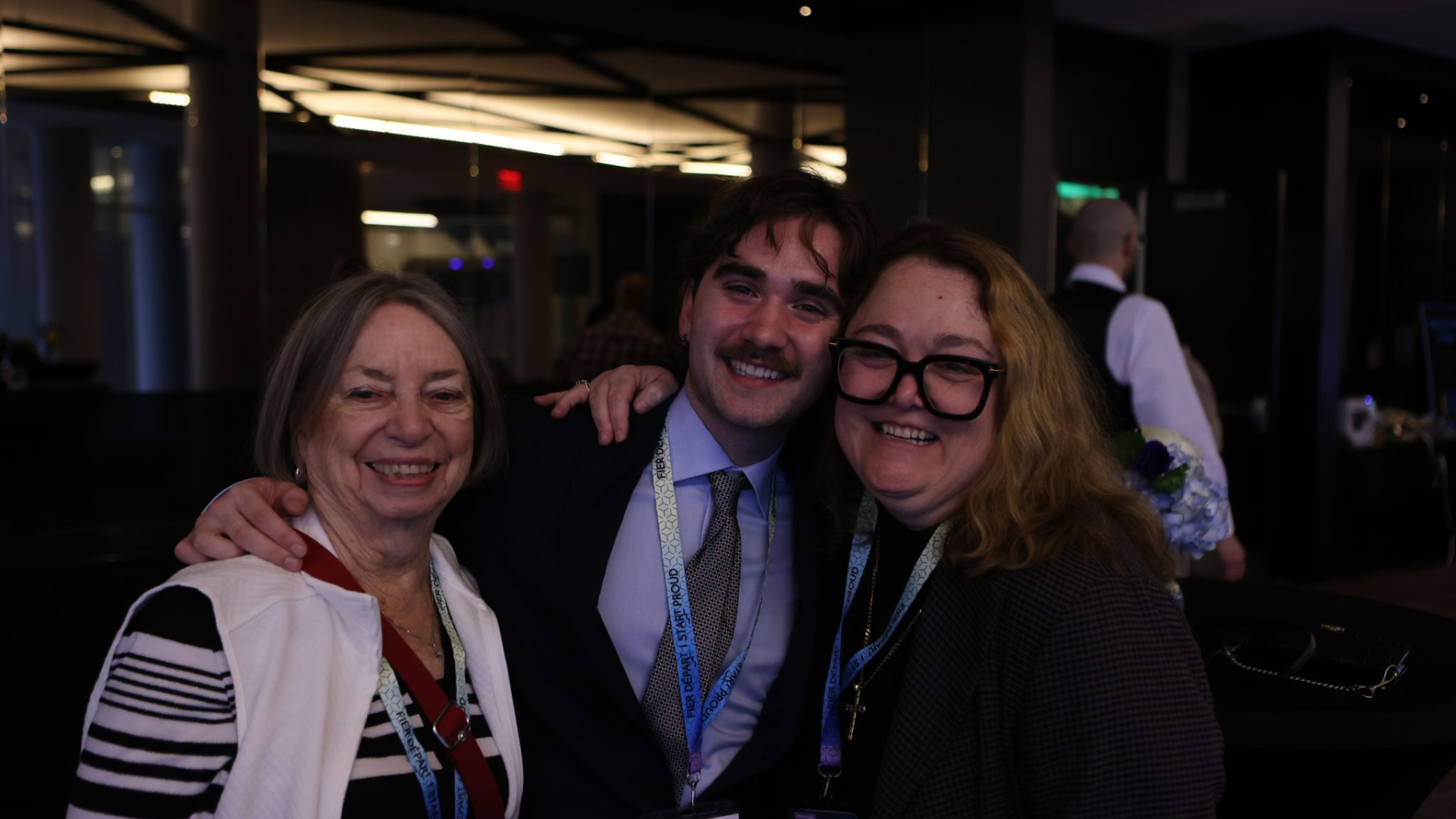
And it meant the world to him that she was beside him on the stage that day. “Really, she didn’t have to do that. But she decided to show up in the biggest way possible for me.”
Rippling effects
The impact of the panel has continued to ripple throughout their lives. Retera-Robinson’s friend Aidan Bonner, who took part in the panel with his father, wrote about the event on Substack. “One of the three pairs featured my good friend Mattie and his 85-year-old grandma, Katherine, who was rightfully applauded for remarking that she showed up because she ‘just wanted to learn,’” wrote Bonner. “That kind of willingness, love and care that extends beyond generations is something that will stick with me for a long time.”
“She lives by that article,” Retera-Robinson said. “She’s been sharing it with a bunch of people.”
He and his grandmother talk about their shared experience often. It’s had an impact with other members of their family, too: “We’re more open to talking about things within the community and what advocacy means.”
And it’s also helped demonstrate how to show up as your whole self at work.
“The way we live in society, career and personal have always been separate,” Retera-Robinson said. “Pictures of your family on your work desk are kind of taboo. You’re not supposed to wear your heart on your sleeve.”
“That’s just part of the corporate narrative in a lot of ways,” he said. “But as I go into the workplace, that’s just not who I am.”
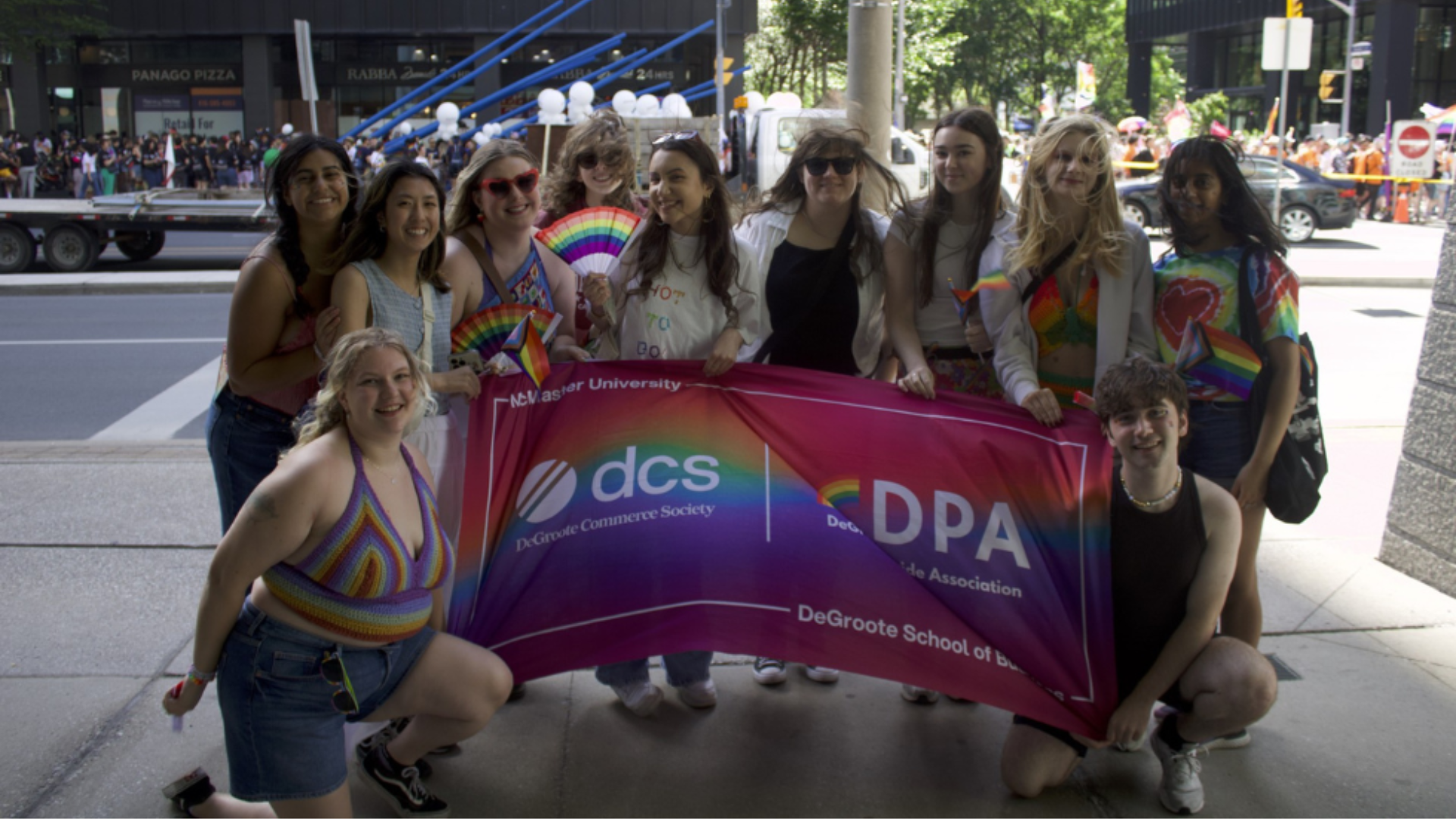
A big part of his career is advocacy and doing things for the community. That includes co-founding the DeGroote Pride Association at McMaster, to bridge the gap between 2SLGBTQIA+ students and business professionals.
But while he’s often done advocacy work, he’s never really talked about his own personal life. “It was nerve-wracking,” he said. “[But] I’m glad I did it because in a lot of ways it shows where my passion and my roots of advocacy come from.”
Talking on stage about something he was so passionate about, with one of the people he loves most in his life, was a milestone he never imagined.
“Getting to do something like this really just allows me to honour my family and the legacy that I want to carry on.”