

STRATEGIC PLAN | TEACHING AND LEARNING STUDENT
Learning without a script: First-year students reflect on winning the 24-Hour Case
February 10, 2026 ·
Contributed by: Angelica Babiera
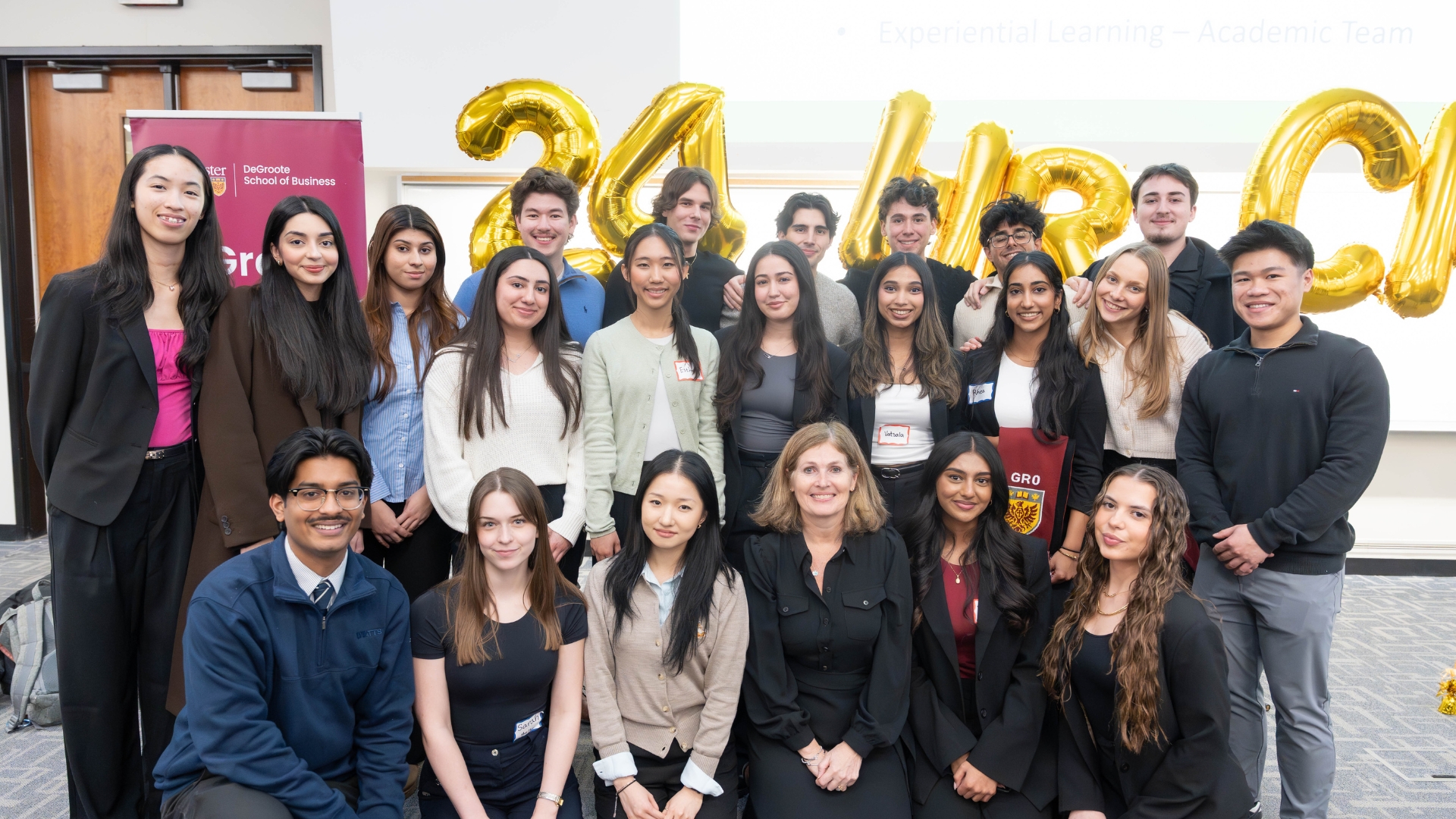
When first-year commerce students entered the 24-Hour Case competition, they did so with limited experience but an abundance of curiosity. For many, it was their first exposure to a business case challenge—particularly one without a predefined solution, rigid framework or safety net. What unfolded over the course of a single day was not only a winning case proposal, but a formative learning experience that reshaped how these students understand the business landscape itself.
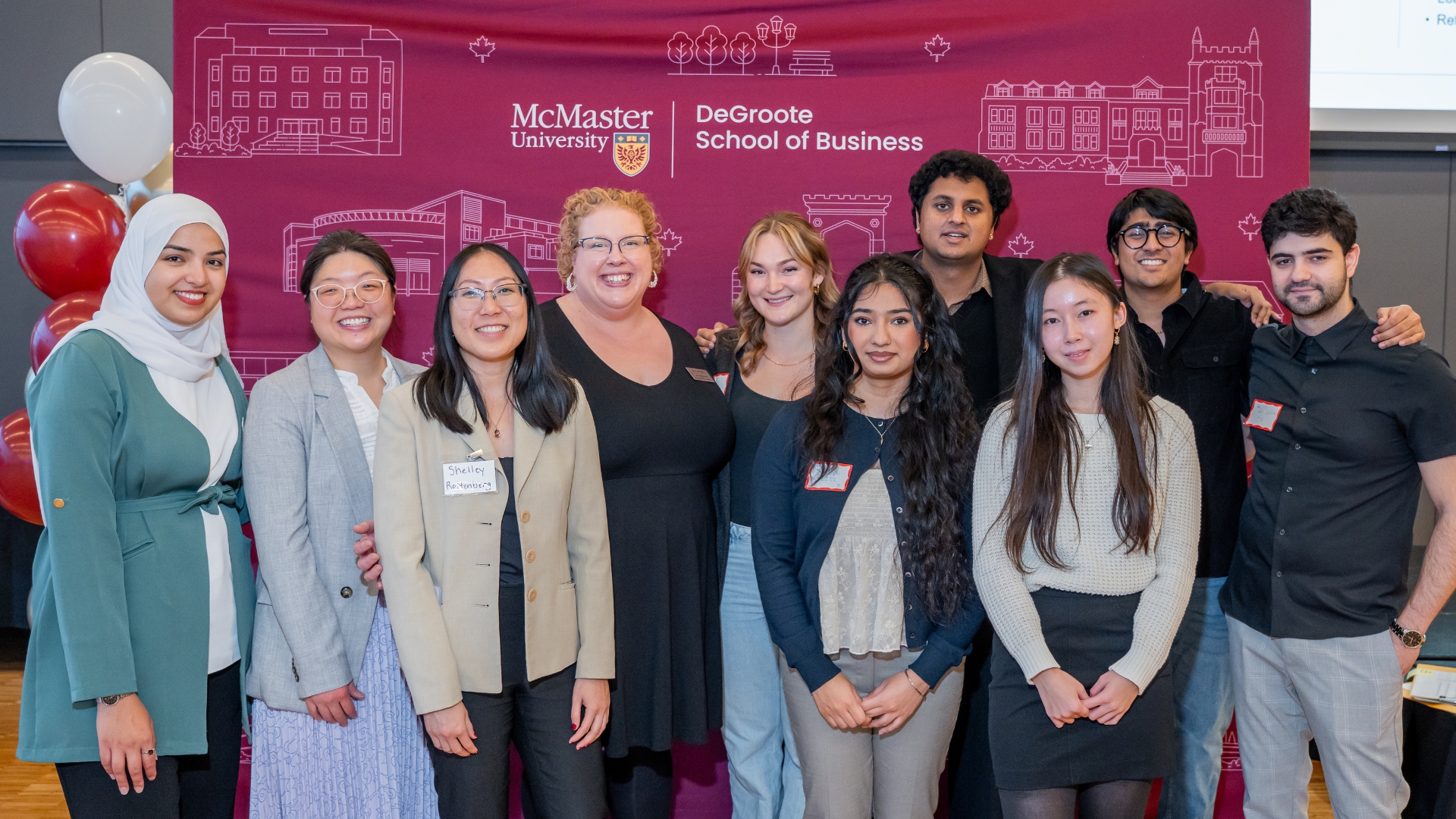
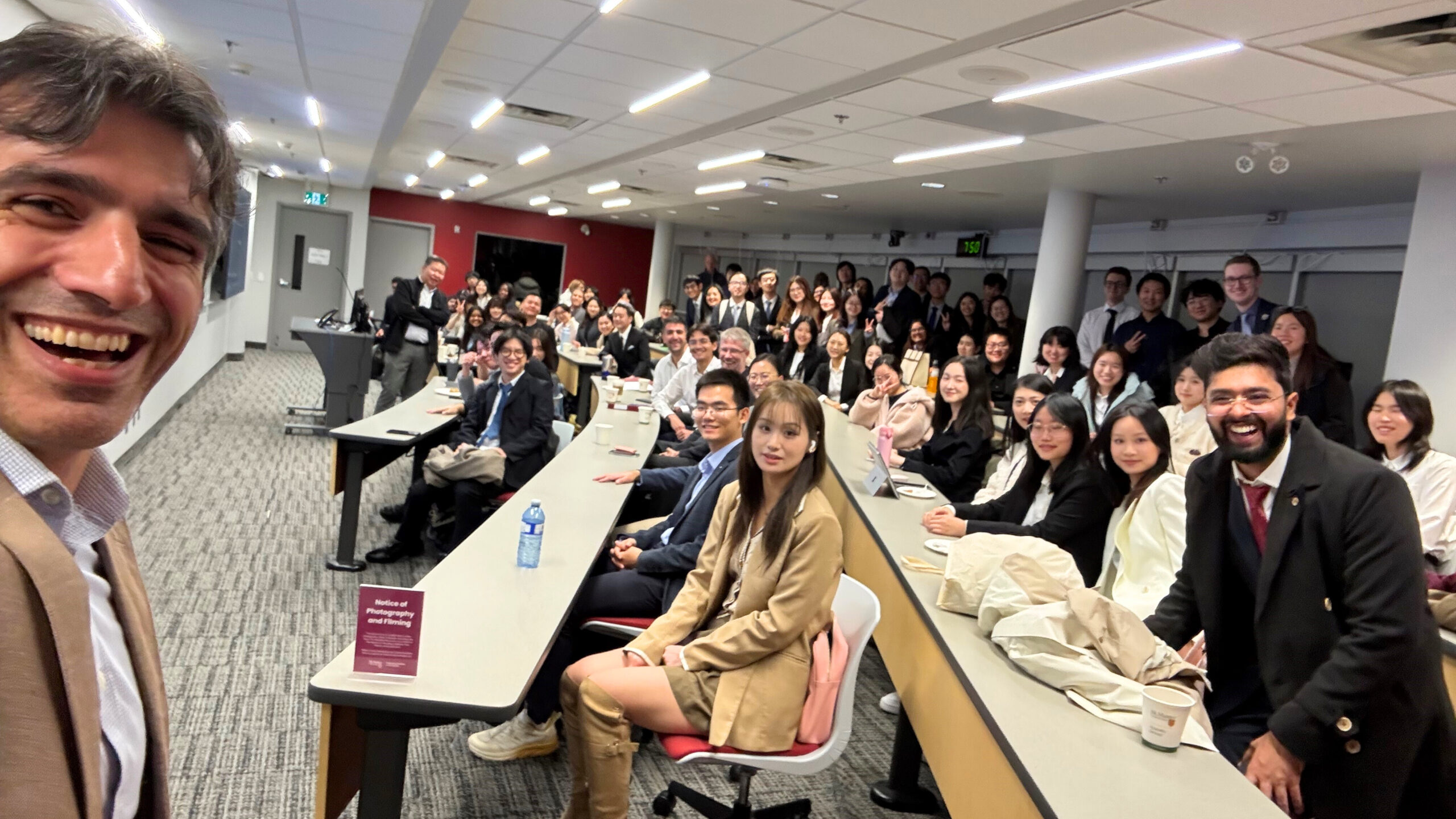
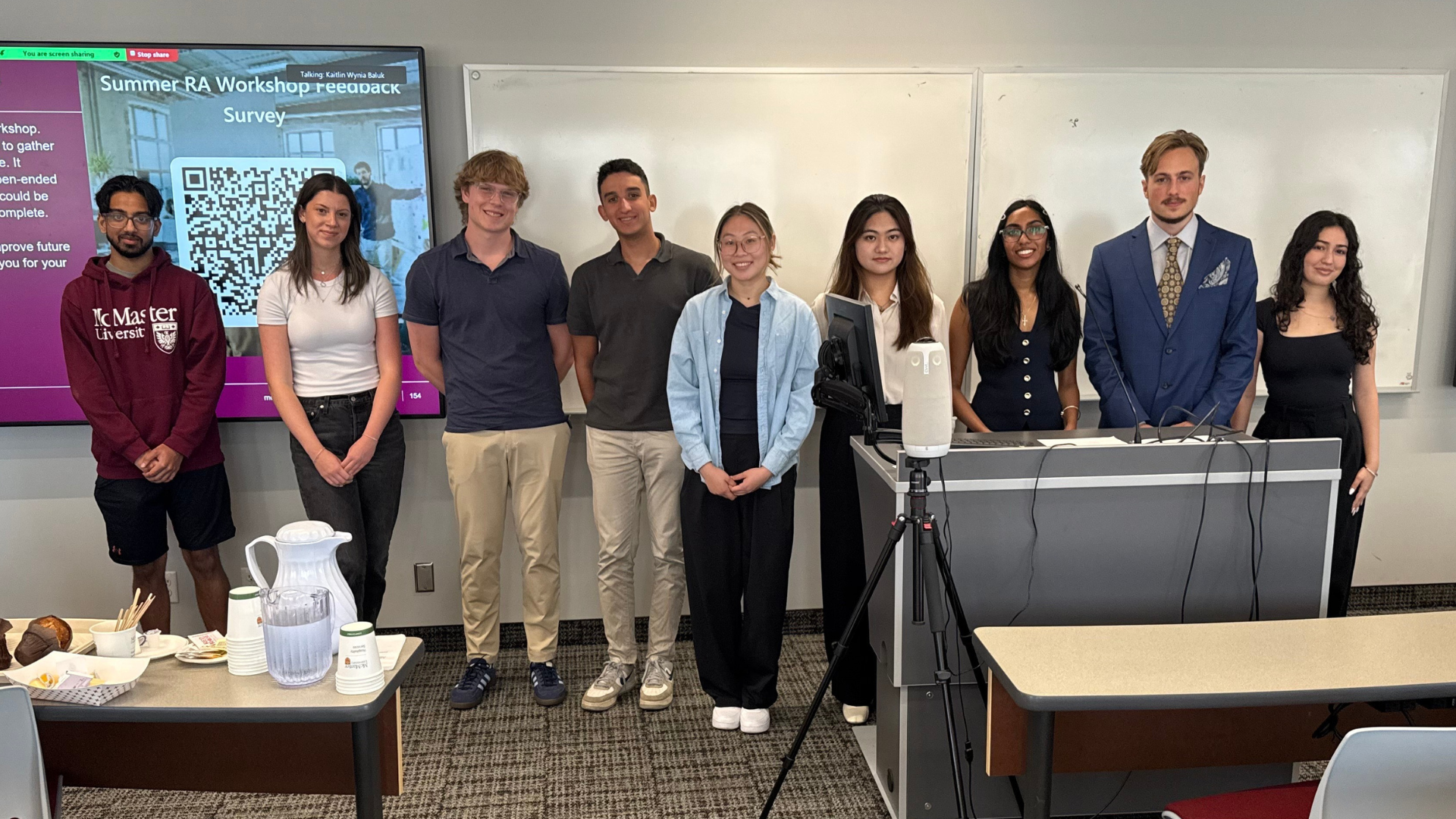
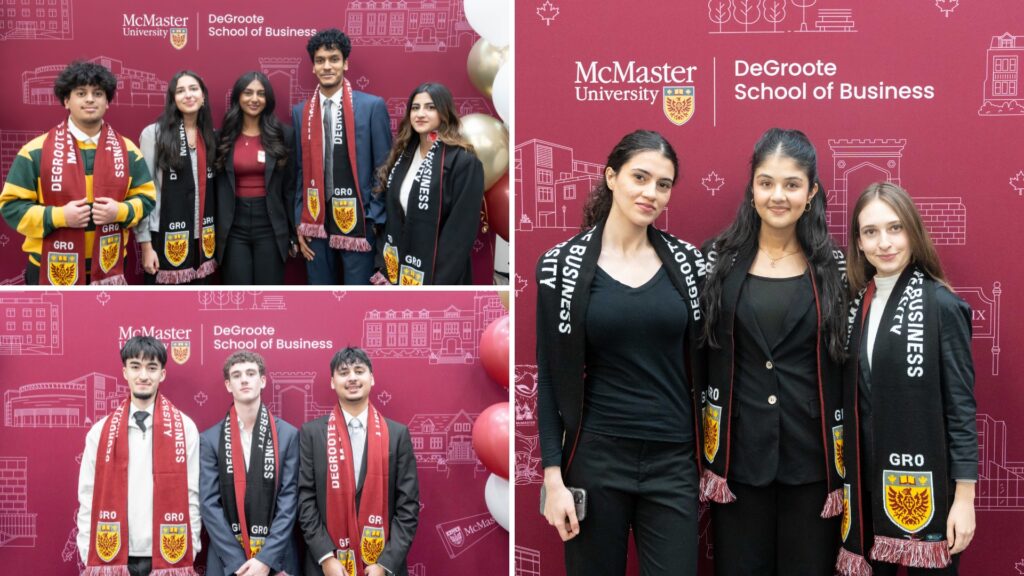
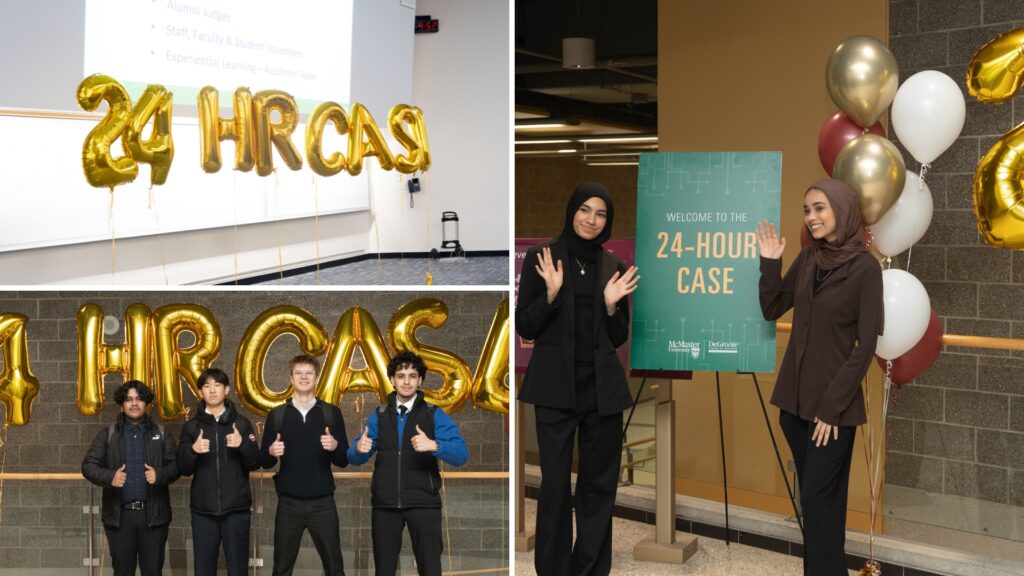
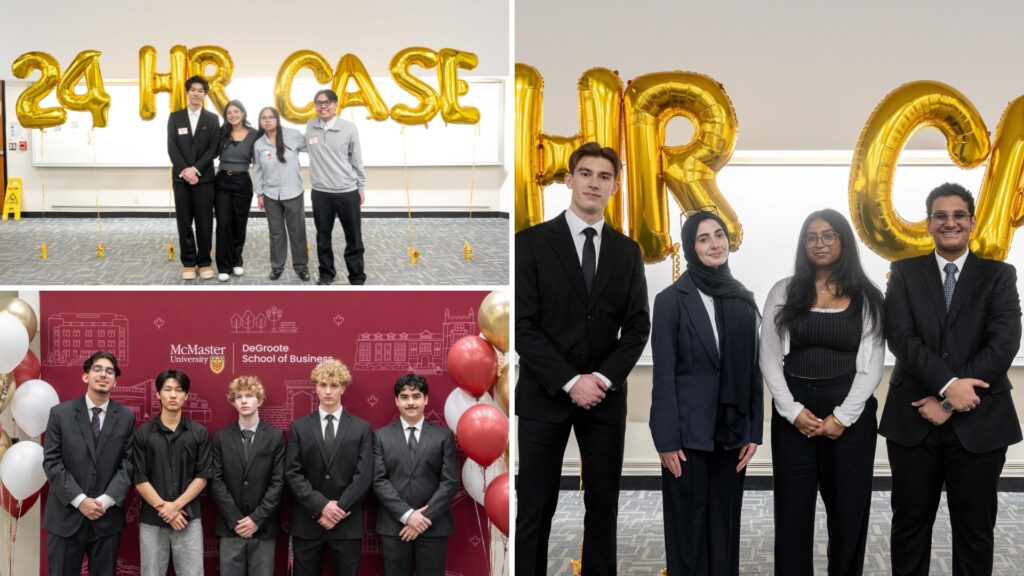
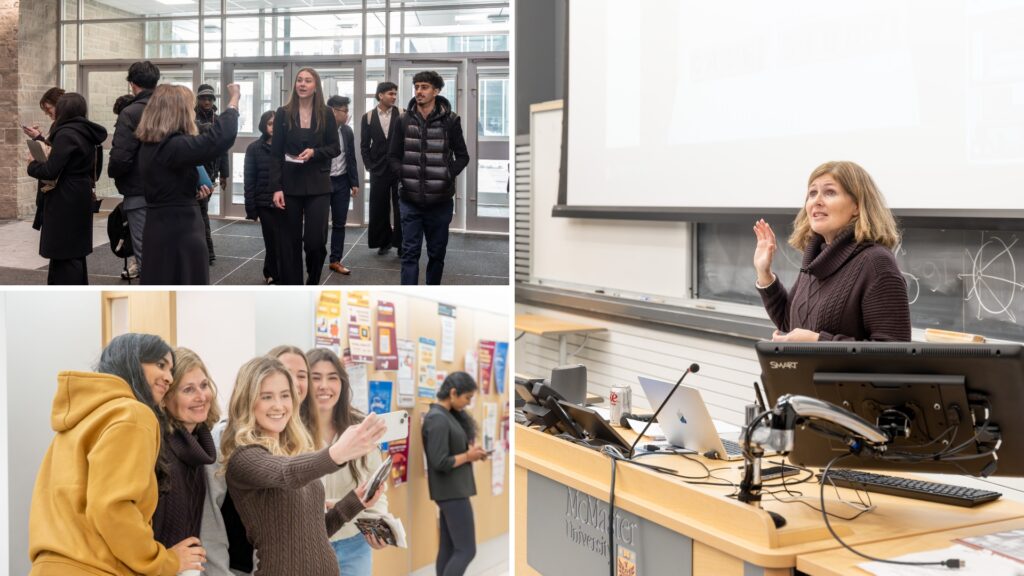
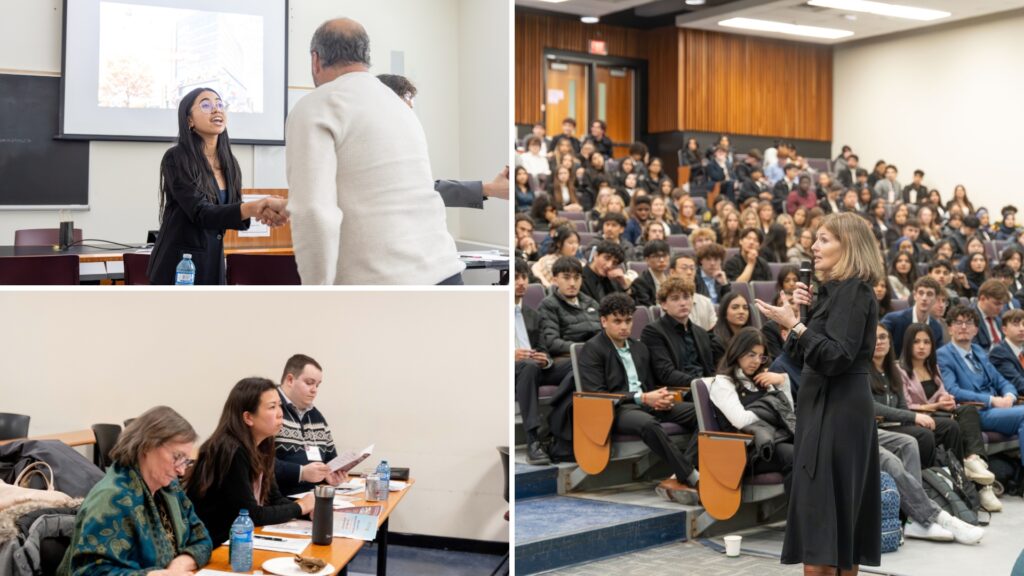
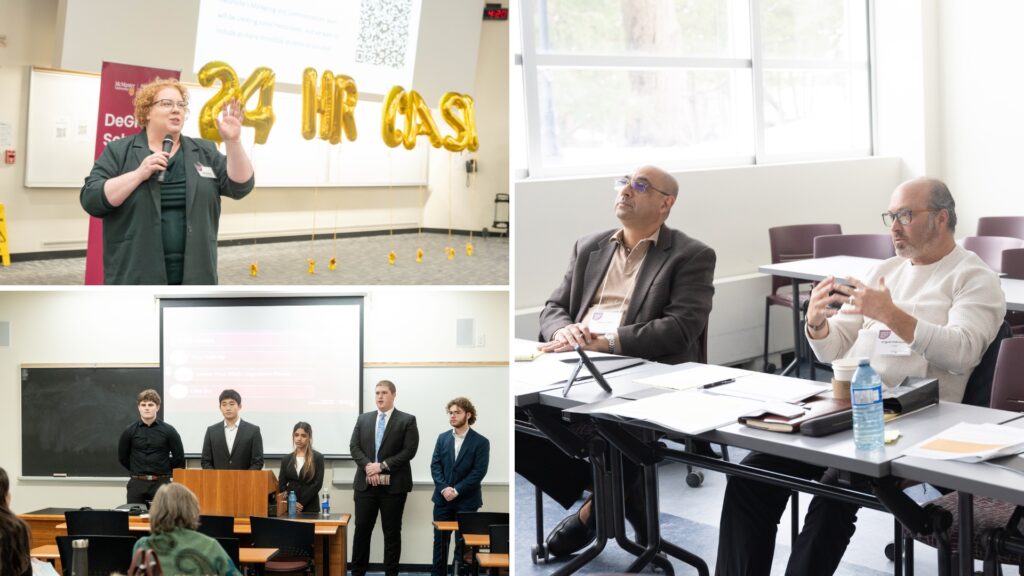
That experience came to life on a large scale, with nearly 1,000 first-year Commerce students taking part in DeGroote’s 24-Hour Case, led by instructor Susan McCracken. This signature experiential learning challenge is designed to immerse students in real-world problem-solving early in their university journey. As part of the GR0 program, the event took place over two days in January, bringing students together in teams to analyze a real business case, develop strategic solutions, and present their ideas to alumni and industry judges under tight time constraints.
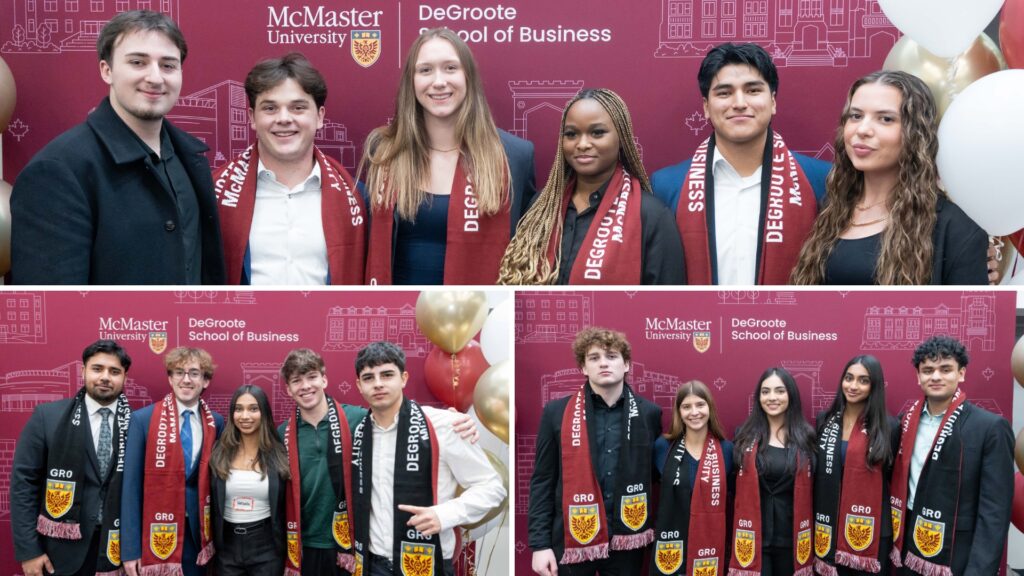
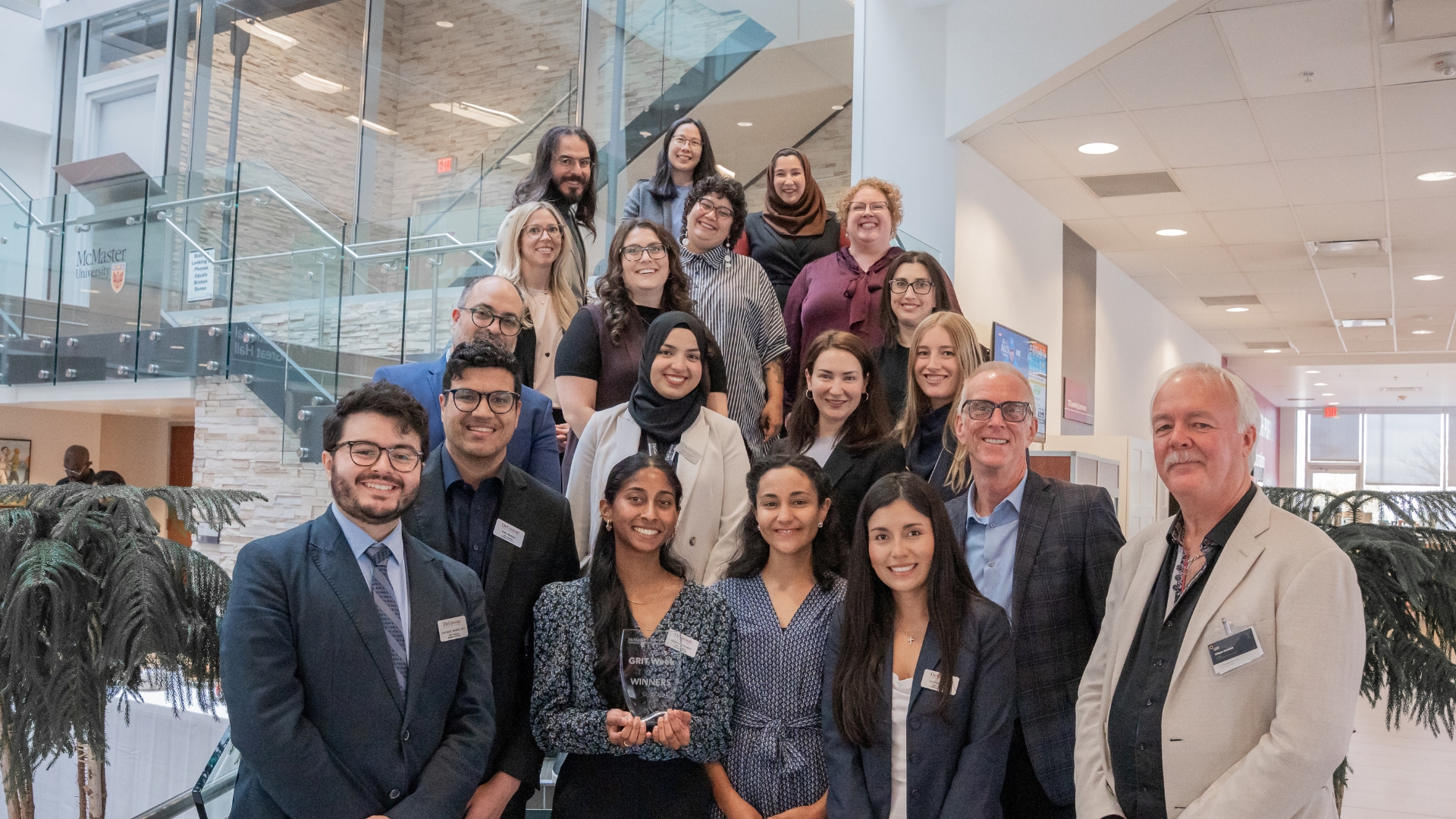
The competition ran from the evening of Friday, January 16, through Saturday, January 17, beginning with a hybrid opening ceremony and case release, followed by in-person collaboration, advising sessions, presentations and a closing ceremony. In total, students formed more than 200 teams, with 29 ultimately recognized as winners by alumni judges in each presentation room.
This year’s case, developed in partnership with DeGroote’s Advancement and Experiential Learning teams, asked students to envision a student-led event to celebrate the opening of the McLean Centre for Collaborative Discovery. Students were asked to prepare a realistic budget, audience and activities for the event.
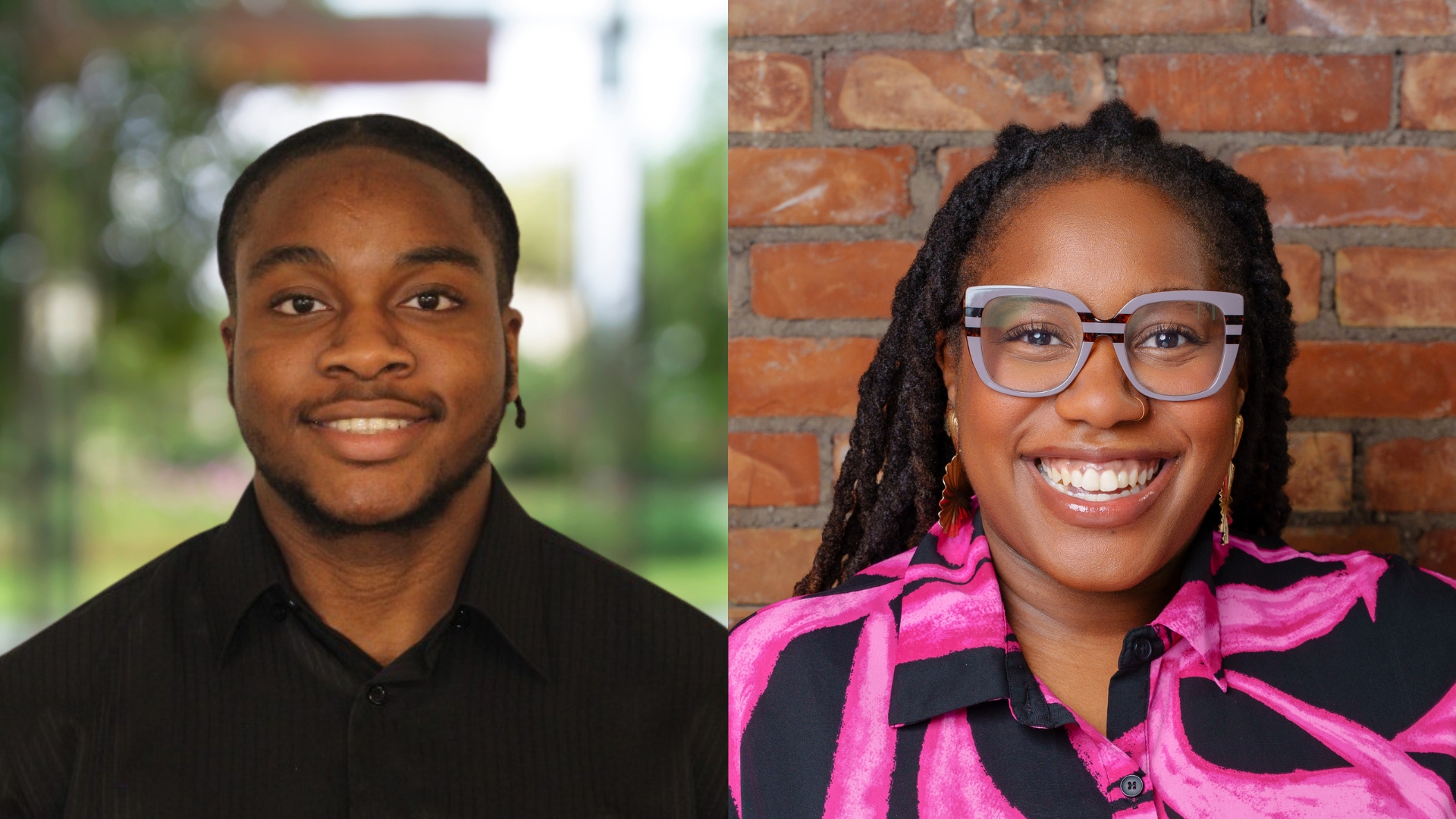
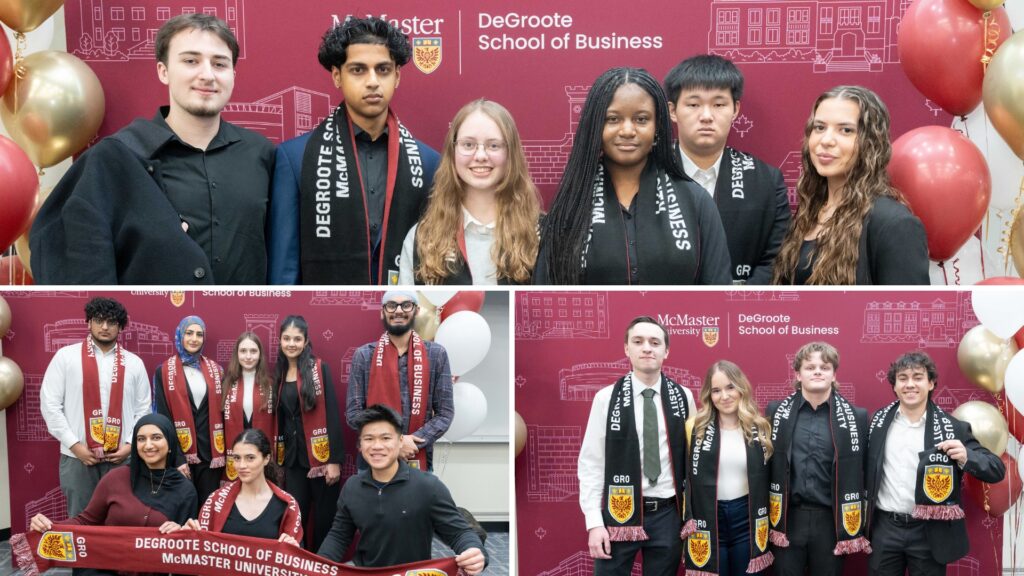
For many participants, the 24-Hour Case marked their first opportunity to move beyond theory and into application. Roman Riaz, a first-year student and member of a winning group, described the experience as a turning point early in her academic journey.
“Participating in my first case competition as a university student was exciting and a truly rewarding experience,” Riaz said. “After a semester of mostly learning theory, it was meaningful to finally apply that knowledge to a real-world scenario.”
One of the defining challenges of the 24-Hour Case is learning to work without certainty. Unlike most coursework, there is no single correct answer students can work toward. Instead, teams are evaluated on how well they justify their ideas, think creatively and communicate their solutions.
For Aseel Basheer, a first-year student on one of the winning teams, that ambiguity became most apparent during the presentation stage.
“When there isn’t a single ‘right’ answer, presenting can feel daunting and nerve-wracking, especially in front of judges,” Basheer said. “I handled this by shifting my mindset away from finding the perfect ‘right’ solution, and toward confidently communicating the value behind our ideas.”
Basheer said their team focused on ensuring their proposal remained creative and aligned with DeGroote’s values, rather than second-guessing expectations. “As a team, we were confident that our proposal was creative and innovative whilst being centred around DeGroote’s values. My role was to clearly convey our own unique vision to the judges with confidence.”
That emphasis on vision was echoed across teams. Rather than chasing perfection, students grounded their ideas in purpose. Veronica Crnko, a first-year student on another winning team, said her group consistently returned to the core objective of the case.
“When there wasn’t one ‘right’ answer, we focused on the event’s overall goal of fostering a spirit of community at the McLean Centre,” Crnko said. “Grounding our idea in the initial vision was the key to success.”
Collaboration played a central role throughout the competition. Teams were randomly assigned, requiring students to adapt quickly to new working dynamics and perspectives. According to Crnko, navigating disagreement became an unexpected strength.
“Collaboration was essential, especially when our team faced initial healthy disagreements and diverging ideas while developing our plan,” she said. Rather than settling for compromise, the team combined perspectives. “We merged two ideas from team members into a winning ‘third way’ solution that the judges specifically commended.”
The compressed timeline also forced students to think critically and adapt in real time. Budget constraints, feasibility concerns and constant revisions required teams to reassess their ideas repeatedly. “The pressure of a rapidly approaching deadline pushed our team to quickly find solutions as we uncovered faults in our initial plan,” Crnko said, describing how early setbacks became opportunities for growth.
For many students, presenting under these conditions pushed them beyond their comfort zones. Juna Vo Tran reflected on delivering a presentation without prepared notes for the first time.
“It marked the first time I presented without a script, which had always served as a personal safety net,” Tran said. With no option to rely on memorization, Tran had to trust their understanding of the material. “By the end of the experience, I successfully overcame this challenge,” noting that the confidence gained would not have been possible in a traditional instructional setting.
The hands-on nature of the Case also reshaped how students viewed learning itself. Basheer highlighted the significance of working on a project connected to the future McLean Centre for Collaborative Discovery.
“We weren’t just applying concepts to a fictional case; we were contributing ideas to a real project connected to our campus and our future as DeGroote students,” she said, adding that the authenticity of the problem made the experience feel purposeful.
As students reflected on the competition, many pointed to a broader shift in how they now understand business education. Riaz summarized that takeaway succinctly:
“This experience changed my thinking, making me realize how important it is to balance theory learning and experiential learning.”
The 24-Hour Case may have lasted only a day, but for these first-year students, its impact extends far beyond the competition itself—shaping confidence, capability and a clearer understanding of what it means to do business, not just learn business.