

STRATEGIC MANAGEMENT STRATEGIC PLAN | RESEARCH AND SCHOLARSHIP
Shaping the future
February 25, 2026 ·
Contributed by: Julienne Isaacs

Candice Chow likes to use a metaphor when she explains the concept of foresight.
Picture a hockey game. The puck is the future.
“L.R. (Red) Wilson used to say that we need to skate to where the puck is,” she says. “That’s Wayne Gretzky’s famous quote. What Red meant by that is we need to build our anticipatory capability and agility to so that we could proactively shape how the game is being played. Building on Red’s insight, I’d like to take it one step further. Let’s empower ourselves to direct the puck where it’s supposed to go.”
Chow directs the Foresight Lab at the DeGroote School of Business. She’s talking about what inspired the late Lynton “Red” Wilson to found the lab in 2018.
Wilson, Chancellor Emeritus at McMaster University, was a giant in the Canadian business world and a generous friend to the university throughout his life.
Several years ago, says Chow, Wilson was watching the rise of geopolitical uncertainty and global instability.
“A lot of thought leaders like Red saw that if businesses don’t practice the ability to foresee what could happen, they will not be prepared to navigate changes and to pivot,” she says. “He saw the opportunity for Canada to lead in foresight practice.”
Wilson’s vision and backing resulted in the founding of the Foresight Lab, a learning and networking hub for professionals that offers training on trend spotting, adaptability and other leadership skills.
Strategic foresight is a structured, collaborative approach to gathering insights about the future in order to guide today’s decision-making. It typically looks 10 or more years ahead to track and prepare for emerging trends, risk and potential opportunities.
Foresight isn’t about trying to pin down exactly what might happen in the future in order to prepare for it, Chow emphasizes. Rather, it’s about building imaginative capacity. Leaders learn to do this by imagining many possible futures — and by questioning their own biases. It is these underlying assumptions about the future which can hinder innovation, she says. And when we fixate on controlling the future, we fail to see opportunities.
In some ways the Foresight Lab itself serves as a model for adaptability: over time, its approach has evolved based on what it needs to accomplish.
Early on, the lab offered training that was module-based; during the Covid-19 pandemic it offered webinars. After consultation with business leaders, the Foresight Lab started working more closely with industry leaders to offer hands-on opportunities. One such effort was the lab’s first in-person conference, held in Toronto in collaboration with Purolator, focused on future-proofing the supply chain.
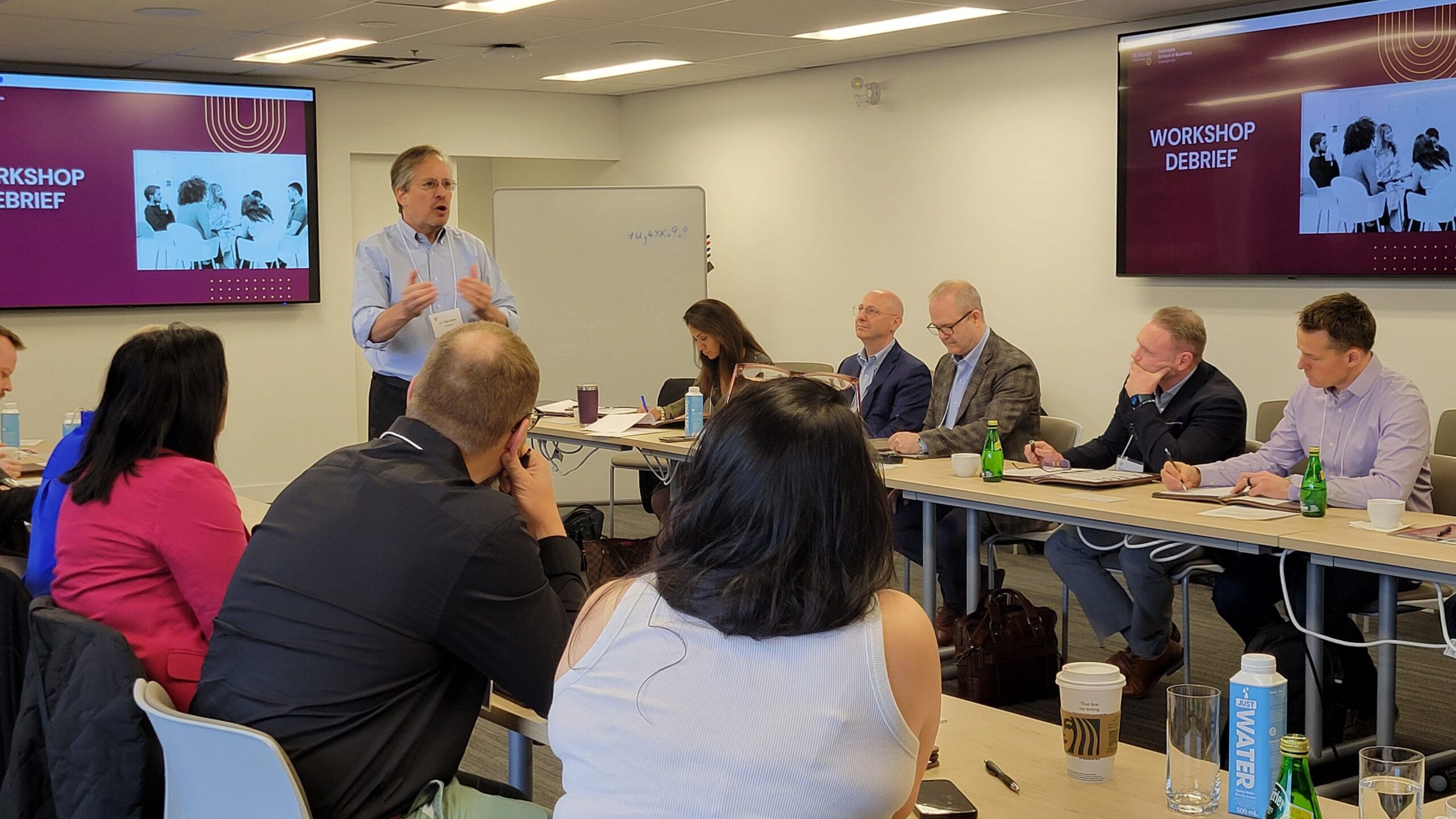
These days, Foresight’s Executive Education offerings adopt an integrated learning approach: multiple concepts flow through an entire course of training. Last November, the lab offered a four-day intensive workshop, supplemented by virtual sessions, for its Strategic Foresight Certification for Executives. The course was designed to build executives’ futures literacy and boost their organizations’ agility, says Chow.
Incorporating foresight as a component of strategic management courses and experiential learning initiatives equips learners with future thinking capability and a long-term orientation to decision-making.
Back to the hockey metaphor: Chow says foresight is all about learning that kind of agility, about influencing the gameplay.
“Foresight isn’t chasing. It’s shaping,” she says. “We shouldn’t follow where the trend goes. We need to direct, to nudge where things should go. And play the game the way we want to play it.”
Red Wilson will be remembered for his own visionary foresight, says Chow. “I think he’ll be remembered as a pioneer in advancing the role of business in society. He opened the door for business to be successful in a holistic sense, in a way that is more open to innovation and to imagination, and that enables us to manage uncertainty.”
If you’re interested in exploring opportunities to participate in the Agility in the 21st Century Conference by the Foresight Lab at McMaster University in October 2026, you can sign up here.