

MCCD MCCD | MEB STRATEGIC PLAN | TEACHING AND LEARNING STUDENT
Where ideas take shape: Inside DeGroote’s reimagined 2GR0 Showcase
December 18, 2025 ·
Contributed by: Angelica Babiera
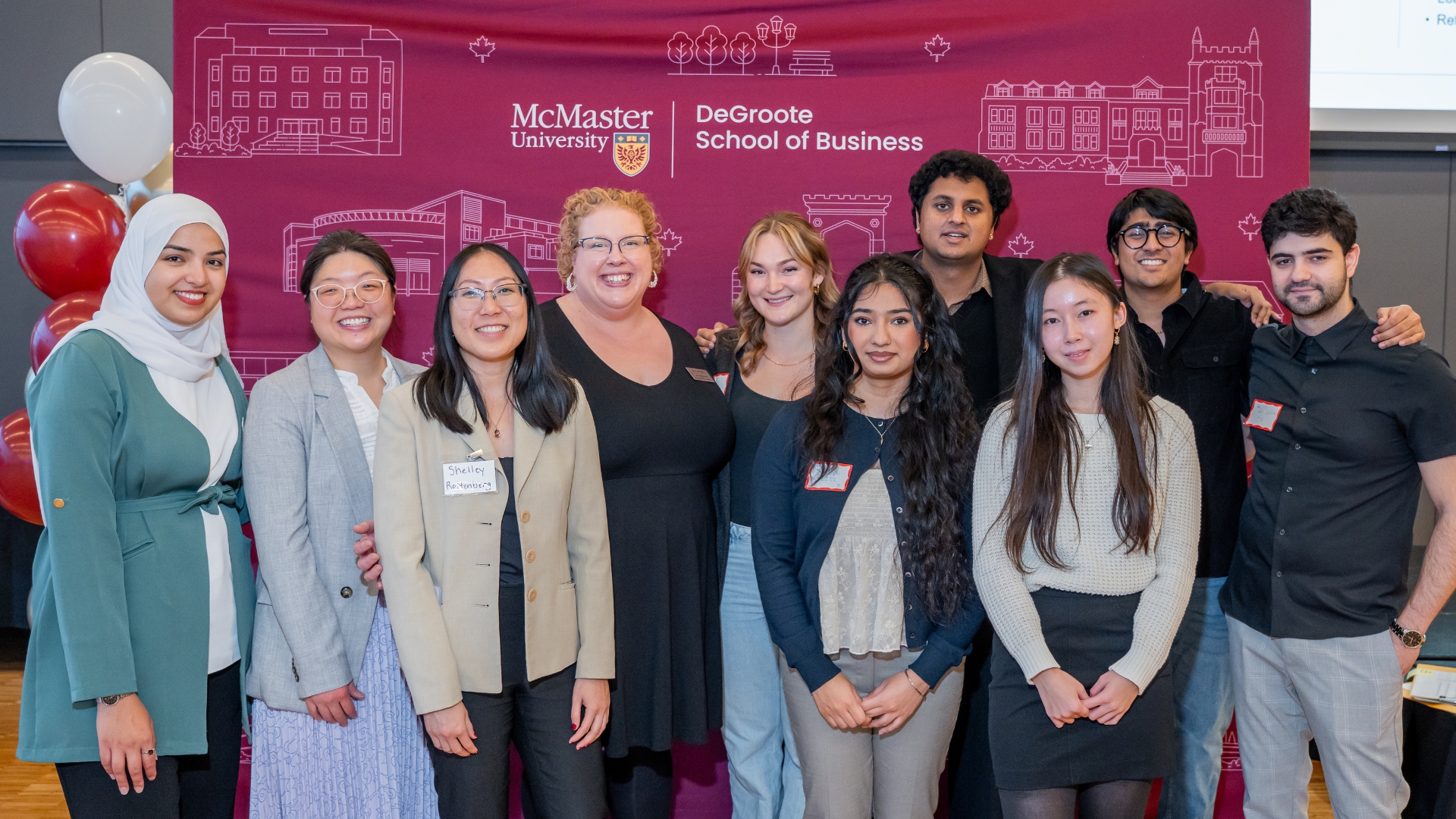
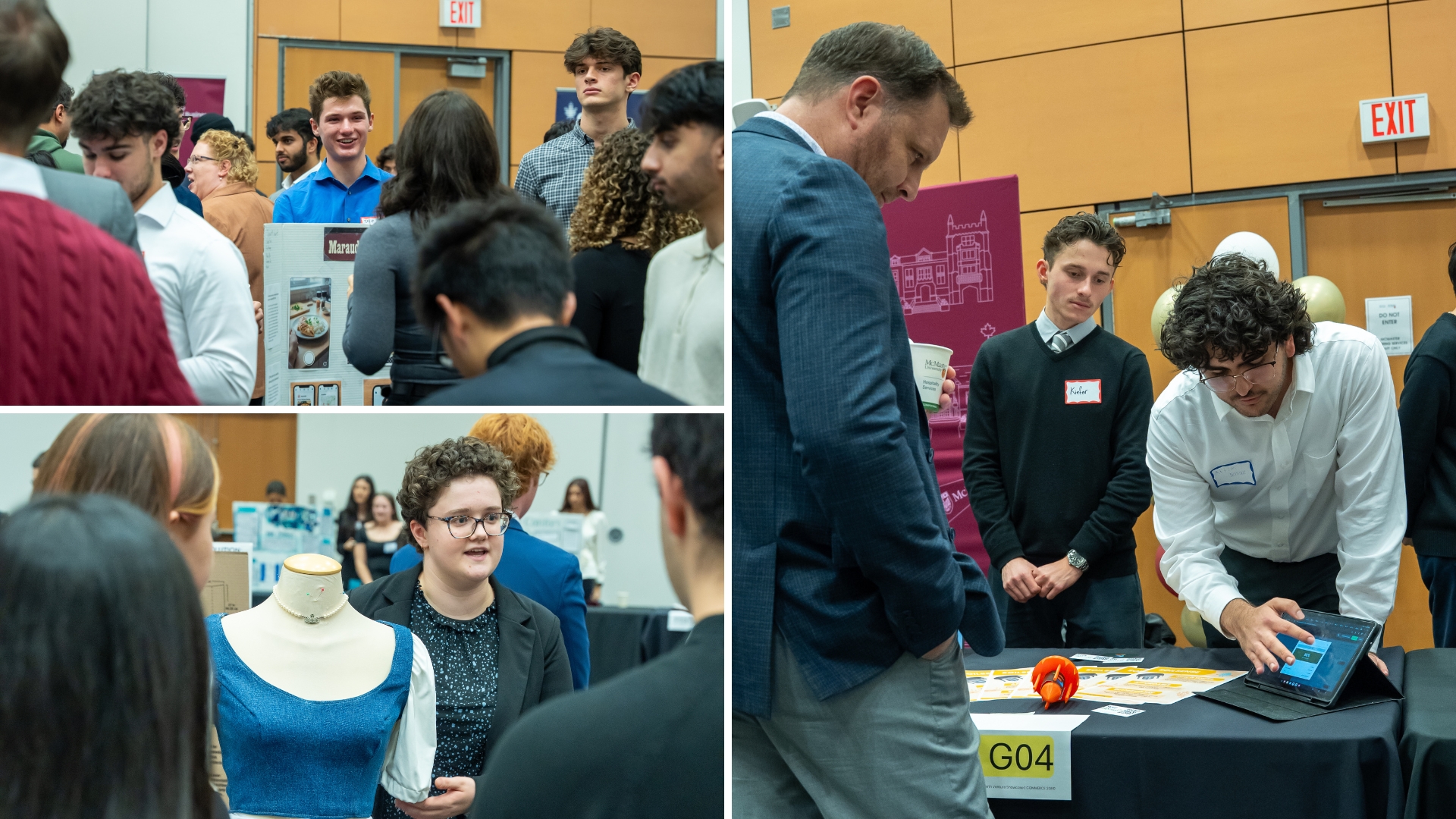
On two late-November afternoons, McMaster’s campus filled with the nervous excitement of second-year Commerce students preparing to share ideas they had been developing for months. Foldout tables became makeshift storefronts and prototype displays, while judges, mentors and staff moved through the aisles to listen, ask questions and take notes.
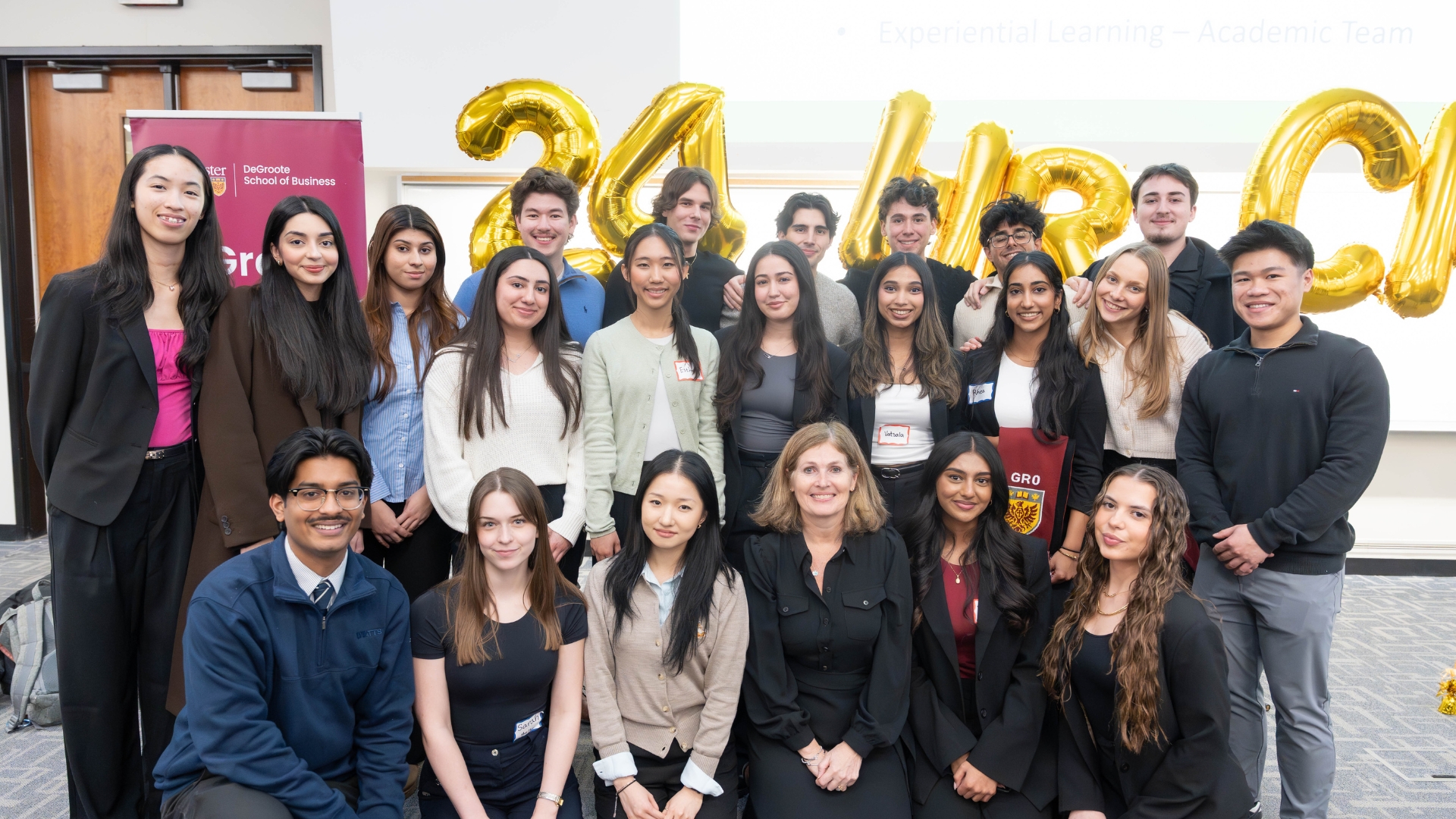
This year marked the debut of the reimagined 2GR0 course, culminating in a two-day showcase designed to make the second-year student experience and development course more hands-on.
As part of the GR0 program—which complements the Commerce curriculum by helping students build skills such as creative problem-solving, critical thinking and collaboration through experiential, technology-enhanced learning—students took on a venture design challenge.
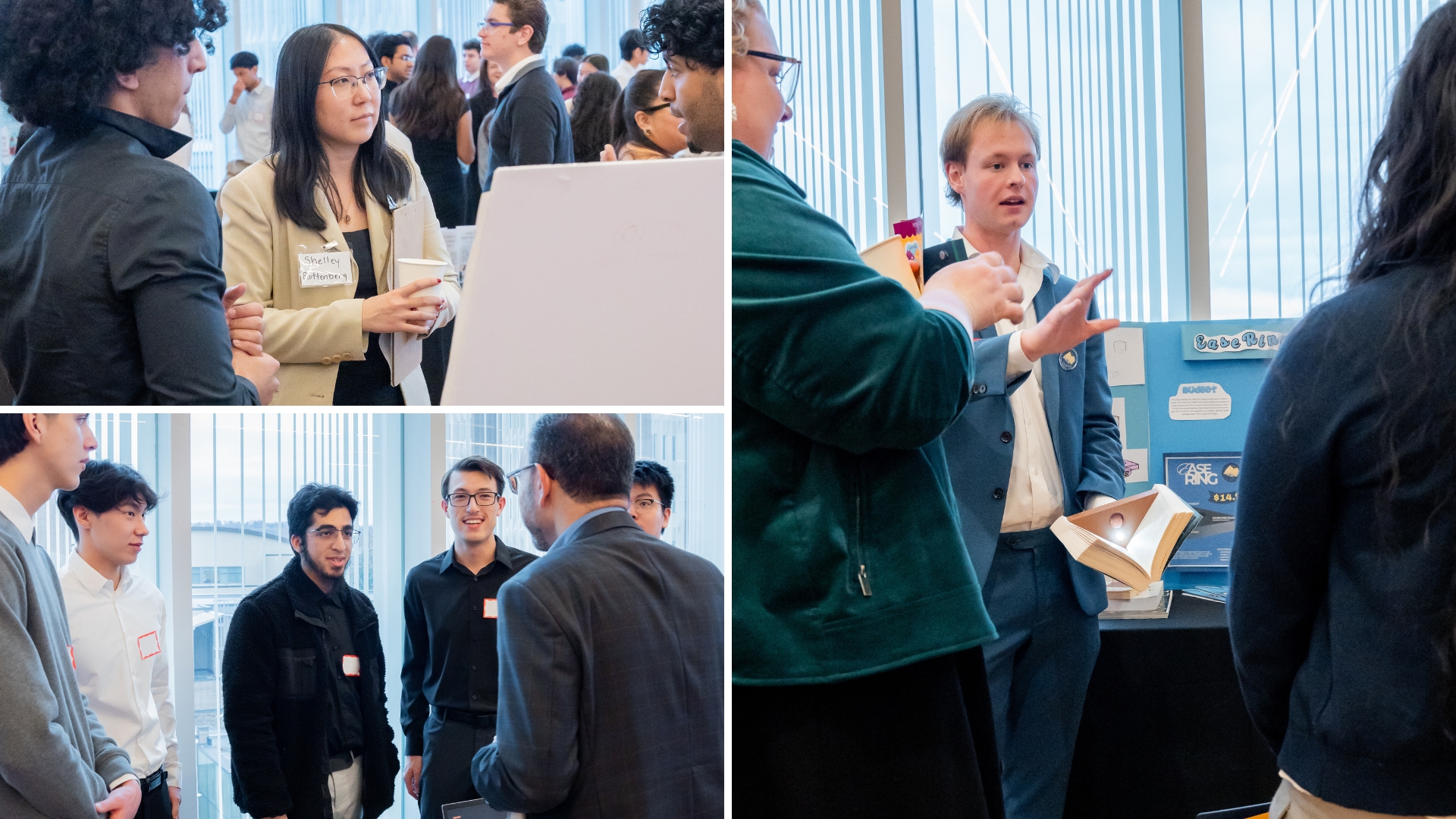
They were tasked with developing a new business aligned with their assigned theme: Wednesday’s Social Impact or Friday’s Sustainable Futures, both of which connect back to the McLean Centre for Collaborative Discovery learning hubs. Working within a modest budget, student teams created prototypes, visual displays and prepared to pitch their ideas.
This shift reflects the vision championed by Sarah King, manager of the Experiential Learning Academic team, and a key architect of DeGroote’s experiential learning strategy.
“We are the only business school in Canada that has experiential learning for every student in every year of our undergraduate programs,” she says.
For King, the aim of redesign reaches beyond venture creation. “By encouraging students to develop their own entrepreneurial venture, we help them hone creativity skills, communication skills and budgeting skills,” she adds. “The point of all this is to help all our students see themselves as lifelong learners, to prepare them to be good people in the world and to make exceptional contributions in whatever field they choose.”
Bringing that vision to life in the classroom is Anita Boey, assistant professor of Human Resources and Management, and professor for the 2GR0 course. “We teach students the theory behind building a business while they actively create one and receive continuous feedback. They also spend a lot of time reflecting—at every step, they pause, digest what they’ve learned, and consider how they’ve grown,” Boey said.
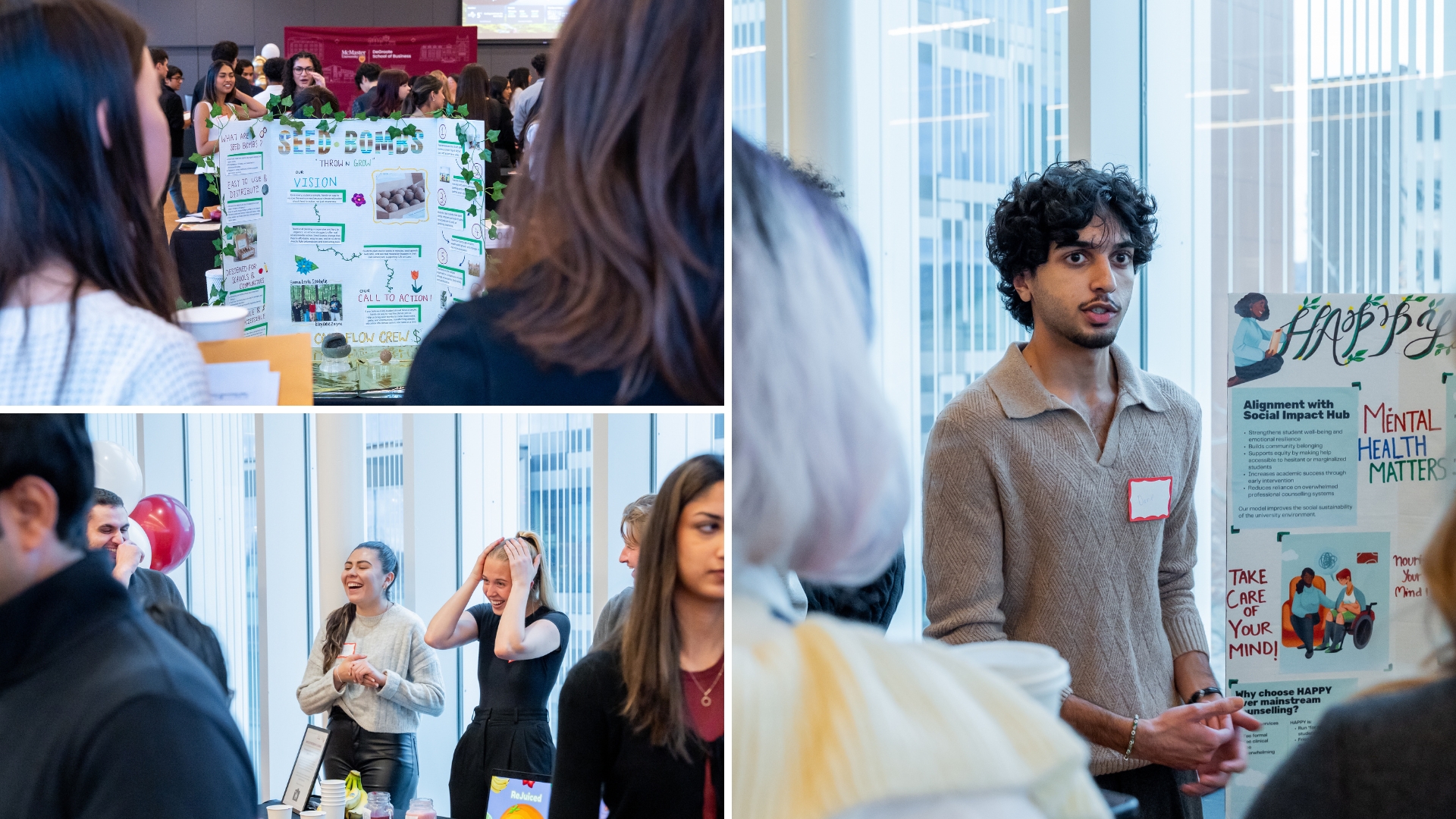
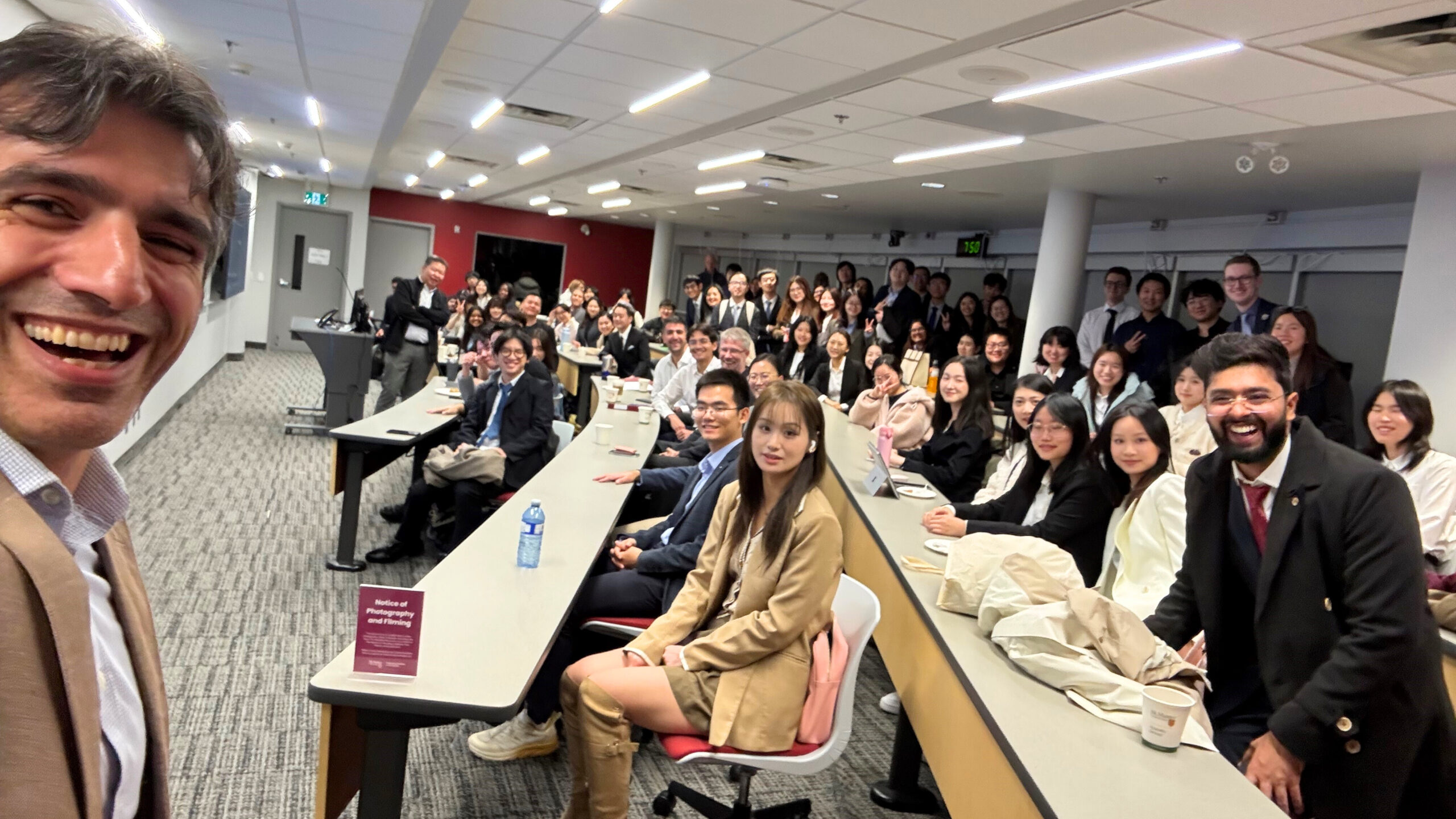
For the more than 400 students enrolled in 2GR0, the showcase was far from a routine end-of-term presentation. Split over two days with roughly 200 students and 35 teams each afternoon, the format required them to think about feasibility, purpose and impact. Wednesday’s Social Impact theme focused on community well-being and positive social change, while Friday’s Sustainable Futures theme explored environmentally responsible business practices. Student projects ranged from food sustainability and product refurbishment to fashion sustainability.
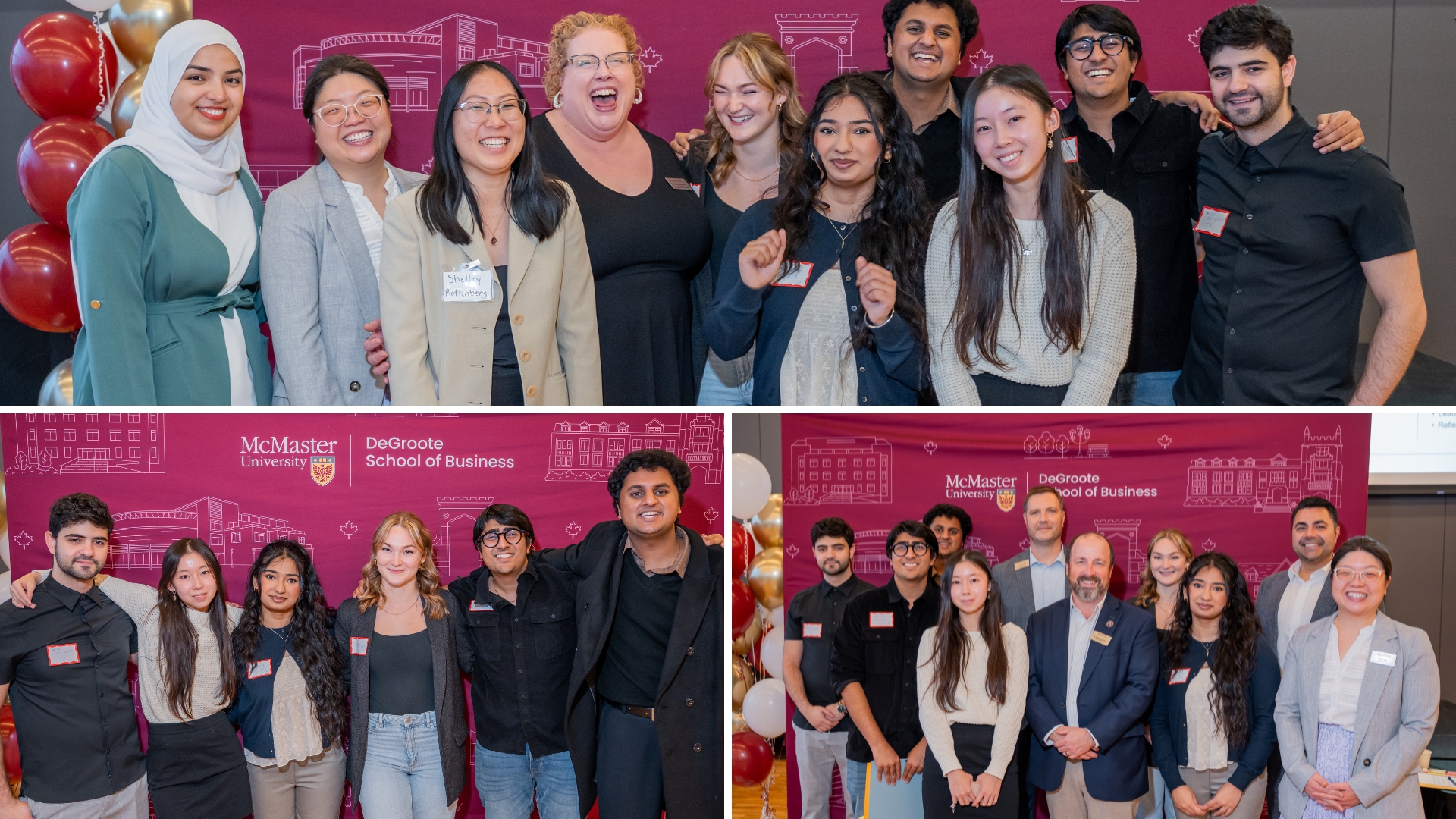
Each team met with three official evaluators—a teaching assistant, DeGroote staff member and McLean Centre MBA mentor. Special judge, Entrepreneur-in-Residence Tej Sandhu, selected the winner for “Best Overall Venture” for both days. On Wednesday, the Social Impact Hub faculty lead Brent McKnight judged student ventures with the “Biggest Social Impact,” while Sustainable Futures Hub faculty co-leads Pavithra Balaji and Cansu Ekmekcioglu judged for the “Biggest Sustainable Impact” on the Friday. The Audience Choice Award invited attendees to vote via QR code.
Wednesday’s winning teams included Del Ray Five, which pitched the EaseRing—a book holder with a built-in light; Cherry Ltd., which developed a bioplastic phone case made from potatoes; and Locked In, which introduced LILI, a Life-Saving Intelligent Learning Interface.
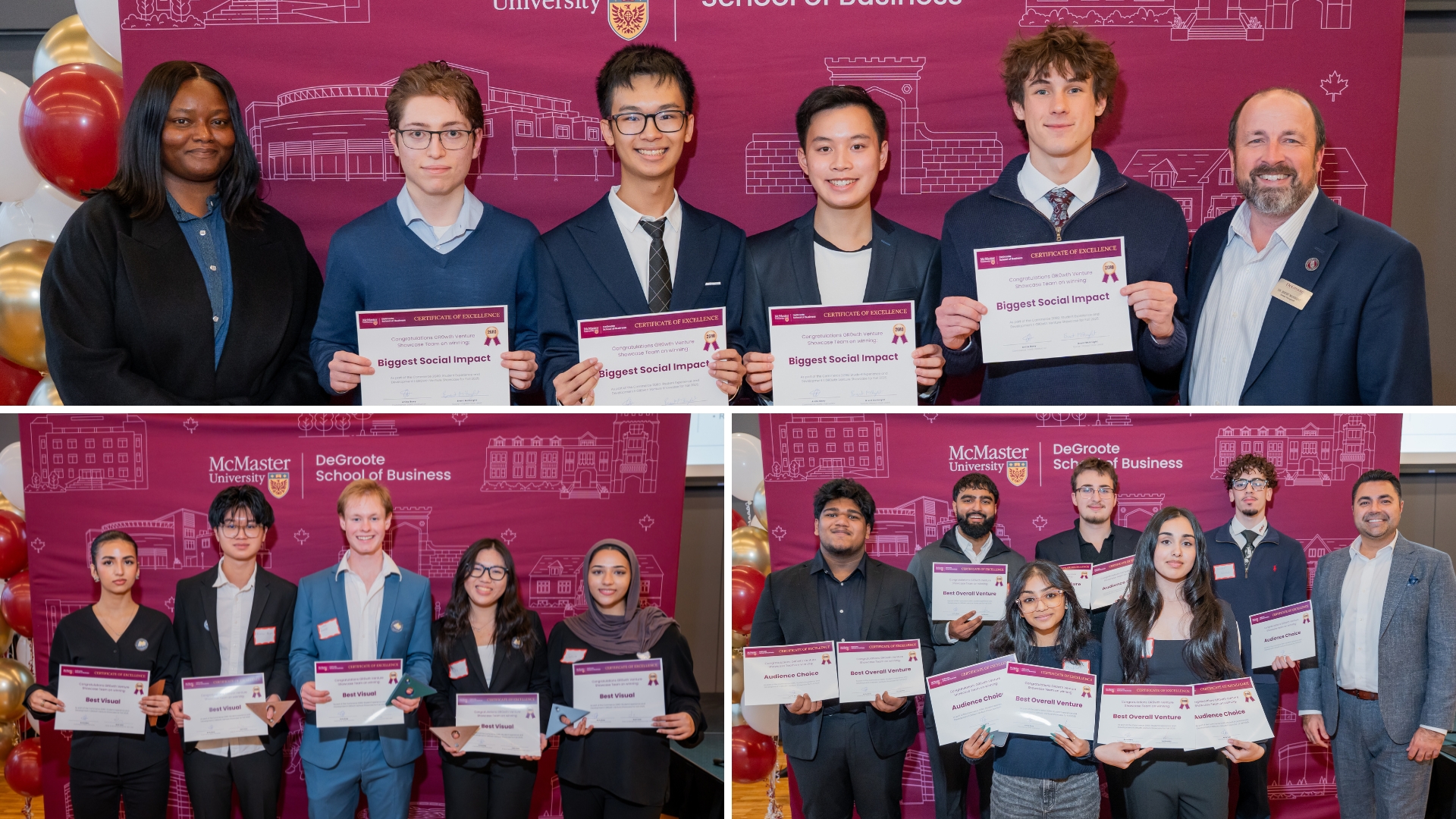
Meanwhile, Friday’s winners featured Labubu with Soil Sense, a soil health monitoring solution; Corporate Giants with Solar Nest, a solar-powered study pod; STGLC with a rainwater purifier; and The Ghost Committee with Thrift and Stitch, a sustainable fashion concept.
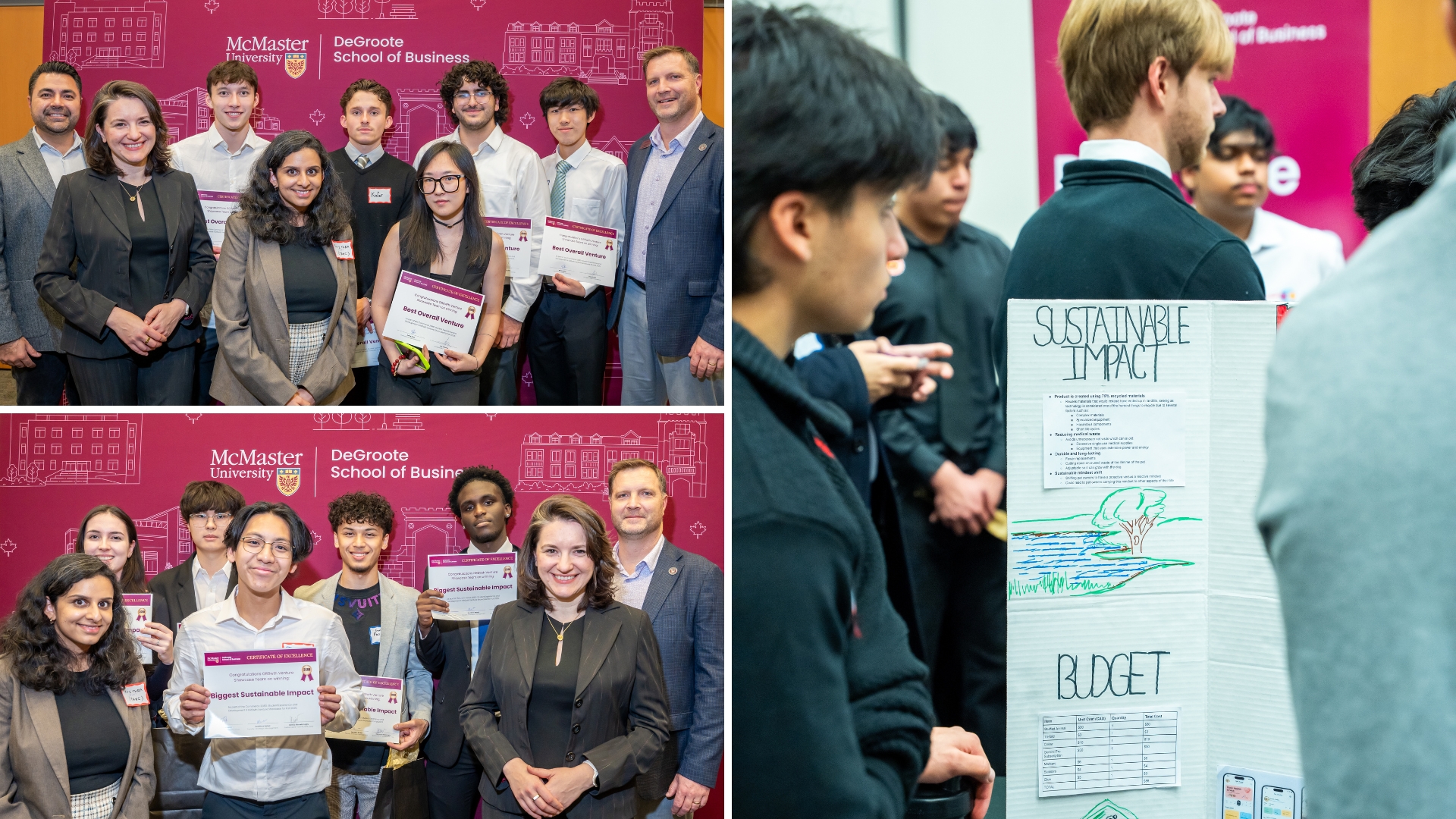
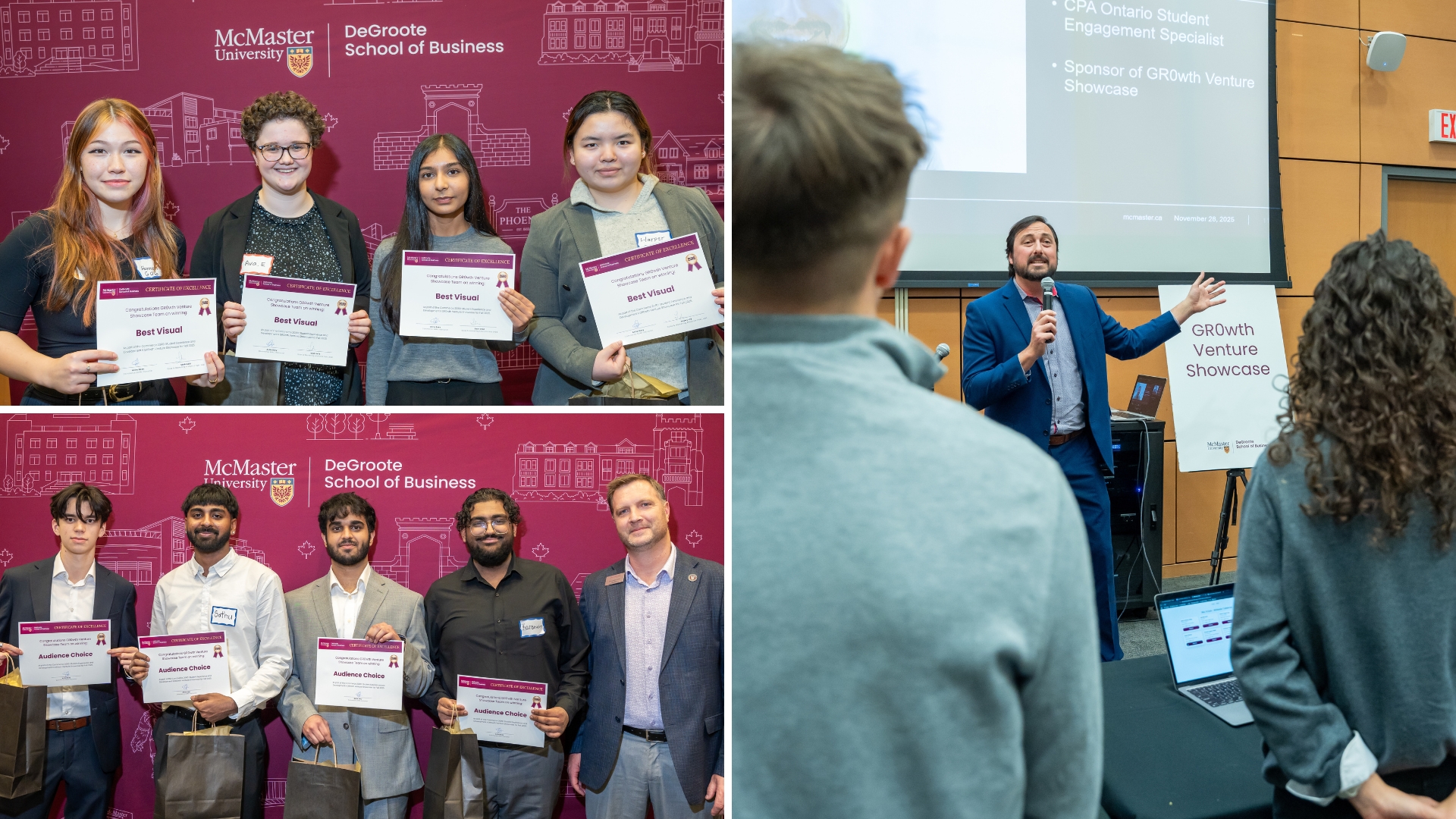
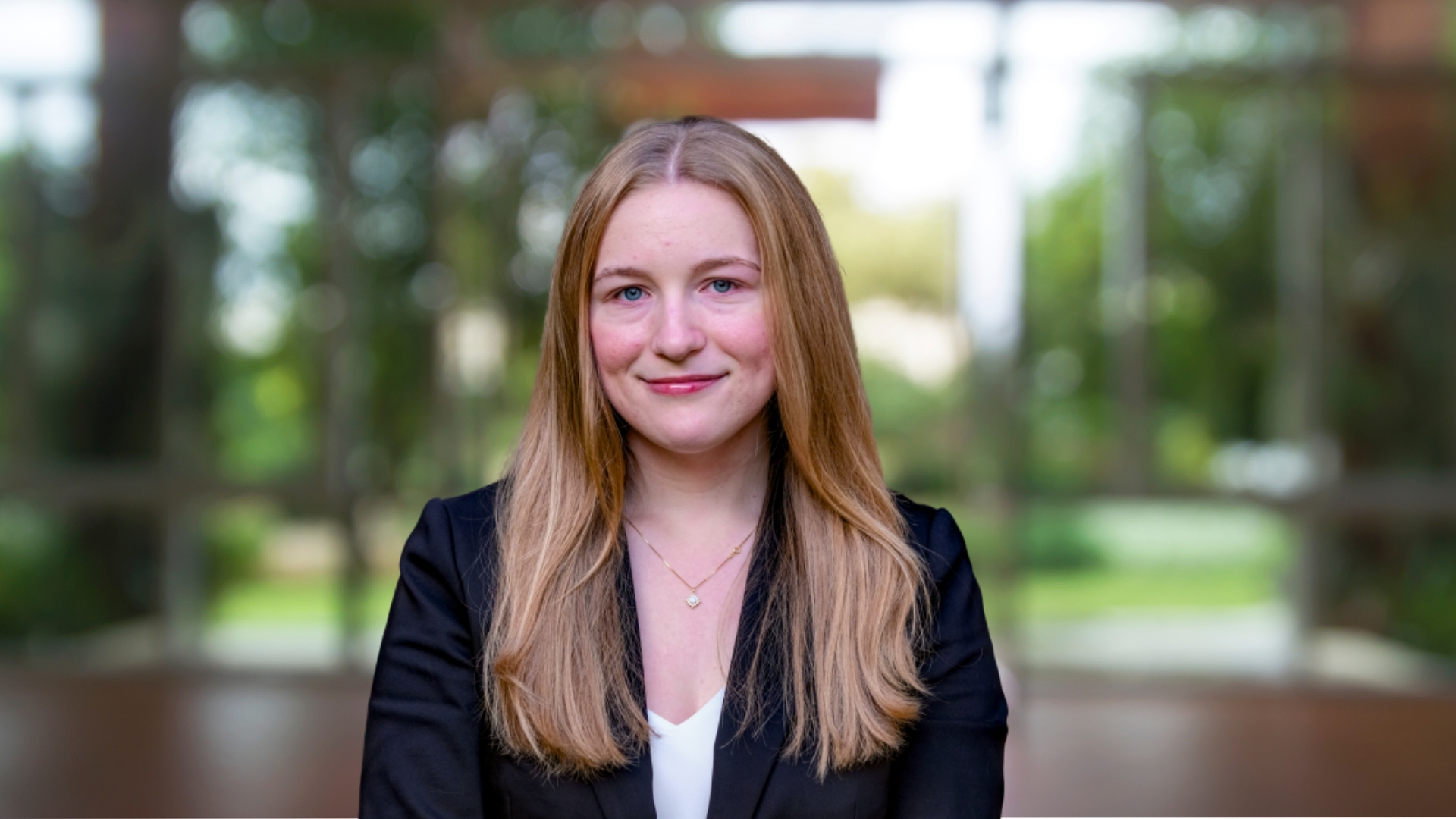
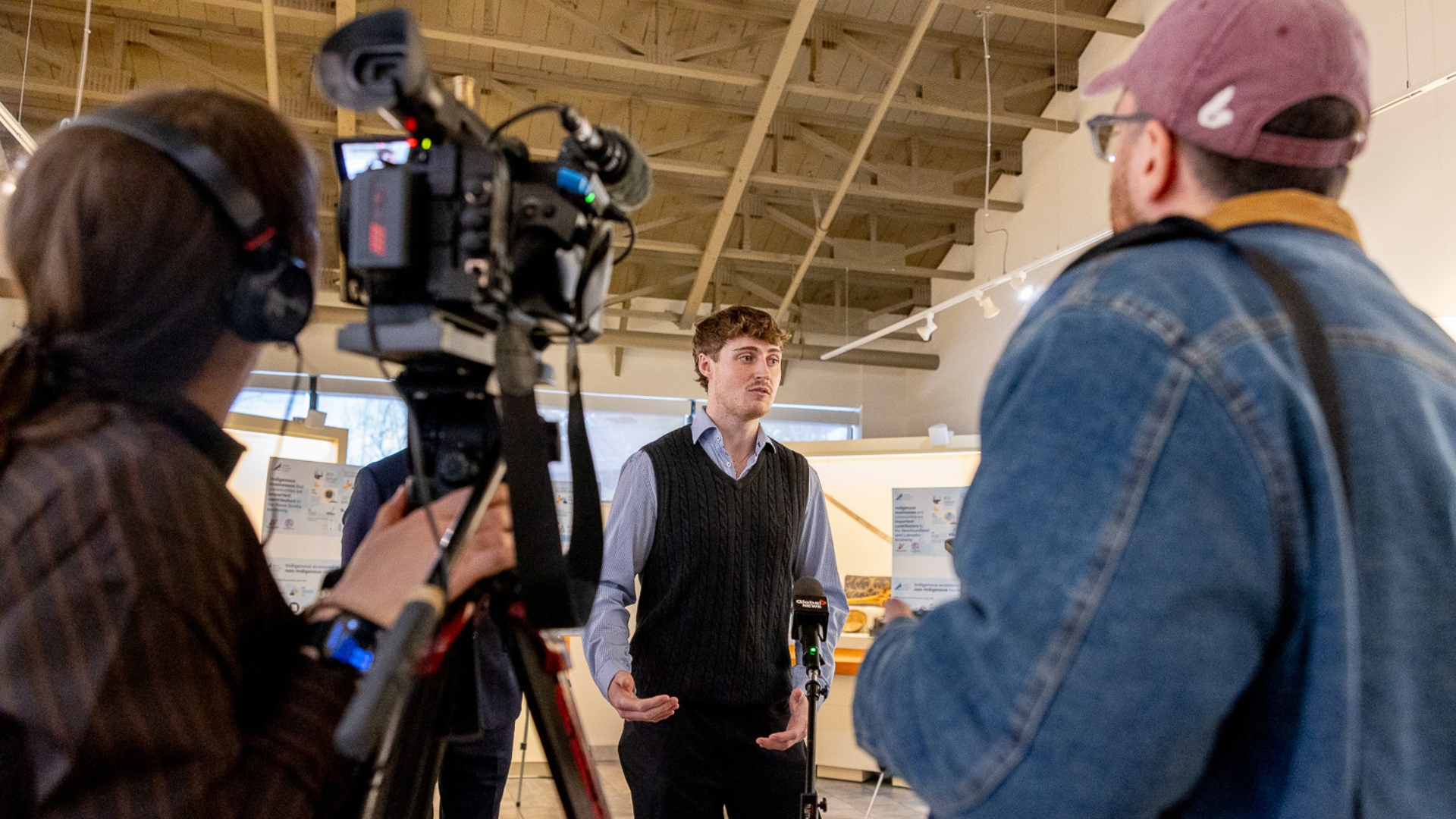
Second-year Commerce student, Emily Payne, said the experience reinforced the value of hands-on learning. She noted that they were able to experience how to create a product from scratch while engaging with professionals and entrepreneurs who offered a perspective that extended well beyond the classroom.
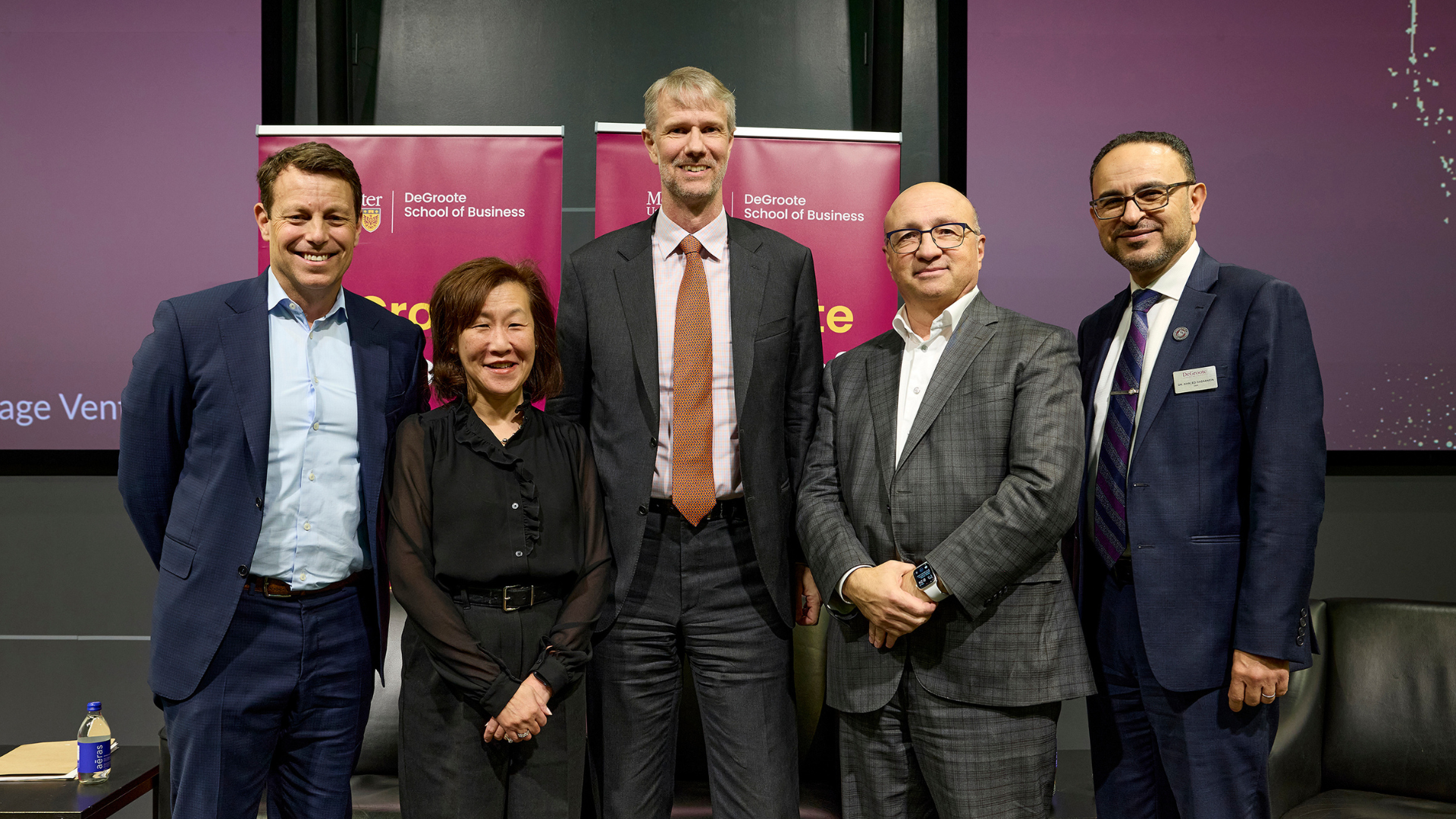
This kind of impact is exactly what Dean Khaled Hassanein envisioned for the DeGroote community as it pushed students to think critically about creating meaningful change.
“It makes the students think about how they can make a real impact, to address a social need, and to think about the elements that would make this actually work. ‘How am I going to market this idea? How am I going to fund this idea?’ Those are the hallmarks of a business leader.”
Meanwhile, for Aaron Schat, associate dean of Undergraduate Studies, the showcase offered a clear look at learning in action. “It was such an exciting day to hear the students share ideas they developed over the semester, to see the creativity, to see the collaboration and the excitement to share their ideas,” he said. “It represents a convergence of knowledge the students have gained combined with many different types of skills that students need for a variety of careers.”
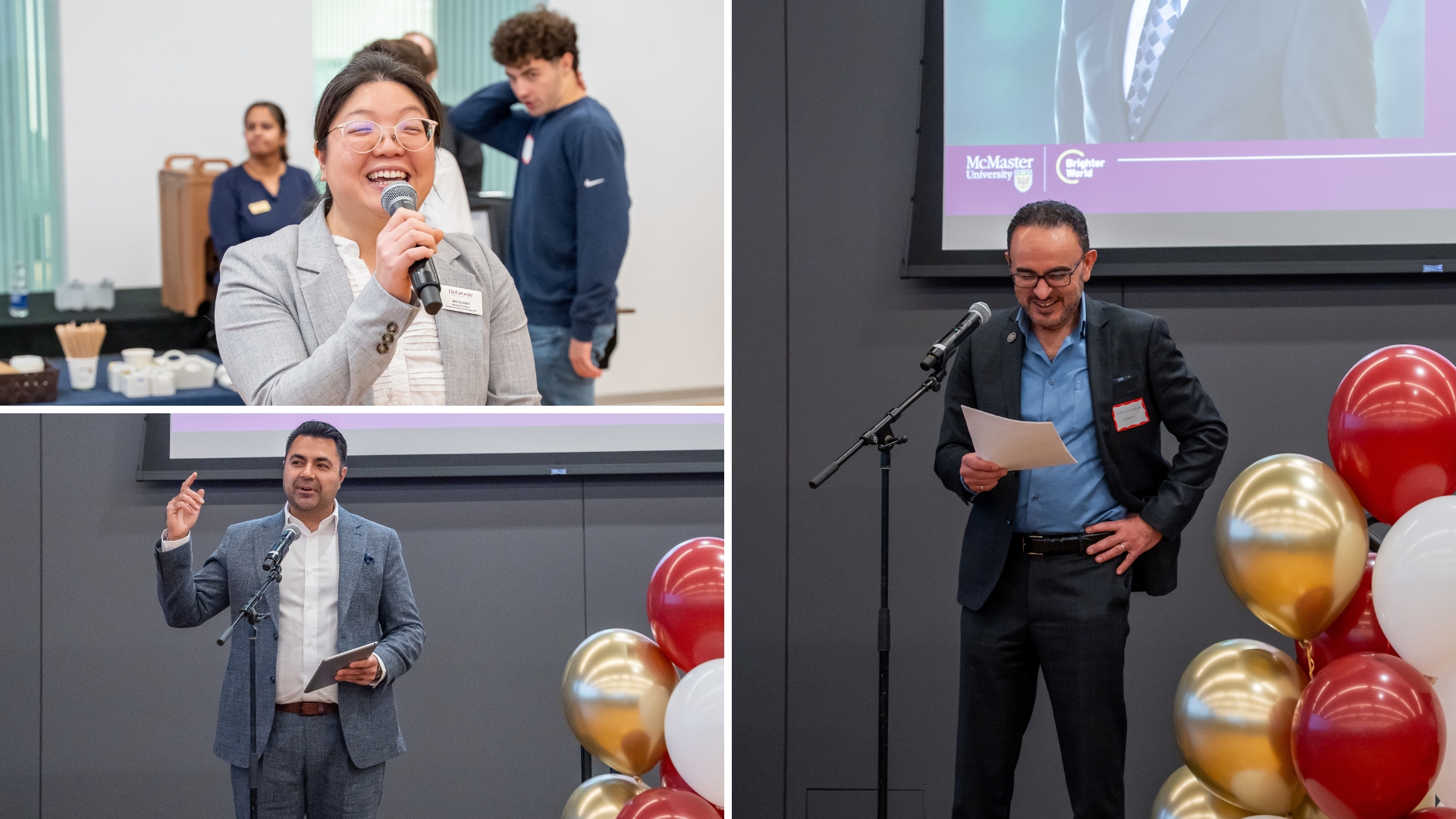
Across both afternoons, it was clear this was more than a showcase. It reflected a recalibrated program, a deeper commitment to experiential learning and a belief that students learn best when they are building something real.
In The Loft and CIBC Hall, ideas came alive through poster boards, prototypes and conversations that carried the buzz of possibility. Business ideas were recognized with awards, but the deeper achievement was watching ideas move from concept to application.
For DeGroote, this year’s GR0wth Venture Showcase marks a new chapter in experiential education. For the students, it marks the beginning of understanding the kind of thinkers, collaborators and leaders they are becoming.


It’s impressive to see second-year Commerce students tackling real-world challenges through the Social Impact and Sustainable Futures themes. These focus areas feel especially relevant as businesses are increasingly expected to balance innovation with responsibility.