

OPERATIONS MANAGEMENT STRATEGIC MANAGEMENT STRATEGIC PLAN | RESEARCH AND SCHOLARSHIP
Four planetary health research projects awarded $320,000 in seed funding
December 5, 2025 ·
Contributed by: Lisa Polewski, McMaster University
Four McMaster research projects focused on environmental sustainability and well-being have been awarded a combined $320,000 through the new Planetary Health Seed Grant initiative.
The grant provides researchers with up to $40,000 a year for two-year projects that align with the university’s planetary health priorities: Living labs, energy pathways, nuclear energy and medicine, and energy transition and electrification.
The grant supports collaborative research while also cultivating a training environment for undergraduate and graduate students, says Elkafi Hassini, planetary health academic lead and associate dean of research with the DeGroote School of Business.
“The funded projects are prime examples of research collaborations across multiple faculties that showcase a variety of approaches toward the mobilization of knowledge through both traditional and innovative pathways,” says Hassini.
Three of the four research projects chosen will be funded through the Planetary Health Initiative, while the fourth is supported by the faculties of Engineering, Science and Health Sciences, along with the Office of the Vice-President (Research).
These are the projects chosen for this funding:
(MAC2) McMaster’s digital twin: An AI-driven energy management system
Research team:
Wael El-Dakhakhni | Civil Engineering and School of Computational Science & Engineering | Faculty of Engineering
Anas Abdallah | Actuarial Science | Faculty of Science
Mahmut Parlar | Operations Management | DeGroote School of Business
Mohamed Ezzeldin | Civil Engineering | Faculty of Engineering
The researchers hope to make McMaster the first net-zero campus in Canada through the creation of an energy management system called MAC2, AI-powered technology that creates a “digital twin” — a virtual reproduction — of campus assets that is updated and calibrated in real-time through dynamic data and sensors.
The research team points out that McMaster, with its high energy demands, is a microcosm of the challenges faced globally when it comes to energy decarbonization.
The project uses the university as a living lab to demonstrate how AI-driven technology can boost energy efficiency and reduce emissions, ultimately supporting McMaster’s climate goals and offering a blueprint for sustainable energy systems in post-secondary institutions and communities at large.
An interdisciplinary living lab at McMaster Forest
Research team:
Emily Choy | Biology | Faculty of Science
Jessica van Horssen | History | Faculty of Humanities
Adrianne Xavier | Indigenous Studies | Faculty of Social Science
Rob Porter | Hamilton Naturalists Club
Matt Fuirst | Birds Canada/Long Point Bird Observatory
Noah Stegman | Nature at McMaster
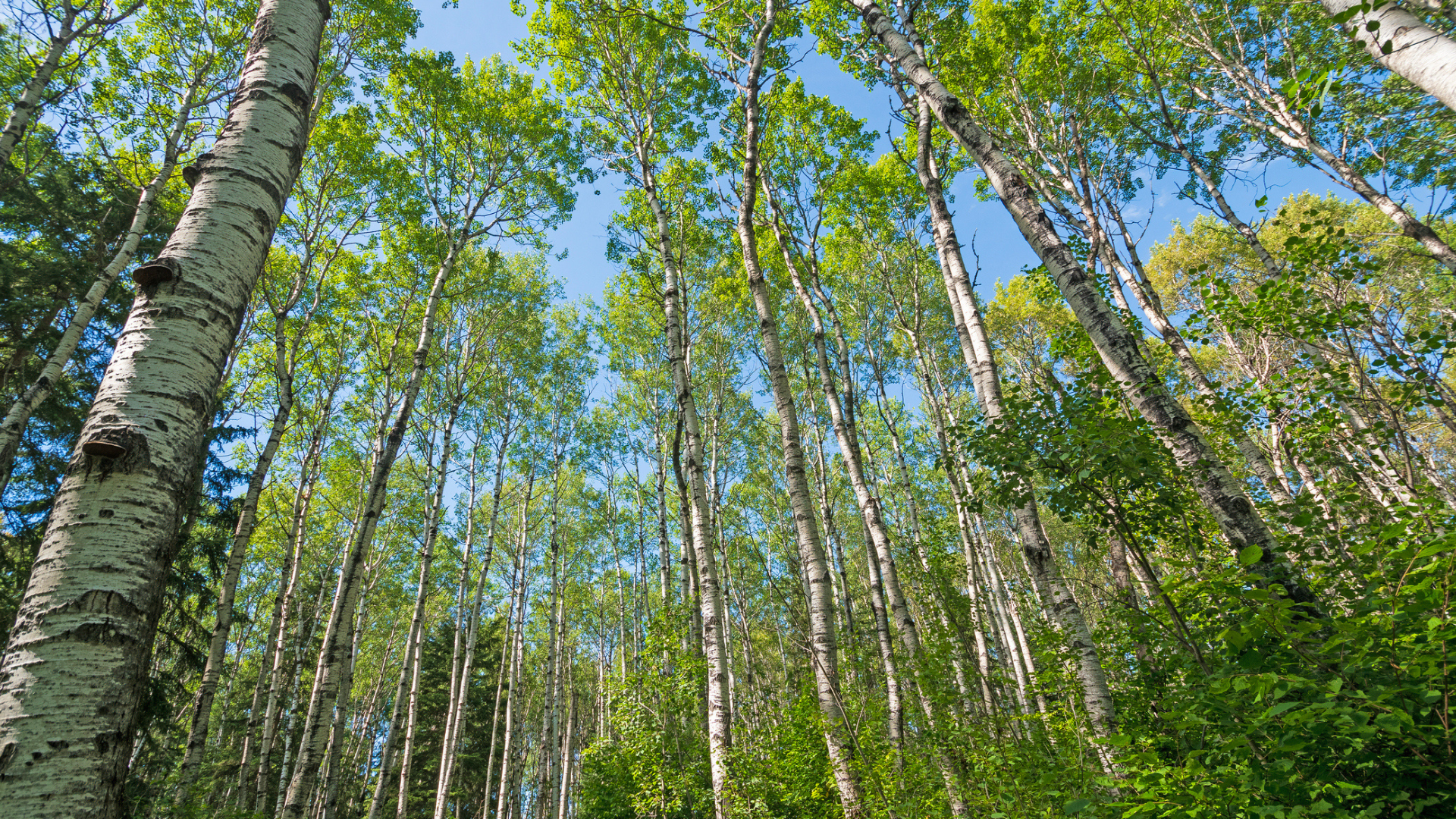
This project is focused on ecological restoration in the McMaster Forest Nature Preserve, a 115-acre plot of land purchased by the university in the 1960s. Researchers will create a McMaster Bird Observatory to study rare migratory songbirds.
They’ll also build a “story map” of the forest’s history and establish a food forest and Indigenous teaching garden with native plant species.
Integrated AI-driven modelling for sustainable nuclear waste management: A deep geological repository case study in Ignace, Ontario
Research team:
Goran Calic | Strategic Management | DeGroote School of Business
Alexander Peace | School of Earth, Environment and Society | Faculty of Science
Adedapo Awolayo | Civil Engineering | Faculty of Engineering
Jeremy Rimando | Canadian Nuclear Safety Commission
Researchers will evaluate the viability of Deep Geological Repositories (DGRs) to isolate spent nuclear fuel deep underground by specifically using Ignace, Ont., as a case study that will inform the potential use of other DGRs to store nuclear waste.
The project aims to establish safe, long-term nuclear waste storage as a cornerstone of sustainable energy initiatives and promote the role of nuclear energy in cutting carbon emissions.
Advancing theranostic applications of Holmium-166
Research team:
Michael Noseworthy | Electrical & Computer Engineering | Faculty of Engineering
Troy Farncombe | Medical Imaging | Faculty of Health Sciences
Soohyun Byun | Physics and Astronomy | Faculty of Science
This project leverages McMaster’s position as Canada’s nuclear university to look at the effectiveness of Holmium-166, a radioactive isotope used to treat liver cancer. The McMaster Nuclear Reactor is one of the world’s leading suppliers of Holmium-166 and researchers say the grant funding will lead to expanded use of the isotope.
The project also aims to attract and train the next generation of multidisciplinary nuclear specialists in the production of energy and isotopes, as well as enable the development of new drugs to treat cancer.