


OPERATIONS MANAGEMENT RESEARCH STRATEGIC PLAN | OPERATIONAL EXCELLENCE
New research is paving the road to recovery for patients in rehabilitation
August 4, 2026 ·
Contributed by: Izabela Shubair
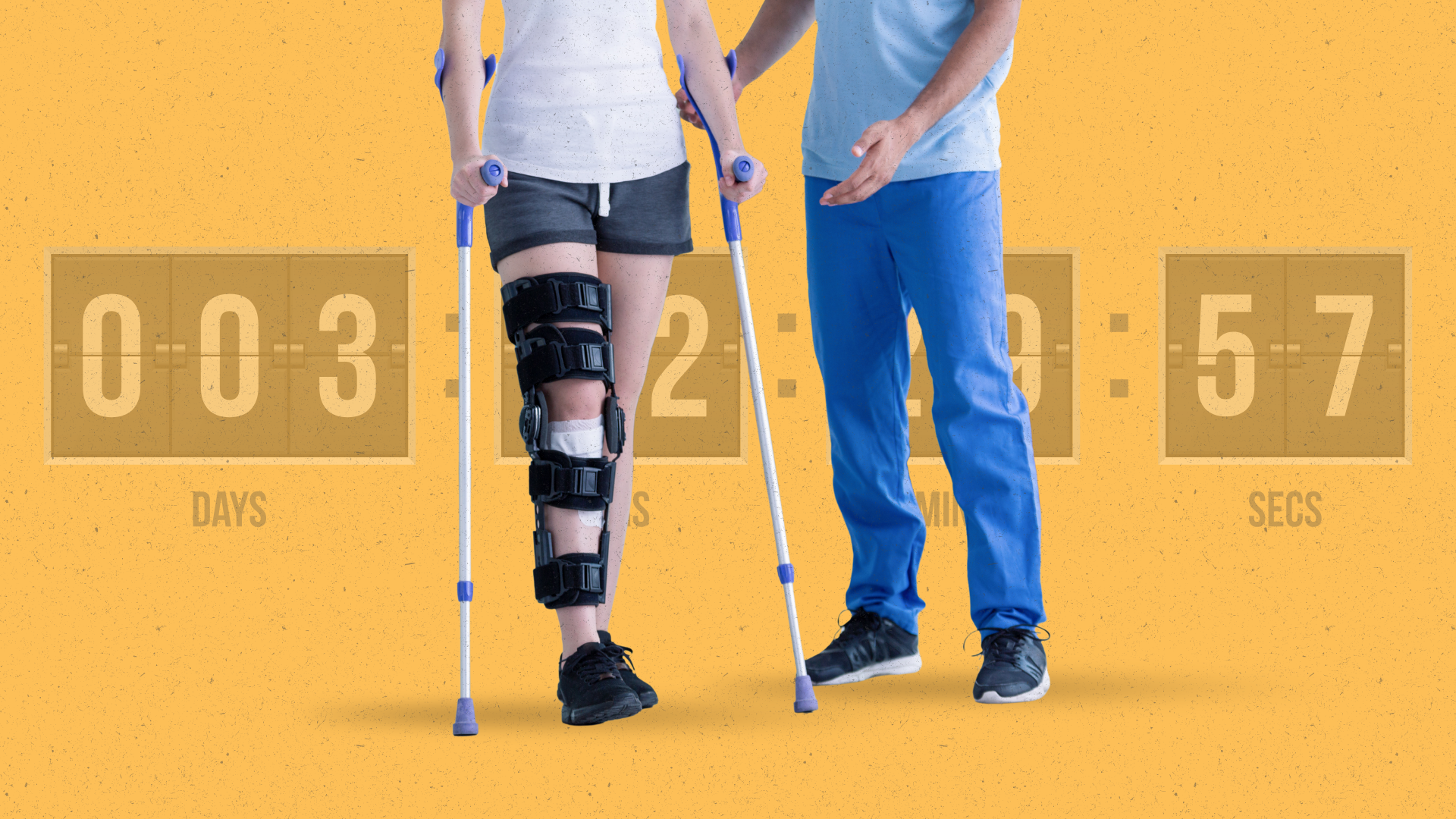
Three days. That’s how long, on average, patients across Canada waited for admission to rehabilitation care in 2024-25.
At first glance, the solution may seem obvious: add more rehabilitation beds. But what if capacity isn’t the only issue? That’s one of the questions that drives Berk Görgülü’s research. His recent work shows that rehabilitation delays are about more than wait times. They can change the demands placed on the health care system itself and have significant consequences for patients.
By examining how admission decisions are made and how patients move through rehabilitation care, Görgülü, an assistant professor of Operations Management, is exploring how hospitals can make better use of existing resources while supporting better outcomes for patients.
“If you run inefficient operations, you can add more beds, but that also means more nurses, more investment — and eventually those beds fill again,” Görgülü said. “There is the potential to make significant improvement in people’s lives if you can increase the efficiency in systems.”
Finding the hidden delays
To improve patient flow, Görgülü first set out to understand what was causing rehabilitation delays. While bed shortages were a factor, his team found that they were only part of the story. Before patients can move from acute care to rehabilitation, health care teams must complete a series of assessments, care plans and other coordination activities. Görgülü refers to this as “processing time.”
“If you have someone with a knee problem, rehab is more straightforward, and those patients move rather quickly,” Görgülü explained. “But if you have someone with a complicated condition that requires more communication, often they are delayed because doctors are busy, paperwork takes time and communication between teams can stall, and that creates a delay even if a bed is available.”
As Görgülü’s team began to understand the causes of rehabilitation delays, they uncovered another, unexpected finding. For some patients, waiting longer for rehabilitation meant spending longer time there once they were admitted. This created a self-reinforcing loop. As patients waited longer for rehabilitation, they required longer stays, increasing congestion throughout the system.
“Different groups experience this delay differently,” Görgülü said. “There are patients, usually neuromusculoskeletal patients — for example, hip surgery, leg surgery — who are required to start rehab as soon as possible. Otherwise, they lose mobility, which causes them to take longer to recover.”
Why health care isn’t a factory
That discovery led Görgülü to another question and additional research: if waiting affects different patients differently, who should receive the next available rehabilitation bed?
In most operational systems, Görgülü said, the order of work does not change the total amount of work required. He uses the analogy of a factory producing two different products. It doesn’t matter whether product A or product B is produced first. The total amount of work remains the same.
Rehabilitation care, however, doesn’t follow the same logic. When certain patients wait too long, their condition deteriorates. That means the order in which patients receive care can actually change the amount of work the system must handle.
Using health care data, Görgülü built a mathematical model to test different scheduling decisions and identify which approaches could reduce congestion. The model challenged the traditional first-come, first-served approach by showing that prioritizing patients most affected by delays doesn’t just reduce their individual wait time. It can prevent additional workload from accumulating over time and reduce delays for other patients.
Clinicians were already recognizing some of these patterns through experience, Görgülü said. However, those decisions were often made informally rather than through a standardized approach. His model provides a way to quantify that expertise and determine when different prioritization strategies can improve patient flow.
From theory to practice
Developing a model is only the first step. For it to support real-world health care decisions, hospitals need ways to integrate these approaches into existing workflows and ensure they complement clinical expertise.
“There is a human element in health care,” said Görgülü. “The decisions are very important and can have serious consequences.”
There is often a significant gap between developing a model and seeing it implemented as an app or other digital tool, although that timeline is shrinking, he added. For this type of approach to be adopted, health care teams need opportunities to test how it performs in real-world settings and understand how it can support — rather than replace — existing decision-making.
Beyond rehabilitation care, Görgülü sees opportunities to apply similar approaches in other areas where delays can affect patient outcomes, including emergency departments and intensive care units. The goal is not simply to build better models, but to create systems that help health care teams make better decisions when timing matters most.
“One thing I find motivating is that eventually it gets implemented. It may be your version, or someone takes it where you left off,” Görgülü said.



Very good to see this research. It reminds me of the research to show the higher costs that can result from sending patients home too early. So often rehab is a costly shambles, both in Canada & the UK. It is sometimes a lack of skills too. For that reason (and the delays mentioned), I suggested to a friend that he hire a personal trainer. It saved his life. Fortunately, he could afford it.