

OPERATIONS MANAGEMENT RESEARCH STRATEGIC PLAN | RESEARCH AND SCHOLARSHIP
Strait of Hormuz blockade will cause months of instability, expert warns
April 2, 2026 ·
Contributed by: Andrea Lawson, McMaster University
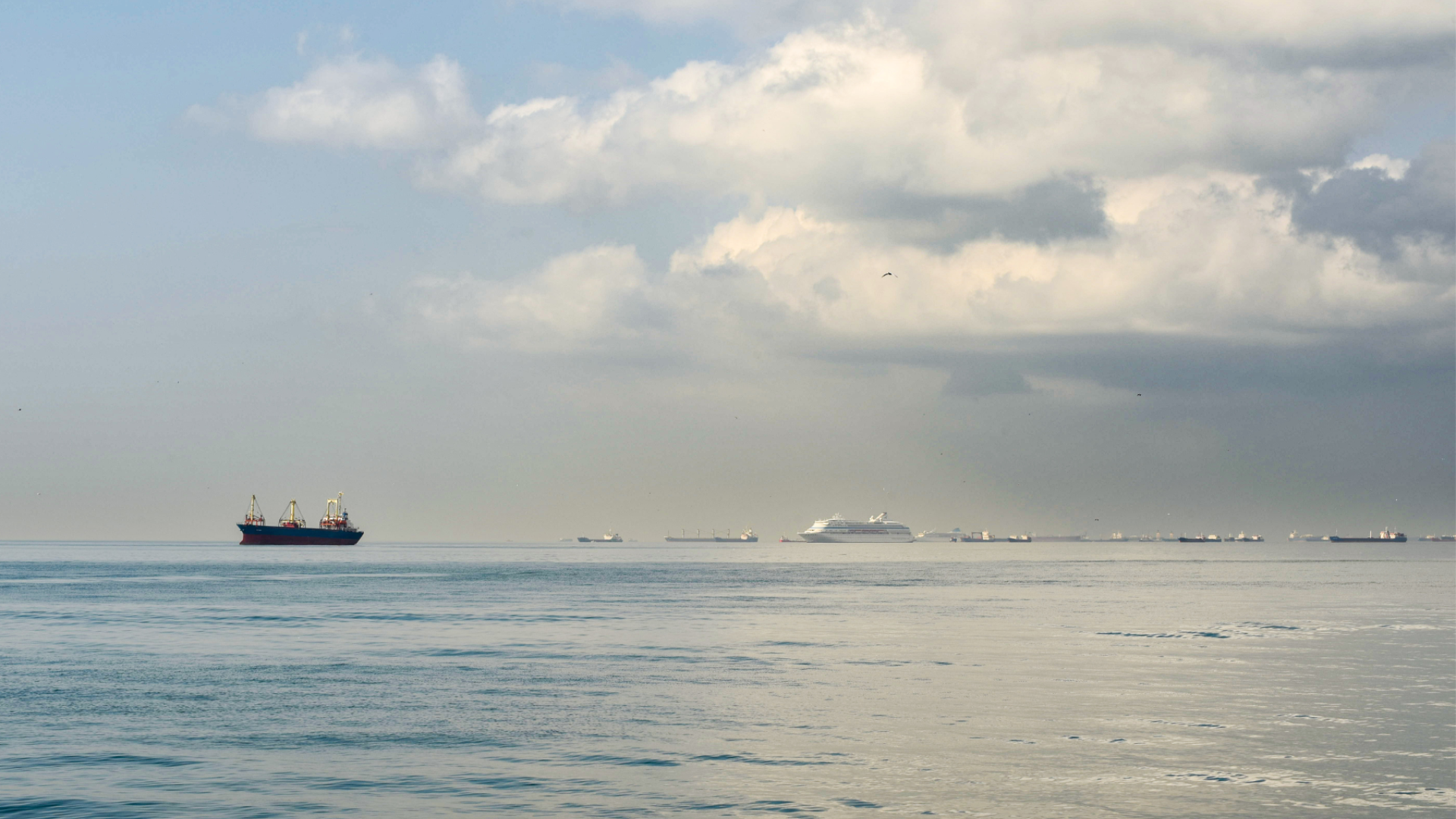
Uncertainty surrounding the Strait of Hormuz will persist long after the blockade lifts, with global markets facing months of instability, warns a McMaster supply chain expert.
“The disruption in the Strait of Hormuz is affecting every nation in some way,” says Behrouz Bakhtiari, assistant professor of Operations Management at the DeGroote School of Business.
As one of the world’s most critical maritime corridors, the strait’s closure has left countries and companies bracing for far-reaching and long-term economic consequences, he explains.
“Even if the Strait of Hormuz were to re-open tomorrow, the global impact would persist for months. Markets and supply chains will need time to stabilize, and as that process unfolds, several ripple effects are emerging across the supply and demand network.”
Bakhtiari answers questions and shares insights about the lasting impacts of the Strait of Hormuz blockade on global energy markets and food prices:
How is the disruption of the Strait of Hormuz (and the Middle East broadly) impacting global supply chains?
The most significant impact has been on global energy markets. With major energy supplies blocked, many experts are calling this the worst energy shock since the 1970s.
Oil and liquefied natural gas (LNG) are experiencing the greatest disruptions. The Middle East’s major oil producers sit around the Persian Gulf, and most of their exports must pass through the Strait of Hormuz to reach international waters.
Approximately 20 per cent of the world’s daily oil supply – about 20 million barrels — typically moves through the strait. The blockade has effectively removed that supply from the global markets, driving prices up sharply.
The situation for LNG is even more severe for countries that rely heavily on natural gas for heating, power generation and industrial use. Qatar and the UAE produce about 25 per cent of the world’s LNG, shipments which must pass through the Strait of Hormuz to reach their customers.
With LNG exports halted, governments worldwide are now facing shortages and rising prices, prompting emergency measures to ration and prioritize gas consumption.
Beyond energy, the blockade is disrupting the supply of nitrogen-based fertilizers such as urea. Qatar, Saudi Arabia and the UAE are major producers. They rely on the strait to move urea and ammonia to global markets. This is hitting farmers hard as the northern hemisphere enters the spring planting season.
Lower availability and higher input costs are expected to reduce crop yields and increase food prices by at least 10 per cent. Developed countries are among the most vulnerable to these fertilizer shortages.
Another critical but less visible impact is on helium and sulphur. A substantial share of global supply for both products comes from the Middle East, helium as a byproduct of LNG production and sulphur from oil and gas processing.
About 30 per cent of the world’s helium and 25 per cent of its sulphur typically move through the Strait of Hormuz. Helium is essential for semiconductor manufacturing and for operating MRI machines, while sulphur is used widely in producing fertilizers, batteries, detergents and cleaning products.
What ripple effects are you seeing or do you anticipate on global shipping networks?
From a supply chain perspective, multiple areas are already feeling the impact:
Effective capacity evaporation: Around 10 per cent of the world’s container fleet capacity is currently idle at the Strait of Hormuz. This effectively removes that capacity from global circulation, creating a gap that will take months to recover.
Container imbalance: Tens of thousands of empty containers are now sitting at ports across the Persian Gulf. Because these containers are not returning to major export hubs like China and Southeast Asia, we will see shortages across various supply chains, including ones without a direct connection to the Middle East, such as the transpacific route. Rebalancing global container flows will take considerable time.
Moving the bottleneck: As ports across Persian Gulf become congested or idle, pressure moves to other ports to move essential goods. This added strain can reduce global schedule reliability across many supply chains, an effect that will take months to stabilize.
Insurance and input costs: Measures such as emergency fuel surcharges caused by rerouting, higher inventory carrying costs from longer shipping times, risk surcharges and higher insurance premiums are sending shockwaves through supply chains. These costs are expected to remain elevated for months, and may never return to pre-blockade levels.
Shifting inventory mindsets: Disruptions of this scale undermine the just-in-time inventory models, which depend on predictability and efficiency. Both conditions are being hammered down by the disruption at the Strait of Hormuz.
Businesses that may have operated under just-in-time properties react by shifting to a just-in-case approach, keeping higher inventory and buffer levels to hedge against future disruptions. This risk-averse approach is more expensive and may take months, if not longer, for businesses to unwind even after conditions improve.
Bullwhip effect: The blockade has created ideal conditions for the bullwhip effect across multiple markets. As businesses brace for higher overall costs, they may opt for more conservative ordering decisions and inventory decisions, causing greater volatility at different stages of the supply chain. This effect is likely to linger even after the disruption in the region is resolved.
Given everything we saw during the pandemic, are companies better prepared for geopolitical supplychain shocks today?
Companies are generally more prepared for disruptions than they were before the pandemic. Many have invested in nearshoring and diversified their supplier networks to help absorb shocks. But the disruption at the Strait of Hormuz is unique. For several of the affected products, there are no cost-effective alternatives, and production is highly concentrated in the region. That makes it extremely difficult for suppliers elsewhere to step in and replace lost capacity.
Helium, for example, is a byproduct of natural gas processing, specifically during the production of LNG. Qatar, as one of the world’s leading LNG producers, is also a major supplier of helium. While there are other producers worldwide, manufacturing capacity and shipping constraints mean they cannot quickly make up the supply lost due to the blockade. Qatar has spent years investing in its production to be able to bring capacity to its current levels. Other players in the world cannot absorb the impact quickly and respond to the unmet demand.
Energy markets illustrate a similar challenge. The Middle East plays an outsized role in global oil and gas production, and every day that the Strait of Hormuz remains closed increases the risk of further price spikes.
The United States, along with 31 member nations of the International Energy Agency, has pledged significant releases from strategic oil reserves and has already begun shipping additional volumes to refineries around the world. But so far, markets remain unconvinced.
Neither the quantity nor the speed of these releases can match the preblockade flow of oil through the strait. The intervention may help slow the pace of price increases, but it is just a band-aid, as long as the strait remains closed.