

What does it mean to learn finance with real money?
October 27, 2026 ·
Contributed by: Justin Parker
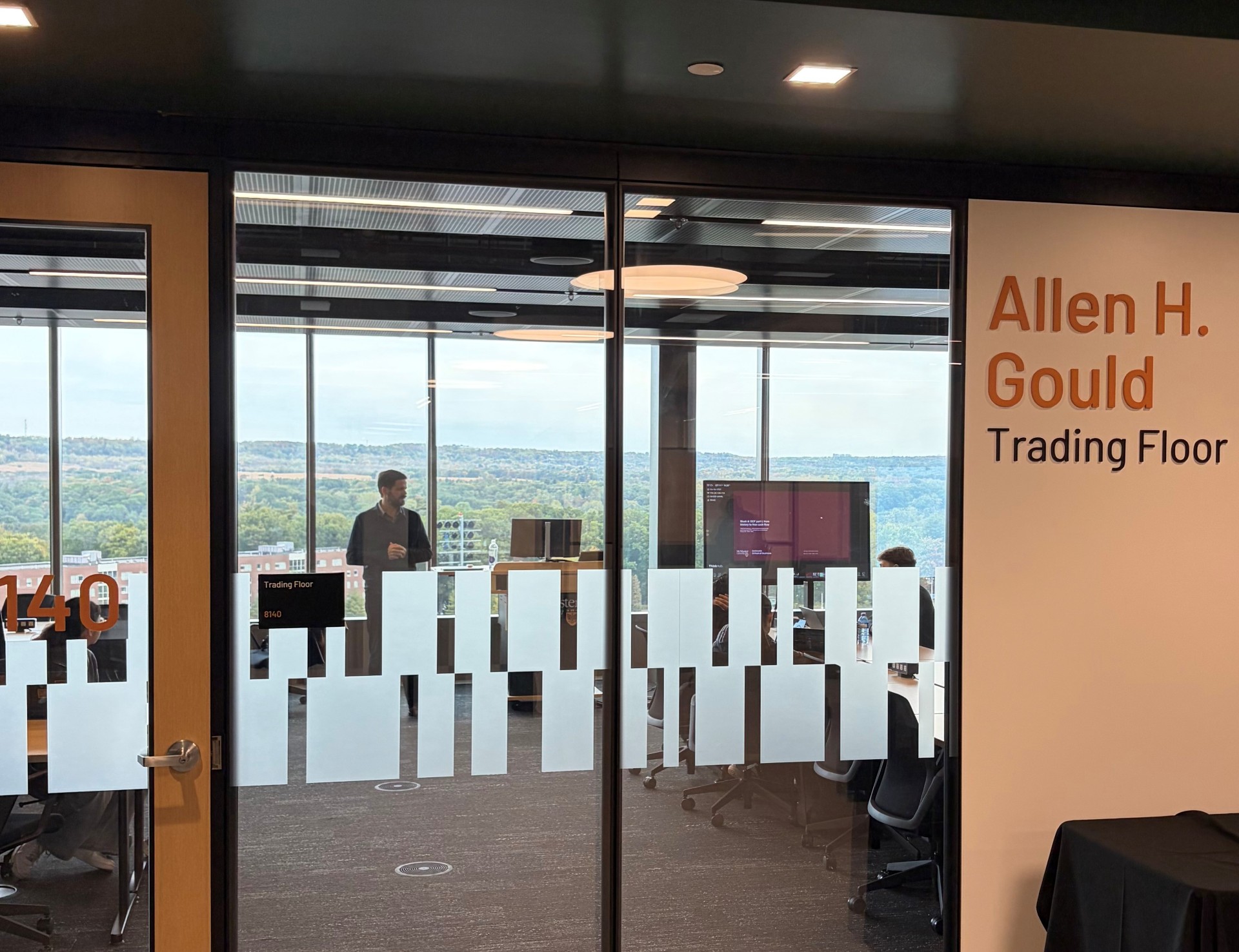
Finance is a discipline of decision-making. In the classroom, students can learn how to value a company, assess risk, construct a portfolio and evaluate an investment opportunity. Those concepts provide an essential foundation for a career in finance. The carefully designed curriculum of DeGroote’s Master of Finance (MFin) program delivers that framework.
But there is a difference between learning how an investment decision is made and actually having to make one.
The Master of Finance Investment Fund (MFIF) bridges that gap by giving MFin students the opportunity to apply their financial knowledge by working together to make investment decisions involving real capital. Rather than treating investing as a case-study exercise, students experience the processes, responsibilities and accountability that come with managing investments in a real-world environment.
From classroom theory to real decisions
The MFIF, utilized through two interactive courses, connects theoretical concepts from the program’s curriculum with the realities of investment management.
Students research companies and industries, analyze financial information, build valuations and develop investment recommendations. They learn to collect data from various sources, assess evidence, build valuation models, challenge assumptions and evaluate outcomes. But the process does not stop there. Just as importantly, students must learn to communicate their thinking and defend their conclusions.
This means valuations and risk assessments become complex assignments, and investment theses must withstand scrutiny, uncertainty and changing market conditions.
How students experience the investment process
One of the distinguishing features of the MFIF is that MFin students experience investing as a connected journey rather than a series of isolated exercises. It is designed to mirror the way investment decisions unfold in the real world.
“Graduates need to be comfortable working with data, models and technology, but they also need financial knowledge and professional judgment to understand what the analysis means, question its assumptions and make sound decisions.” — Dr. Yan Wang, Director, Master of Finance
Research and analysis
Every investment decision begins with understanding the opportunity. Students work in sector teams to research companies and industries, analyze financial information and investigate the factors that could influence an investment’s potential. They build valuations, assess risks and develop an investment thesis supported by evidence.
The process encourages students to look beyond individual metrics and understand the broader story behind a company. What is driving its performance? What could change the outlook? Is the market appropriately valuing the opportunity? What risks could undermine the thesis?
Presenting the investment case
Research is only useful if it can be turned into clear recommendations. Students pitch their analysis to the fund’s Management Committee, explaining the opportunity, valuation and investment thesis while identifying risks. Then they have to defend it.
The process gives students opportunities to respond to challenging questions, reconsider their assumptions and incorporate feedback. Students learn to communicate financial analyses in ways other decision-makers can understand and evaluate.
Portfolio management and monitoring
The work doesn’t end once an investment is approved. Students monitor holdings, track developments and evaluate whether an original investment thesis continues to hold. They consider whether their assumptions remain valid, whether the risk profile has changed and whether positions should be maintained, adjusted or exited.
Rather than analyzing static scenarios, students experience how portfolio management is an ongoing process.
Learning from outcomes
An important lesson in investing is that good decisions do not always produce good short-term results.
Markets are uncertain. Even a well-researched investment can perform differently than expected, while an investment based on flawed reasoning can generate positive returns.
As a result, students learn an important distinction: outcome and process are not always the same thing. Students must examine whether assumptions were reasonable, risks were properly assessed and new information was incorporated appropriately.
When you have to stand behind an investment decision, you learn to be more deliberate about the evidence supporting it, more aware of the assumptions behind it and more willing to revisit your thinking when circumstances change. This emphasis on process helps build discipline, humility and accountability — all essential qualities for investment professionals.
A fund that evolves with every cohort
Another exciting facet of the MFIF is its ability to extend beyond a single cohort. Each cohort will inherit an existing portfolio and track record, contributing its own research and decisions before passing that experience to the next cohort.
Over time, the fund effectively becomes a living record of student investment decisions while creating opportunities for continued engagement with industry professionals and alumni.
Where finance, technology and judgment come together
The Investment Fund also reflects the updated MFin curriculum, which brings together three important capabilities: finance knowledge, technical fluency and professional judgment.
Students build a strong quantitative foundation through areas such as machine learning, econometrics and data analytics. They can then apply those skills alongside their investment management training.
The goal is not to use technology simply because it’s available, but to understand how modern tools can inform financial decisions, while questioning assumptions and interpreting what the results actually mean.
“Anyone can build and run a model. What we are teaching students to do is exercise the judgment to know when to trust it, and develop the conviction to stand behind a call with real capital on the line. That is the job, and thanks to the strong foundation the MFin program gives them, our students are doing it from day one, walking into their careers already having done the work rather than just studied it.” — Ian Finlay, TMX Industry Professor
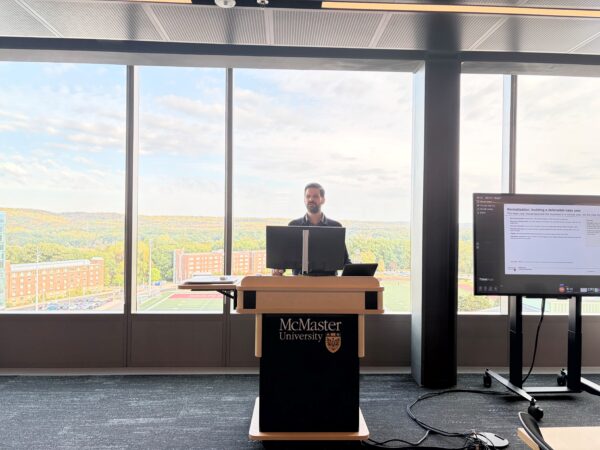
Learning finance by applying it
The value of the Investment Fund is ultimately not just about managing a portfolio. It’s about experiencing what happens when financial knowledge becomes an action.
This reflects a broader goal of the MFin: preparing graduates who have learned finance and applied it to real-world problems using modern analytical tools.
As Dr. Yan Wang puts it: “You will graduate with strong financial knowledge, practical experience, professional judgment and the skills to contribute from day one.”
Explore the Master of Finance program and see how experiential learning is integrated into the curriculum.