

MCCD STRATEGIC PLAN | TEACHING AND LEARNING
Experiential learning as a response to rupture
June 9, 2026 ·
Contributed by: Sarah King (McMaster University) and Jessica Riddell (Bishop's University), Academica Forum

Republished with permission. This article originally appeared in Academica Forum’s series Illuminating Hope. Read the original article.
In times of uncertainty, universities tend to default to ivory tower logic: Higher fences, narrower mandates, scarcity thinking, and compliance metrics. We guard the status quo and hope that our legacies, endowments, and histories will insulate us.
But nostalgia, as Prime Minister Mark Carney told the World Economic Forum in Davos, is not a strategy. Higher education leaders must lead with courage and counter scarcity with hope. To respond to rupture, we must first confront a set of uncomfortable truths.
The social contract that has long underpinned higher education is fraying. For decades, the promise was clear: earn a degree, secure stable employment, and build a life of upward mobility. That linear pathway has broken down as the labour market is being reshaped by AI, geopolitical instability, and economic realignment.
Universities can no longer promise a straight pathway from enrolment to employment, nor should we define our purpose so narrowly. In a world defined by volatility, preparing “job-ready” graduates is insufficient; the metaphors of talent pipelines and career ladders no longer fit. Technical skills and disciplinary knowledge will not be sufficient to thrive in this new world; the challenge before us is to instead cultivate ‘future-prepared’ graduates with agility, reflective capacity, and collaborative skill sets.
To achieve this, universities need to help students build connections and knowledges that help them make sense of who they are and who they are becoming in a world that is also shifting rapidly. We must help graduates become humans who can navigate uncertainty: who can think critically, act collaboratively, reflect deeply, and engage meaningfully with the world around them. In other words, what is required is not just education for employment, but education for participation in a complex, interconnected civic life.
The Solution: Experiential Learning
In short, we need experiential learning (EL), not just as a tool of employability, but also as a civic pedagogy.
Conversation and debates in higher education have too often framed experiential learning (EL) and work-integrated learning (WIL) as competing agendas or pedagogies: the latter aligned with employability and labour market outcomes, the former with critical, community-engaged, and transformative education. However, this is a false dichotomy, one that is largely a product of language, not practice. WIL is a form of EL rather than a competing concept. EL and WIL share important similarities: Both have emerged from a body of theory and scholarship that has proven their enduring potential to help students develop the skills they need for life outside the academy. They both allow students, community & industry partners, and institutions to engage in the collective work of integrating knowledge, reflection, and action in authentic contexts. And they share a common foundation in praxis: Paulo Freire’s term for the recursive process through which theory informs application and application reshapes theory.
Praxis positions experiential learning not as a compromise between competing educational aims, but as a unifying pedagogy that advances both economic and civic prosperity. When we re-center praxis, we can move beyond unproductive binaries and focus on providing the learning experiences that can prepare students for meaningful work while also cultivating their capacities as thoughtful, engaged citizens.
To do this, universities can draw on experiential learning and WIL, intentionally positioned for praxis, to bring students into relationship with communities, industries, and knowledge holders as co-educators and co-creators. Praxis positions experiential learning not as a compromise between competing educational aims, but as a unifying pedagogy that advances both economic and civic prosperity.
In this way, universities can mirror Carney’s call for Canada to build “a dense web of connections,” by becoming the sites where students learn to wrestle with complex problems alongside others across disciplines, sectors, and communities.
Importantly, students themselves are already pointing us in this direction.
A generation ago, students asked: What will university do for me? How will it prepare me for a stable future?
Today’s students are asking a different question: If not me, then who?
This generation has come of age amid financial crisis, a global pandemic, climate emergency, and the rapid rise of generative AI. They do not expect certainty and they want to be able to change the systems they are entering into. They want learning that is immediate, applied, and meaningful. They want opportunities to test ideas, to contribute, to fail safely, and to try again. They are less concerned with linear career pathways and more interested in building the capacities to navigate and co-create multiple, unpredictable futures.
If universities cannot meet them in this moment, the question becomes unavoidable: if not us, then who?
An Example: Experiential Learning at McMaster
At McMaster University’s DeGroote School of Business, we are attempting to answer that question by leaning into hope as a deliberate strategy.
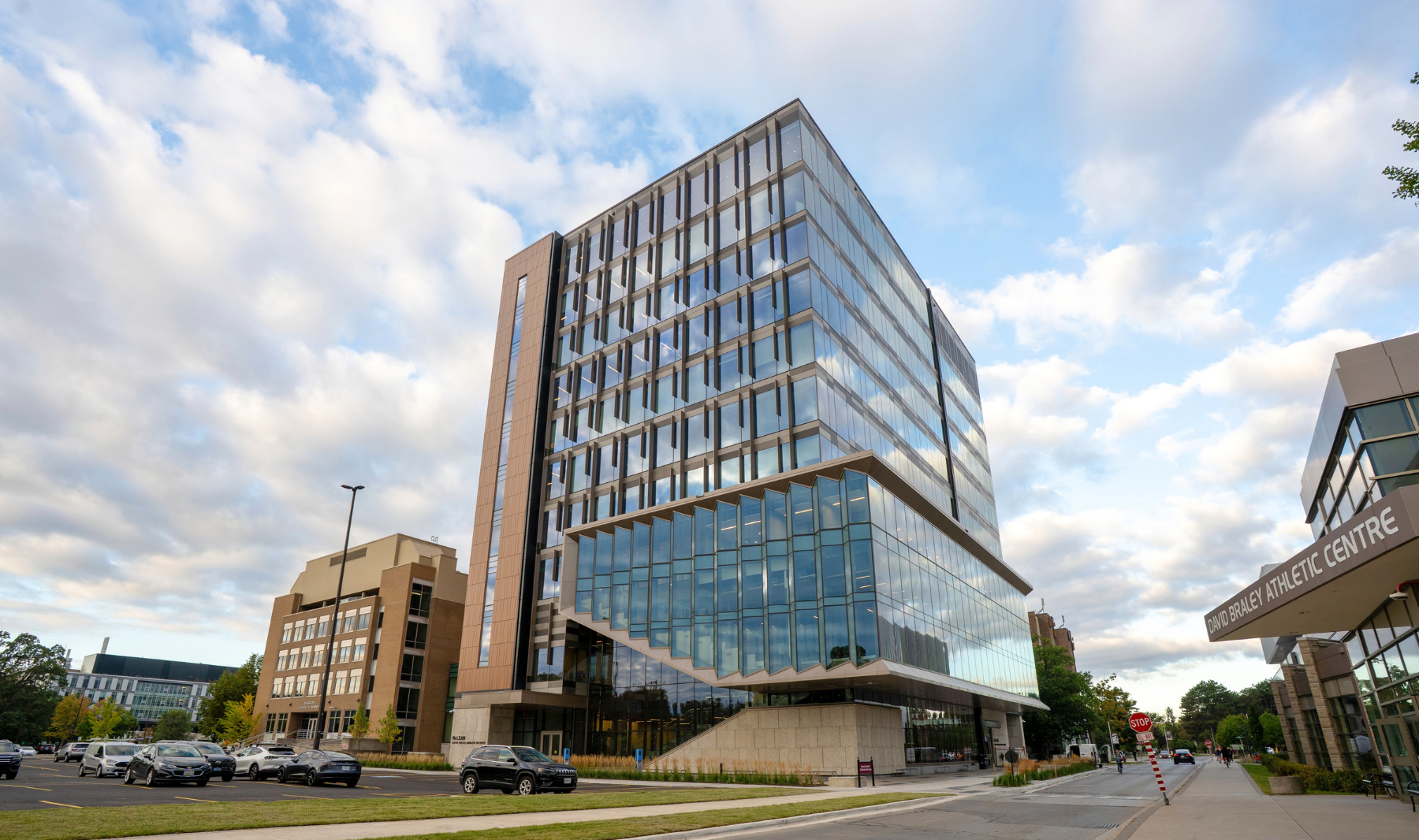
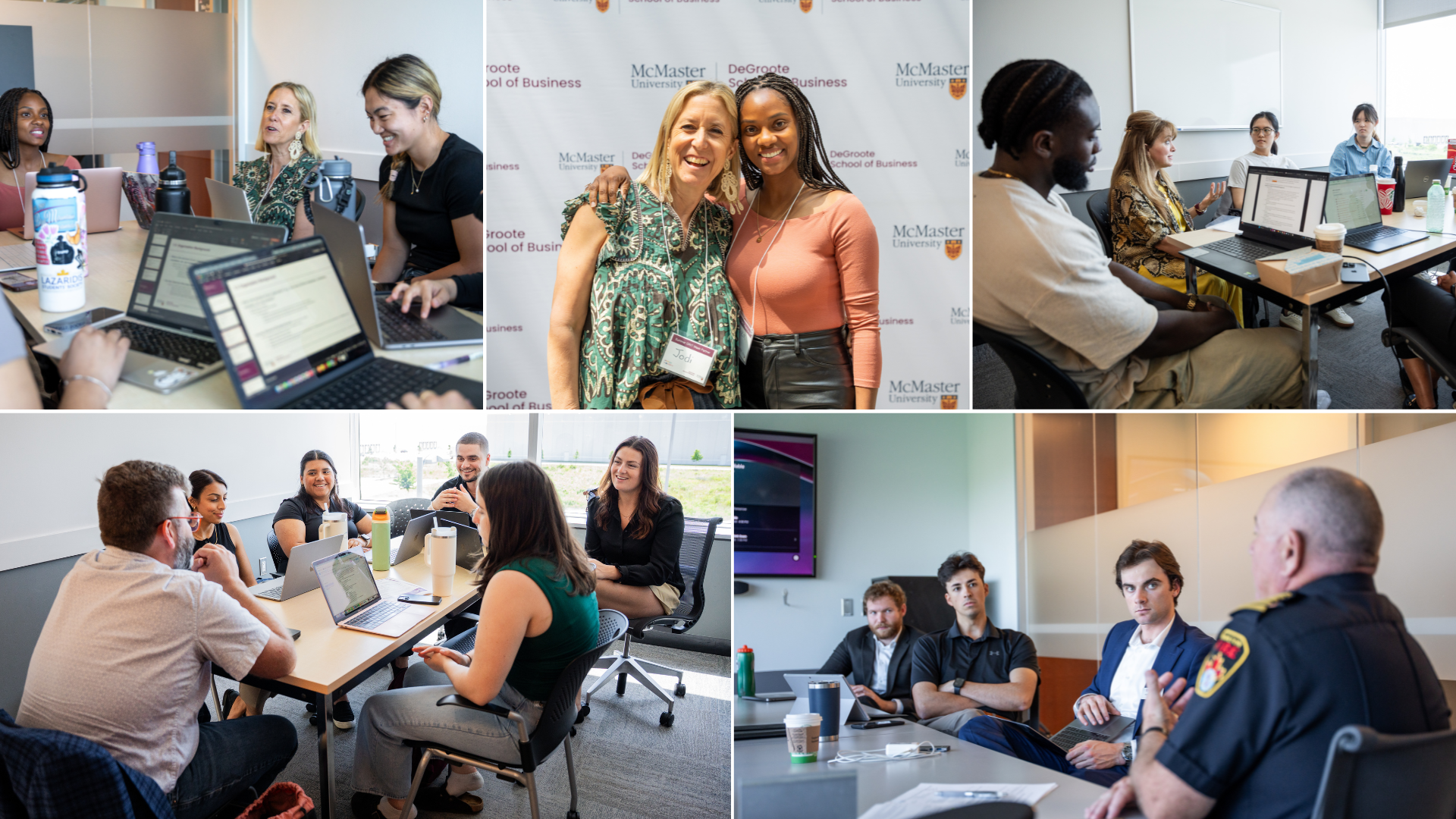
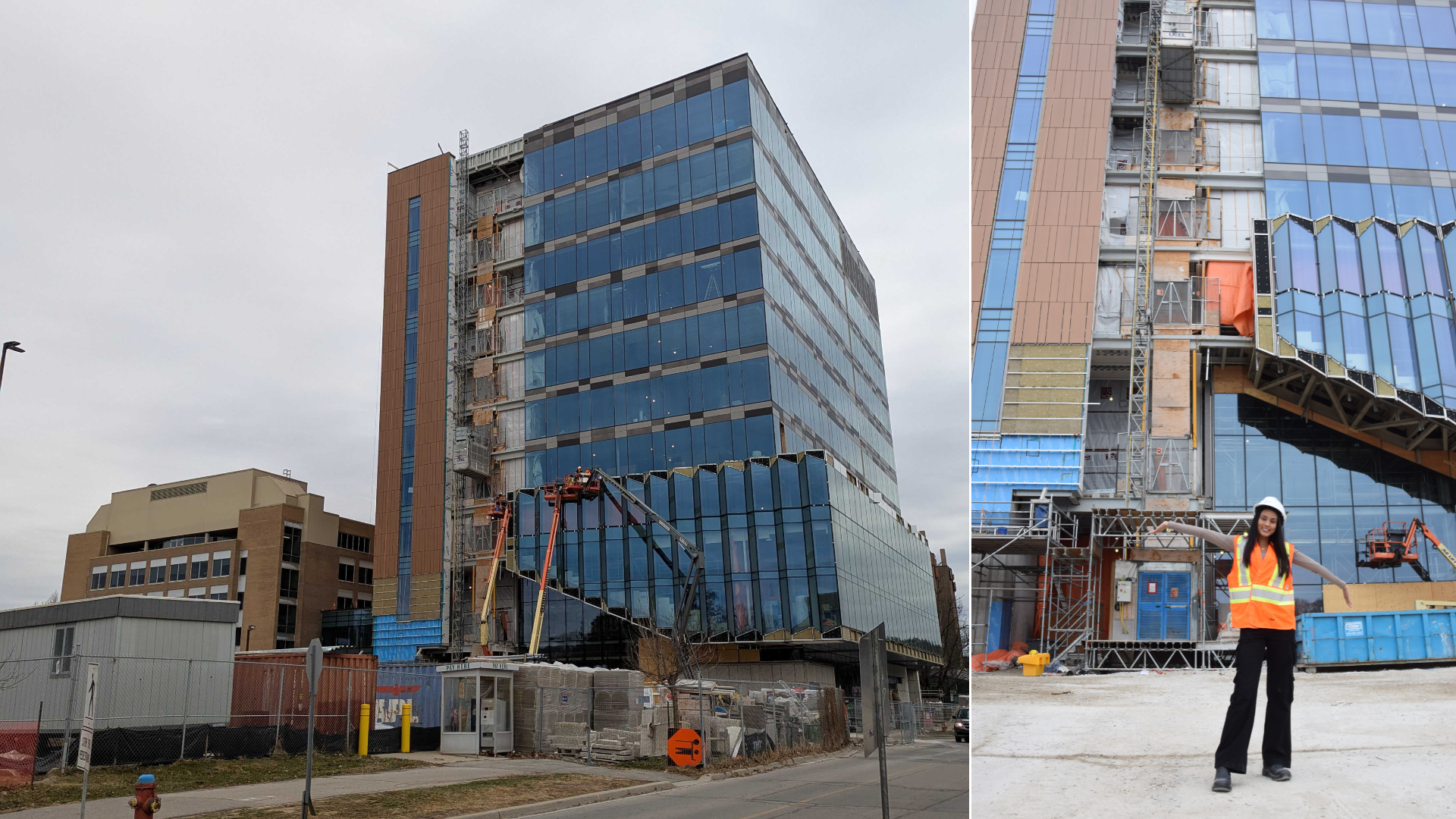
Currently, we are developing a new facility—the McLean Centre for Collaborative Discovery—that will be a place where experiential and discovery-based learning are enacted as praxis within an ecosystem that engages students, faculty, staff, and community and industry partners as co-educators and co-creators.
The McLean Centre’s approach will lean into the civic DNA of the City of Hamilton—entrepreneurial energy, an ethos of grit and resilience, and a culture of building and rebuilding—to offer a place focused on complex civic challenges, interdisciplinary collaboration, and shared stewardship. We will convene industry/community partners to surface ‘wicked’ problems that cause disruption across sectors. Those problems will be used to inform experiential and discovery-based learning activities in curricular and co-curricular contexts—including hackathons, venture labs, and short-term community- and industry-partnered projects—where students will take the lead on tackling the challenges. The resulting knowledge will be returned to industry/community through co-created deliverables and solutions.
The concept relies on an ecosystem of co-educators and co-creators:
- Faculty will play a central leadership and design role, with programming organized around project milestones, partner engagement, and moments of synthesis rather than traditional lecture schedules.
- Staff will help steward networks of community & industry partners, support educational development, and train students to deliver peer-led programming.
- Community and industry leaders will join the McLean Centre as Experts, Executives, and/or Entrepreneurs-in-Residence, ensuring that knowledge is not siloed or gatekept within the institution.
- Students will collaborate across disciplines to research, prototype, and refine solutions to real problems identified with partners, generating work that has immediate relevance while contributing to longer-term civic and economic flourishing in the region. They also can claim academic credit for these experiences through courses offering structured reflection and assessment, in which they articulate how their engagement has developed both civic capacities and the employability capabilities needed in this moment of rupture.
In this ecosystem model, praxis is not an abstract concept but a lived practice that connects the university to Hamilton in meaningful ways while preparing students to contribute thoughtfully and effectively to the communities they are part of. This is what experiential learning as civic pedagogy looks like in practice. It is not an add-on or a programmatic feature. It is a reorientation of the university itself toward community, toward complexity and toward the co-creation of more hopeful futures.
Final Thoughts
The stakes of this moment are high. It would be easy for universities to think they can wait out these unprecedented times. But the unprecedented is becoming precedence. If we preserve what is familiar, we risk accelerating our own decline. An institution’s size and legacy make us unwieldy, less nimble and less agile — but agility and flexibility are the very characteristics that will see us through a sea change in our sector.
Universities now face a choice. We can hope that isolation and insulation protect us from obscurity. Or we can embrace our responsibility as civic institutions: to cultivate imagination, to build connections and to prepare graduates not just to succeed within existing systems, but to reshape them.
Experiential learning, understood as a civic pedagogy, offers a path forward. It equips students, communities and institutions alike to navigate rupture and to imagine and collectively build what comes next.
Sarah King is the Manager of Academic Experiential Education at McMaster University, as well as a key architect of the DeGroote School of Business’s experiential learning strategy.
Jessica Riddell is a Full Professor of Early Modern Literature in the English Department at Bishop’s University (Québec, Canada). She holds the Stephen A. Jarislowsky Chair of Undergraduate Teaching Excellence and leads conversations about systems-change in higher education that shift the focus from resilience to human and ecological flourishing. She facilitates dialogue at the national and international levels about how universities fulfil their public purpose. Her recent book, Hope Circuits: Rewiring Universities and other Systems for Human Flourishing (McGill-Queen’s University Press, 2024), is an expansive call for the reinvention of universities and the renewal of their social contract.



This is a wonderful initiative that will essentially benefit all parties, because the focus is to provide solution for both employees and the industry which will eventually benefit the society in moving with the changes that arises at various times.