

RESEARCH SOCIETAL IMPACT STRATEGIC PLAN | RESEARCH AND SCHOLARSHIP
McMaster recruits five top scholars from American universities
August 27, 2026 ·
Contributed by: McMaster University
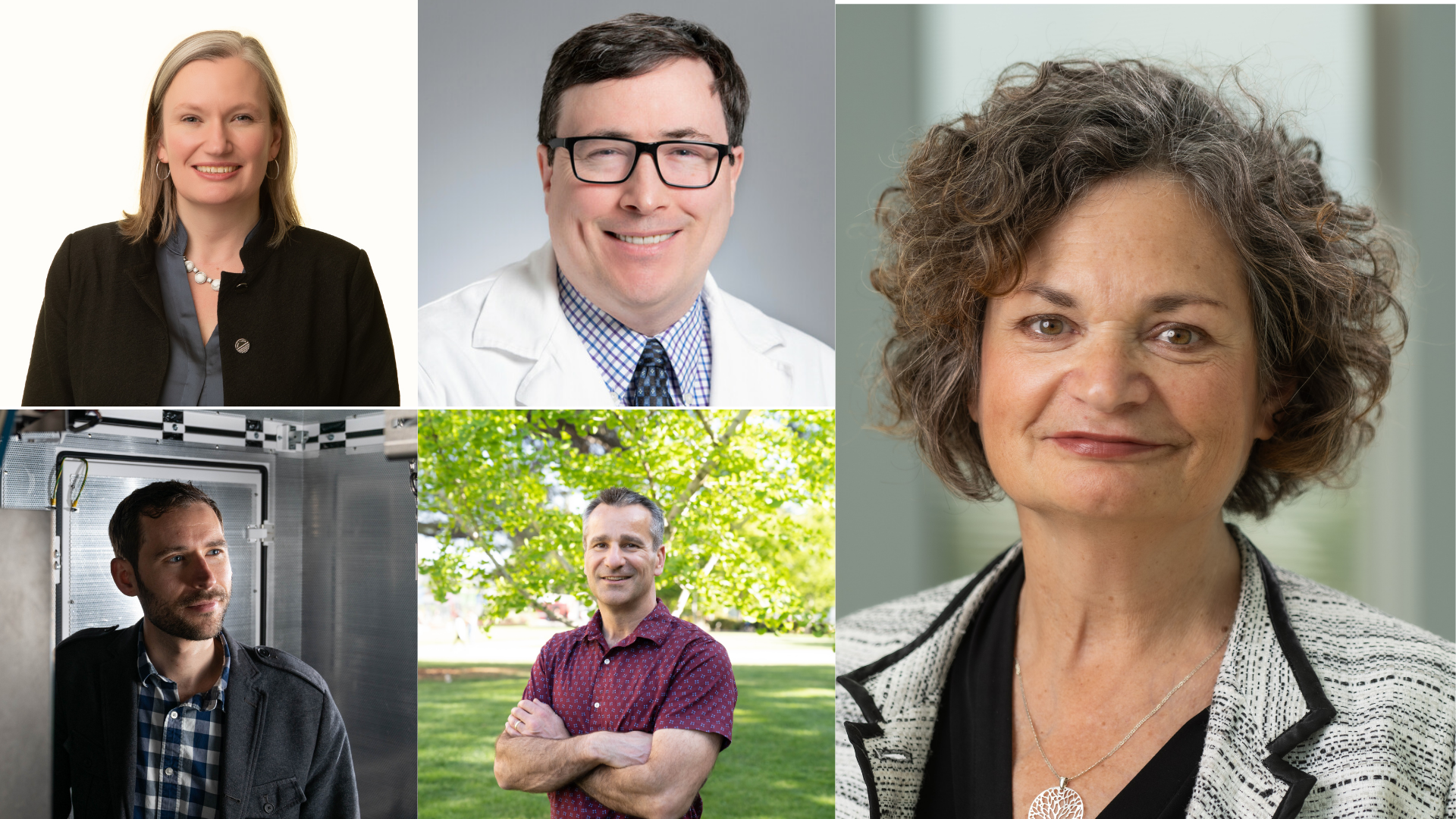
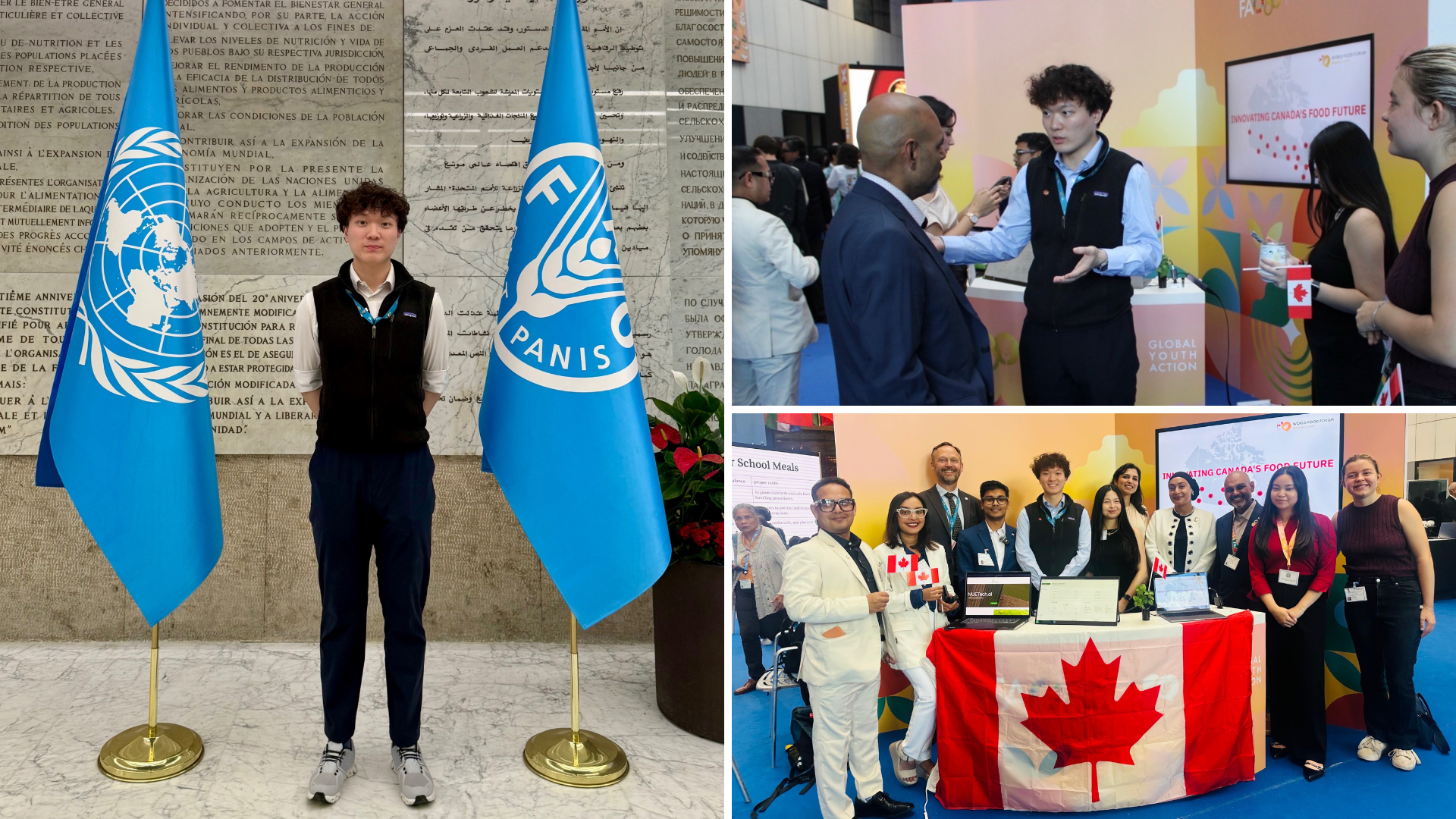
The new Eddie Goldenberg Research Chairs will work alongside McMaster faculty and students to advance cutting-edge research in radiopharmaceuticals, advanced materials and technologies, musculoskeletal health, and social innovation. L-R, clockwise: Suzanne Lapi, Jonathan McConathy, Charlene Zietsma, Keith Baar and James LeBeau.
Five globally recognized researchers from the United States will join McMaster University as Eddie Goldenberg Research Chairs of Canada.
Each chairholder will be awarded $8 million over eight years to lead a high-impact research program at McMaster, while helping to train the next generation of research leaders.
Formerly known as the Canada Impact+ Research Chairs, the program was renamed in July 2026 in honour of the late Eddie Goldenberg, a distinguished public servant and former chief of staff to Prime Minister Jean Chrétien. The program is intended to attract leading international researchers to Canada and strengthen Canada’s research ecosystem.
The five McMaster chairholders will bring expertise in radiopharmaceuticals, advanced materials and technologies, musculoskeletal health, and social innovation, creating new opportunities for collaboration across disciplines and with partners in government, industry, health care and Canadian communities.
McMaster’s President, Susan Tighe, says the appointments reflect the University’s reputation as a world-leading research institution.
“We’re thrilled to welcome these five internationally recognized researchers to McMaster University, where they will work alongside our exceptional faculty, staff and students to advance research with real-world impact,” she says.
“Together, the Chairs and their teams will develop solutions to some of our most pressing global challenges while helping to strengthen Canada’s capacity for research, innovation and economic growth.”
The Chairs are part of the Government of Canada’s $1.7-billion Canada Global Impact+ Research Talent Initiative, a 12-year investment designed to attract and support more than 1,000 leading international and expatriate Canadian researchers.
The federal government announced today at University of British Columbia that 64 Chairs have been awarded to researchers from 13 countries in the first phase of the Eddie Goldenberg Research Chairs program, representing an investment of $504 million.
“At a time when parts of the world are turning away from science, Canada is doubling down. Attracting top talent will deliver breakthroughs that improve Canadians’ lives and advance Canada’s position as a global leader in science and innovation.
“By expanding Canada’s talent pipeline and research capacity in areas that are vital to our prosperity and sovereignty, we are helping build the strongest economy in the G7,” says the Honourable Mélanie Joly, Minister of Industry and Minister responsible for Canada Economic Development for Quebec Regions.
In addition, McMaster was awarded five Canada Impact+ Emerging Leaders awards, totalling $3 million over six years.
McMaster’s five Eddie Goldenberg Research Chairs of Canada are expected to join the University between September 2026 and July 2027, pending McMaster University governance approvals.
Here are the new Chairs.
Suzanne Lapi, Chair in Isotope Production and Radiopharmaceutical Innovation
Lapi will join McMaster’s Faculty of Science from the University of Alabama at Birmingham, bringing expertise in isotope production, radiopharmaceutical design, advanced imaging and therapeutic strategies. At McMaster, she will lead a molecular imaging and theranostics program, leveraging the University’s world-class nuclear facilities and leadership in nuclear medicine to advance new radioisotope-based approaches to patient care.
Jonathan McConathy, Chair for Molecular Imaging and Nuclear Theranostics
McConathy will join McMaster’s Faculty of Health Sciences from the University of Alabama at Birmingham. His research program will accelerate the development, translation, clinical evaluation and commercialization of radiopharmaceuticals for diagnosing and treating cancer and neurological diseases in Canada and internationally, leveraging McMaster’s strengths in nuclear sciences, radiochemistry and translational health research, alongside Hamilton Health Sciences’ and St. Joseph Healthcare Hamilton’s clinical research infrastructure and expertise.
James LeBeau, Chair in Quantitative and AI-Enabled Electron Microscopy for Quantum and Advanced Materials
LeBeau will join McMaster’s Faculty of Engineering from the Massachusetts Institute of Technology. He will lead fundamental research on materials for the next generation of batteries, semiconductors and quantum devices. Using state-of-the-art electron microscopes and research facilities at McMaster, LeBeau will strengthen Canada’s leadership in quantum and advanced materials while offering novel techniques and datasets to the global community.
Keith Baar, Chair in Musculoskeletal Longevity
Baar will join McMaster’s Faculty of Science from the University of California, Davis. His research program at McMaster will focus on understanding, developing, and testing treatments for musculoskeletal pain caused by tendon injury. Baar will study how tendon composition changes as a function of genes, exercise, nutrition and age, with the goal of helping people move better at any age and enhancing quality of life.
Charlene Zietsma, Chair in Catalyzing Ecosystems for Sustainable Futures
Zietsma will join McMaster’s DeGroote School of Business from the University of Michigan. Her research program will explore how researchers, entrepreneurs, industry, governments and communities can work together to address complex societal challenges, including decarbonizing supply chains and advancing affordable housing. Her work aims to develop better solutions to systemic problems, mobilizing McMaster research in society and raising the profile of Canadian research globally.
The first phase of the Canada Impact+ Research Training Awards was announced earlier this year, with McMaster set to welcome 22 top doctoral and postdoctoral researchers to campus as part of the program.
This article was originally published on McMaster News. Read it here.