

Are you afraid to fail?
March 26, 2026 ·
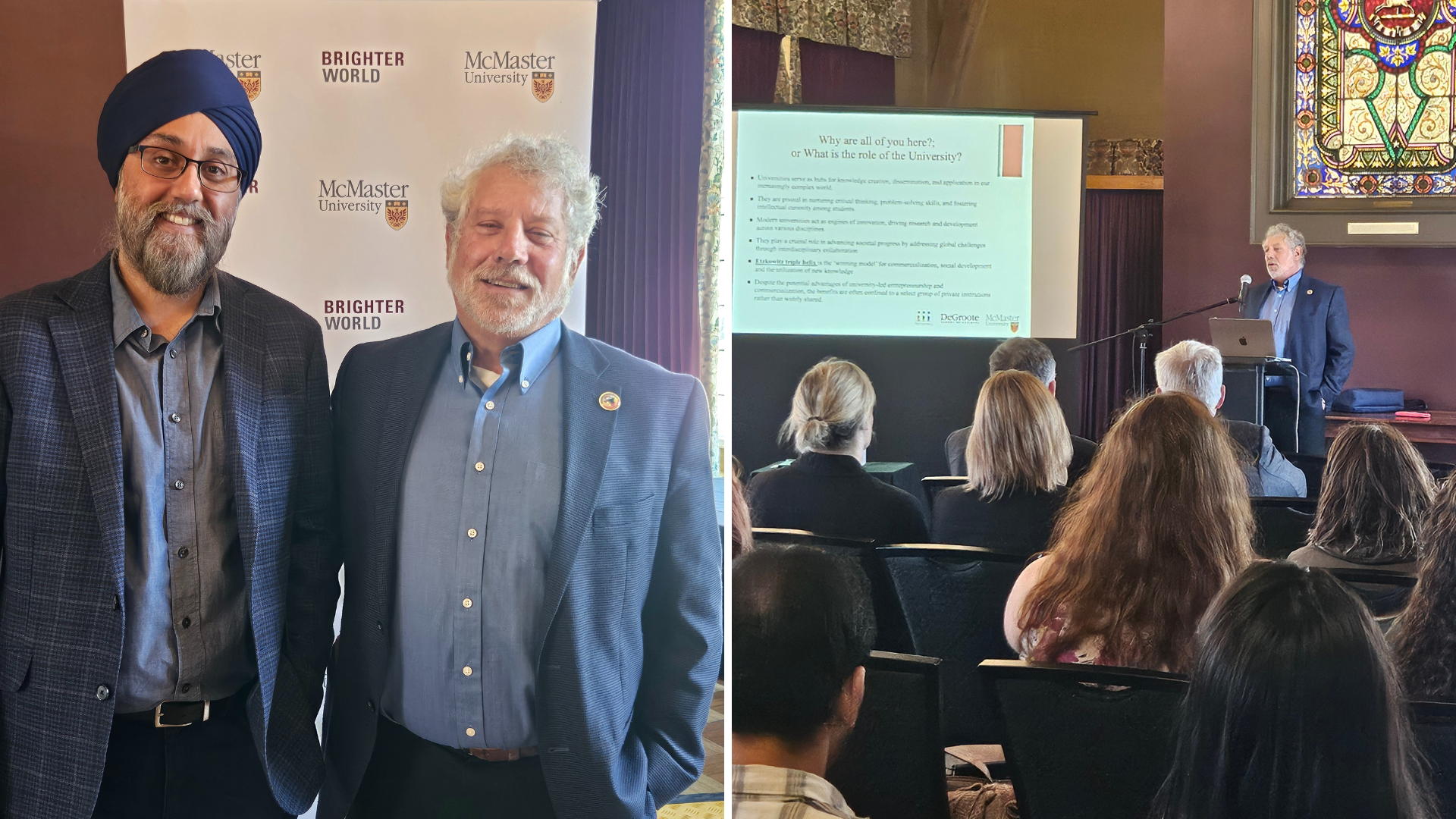
Contributed by: Tej Sandhu, Entrepreneur in Residence, DeGroote School of Business and MERIT Brewing founder
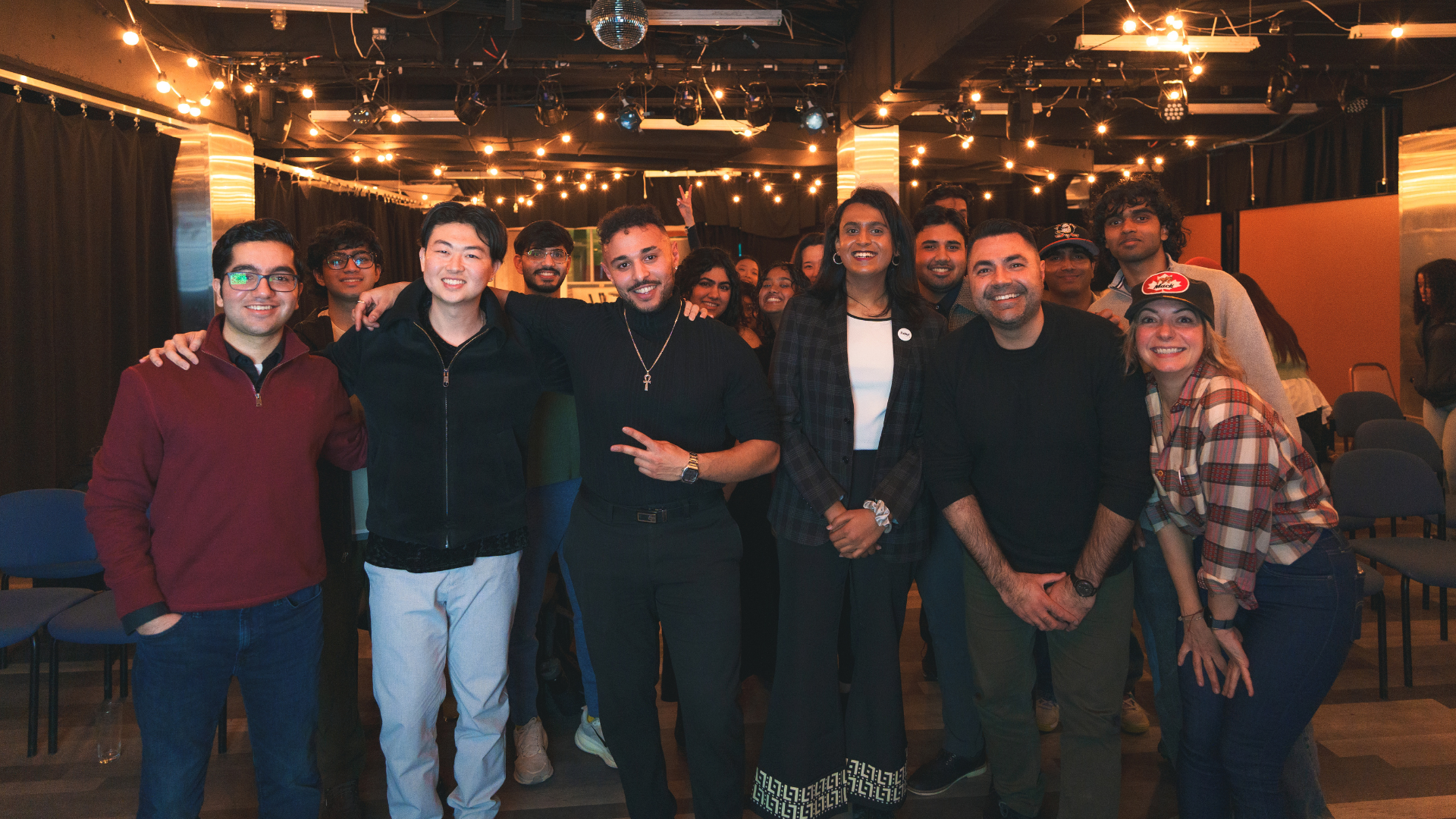
When the conversation turns to entrepreneurship, most McMaster students I meet can name a list of barriers, from time and money to not knowing where to start. But the biggest psychological barrier is failure.
Not the abstract, motivational version of failure. The real version. The kind that makes you look naive. The kind that costs money, time, reputation or momentum. The kind that makes you wonder if you were ever cut out for this in the first place.
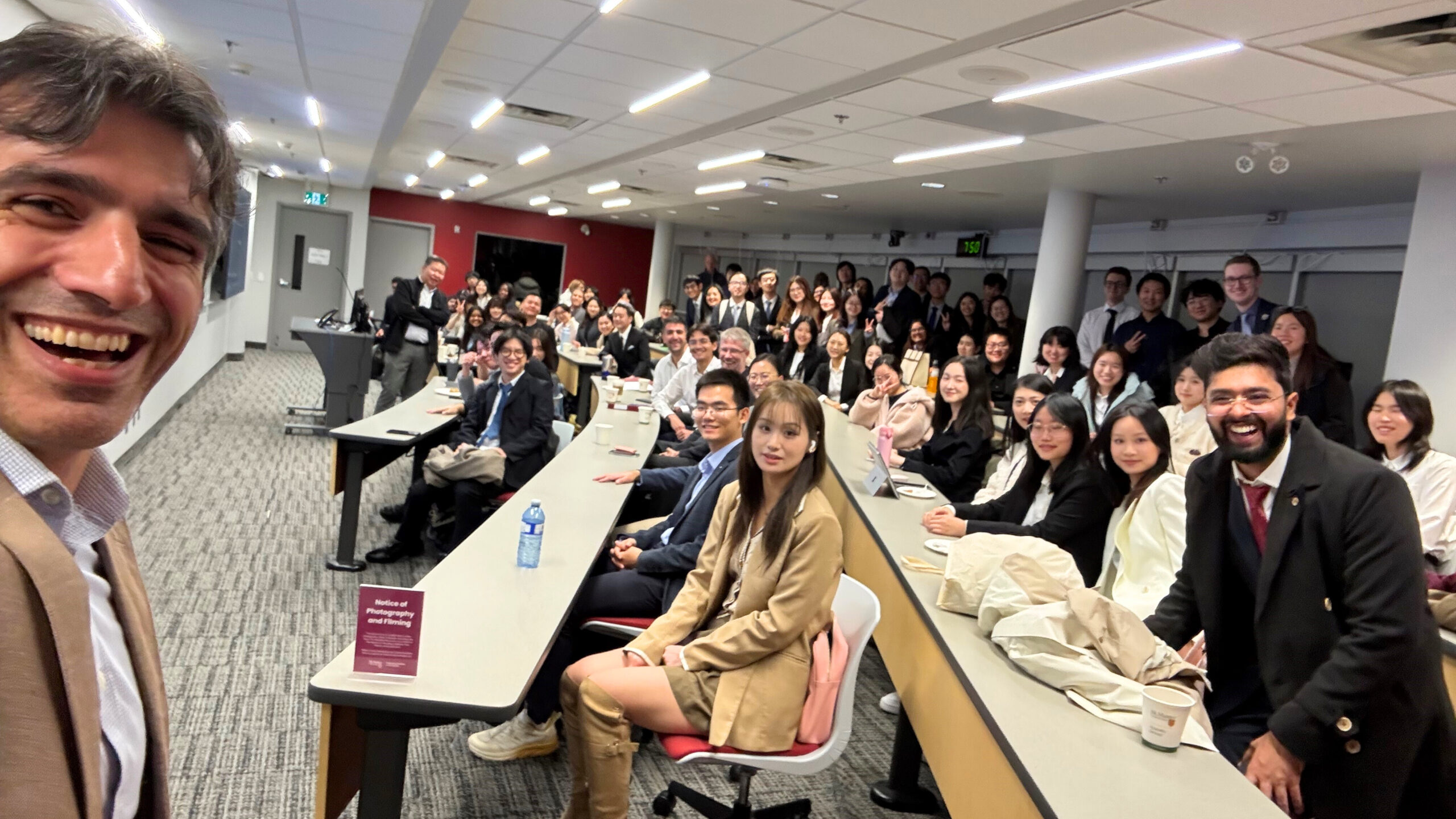
That is why I brought Fuck Up Nights to McMaster. Not because I thought it would magically erase anyone’s fear, but because I knew it would give students something more useful: a more accurate picture of what entrepreneurship actually looks like, and a better definition of the purpose of failure.
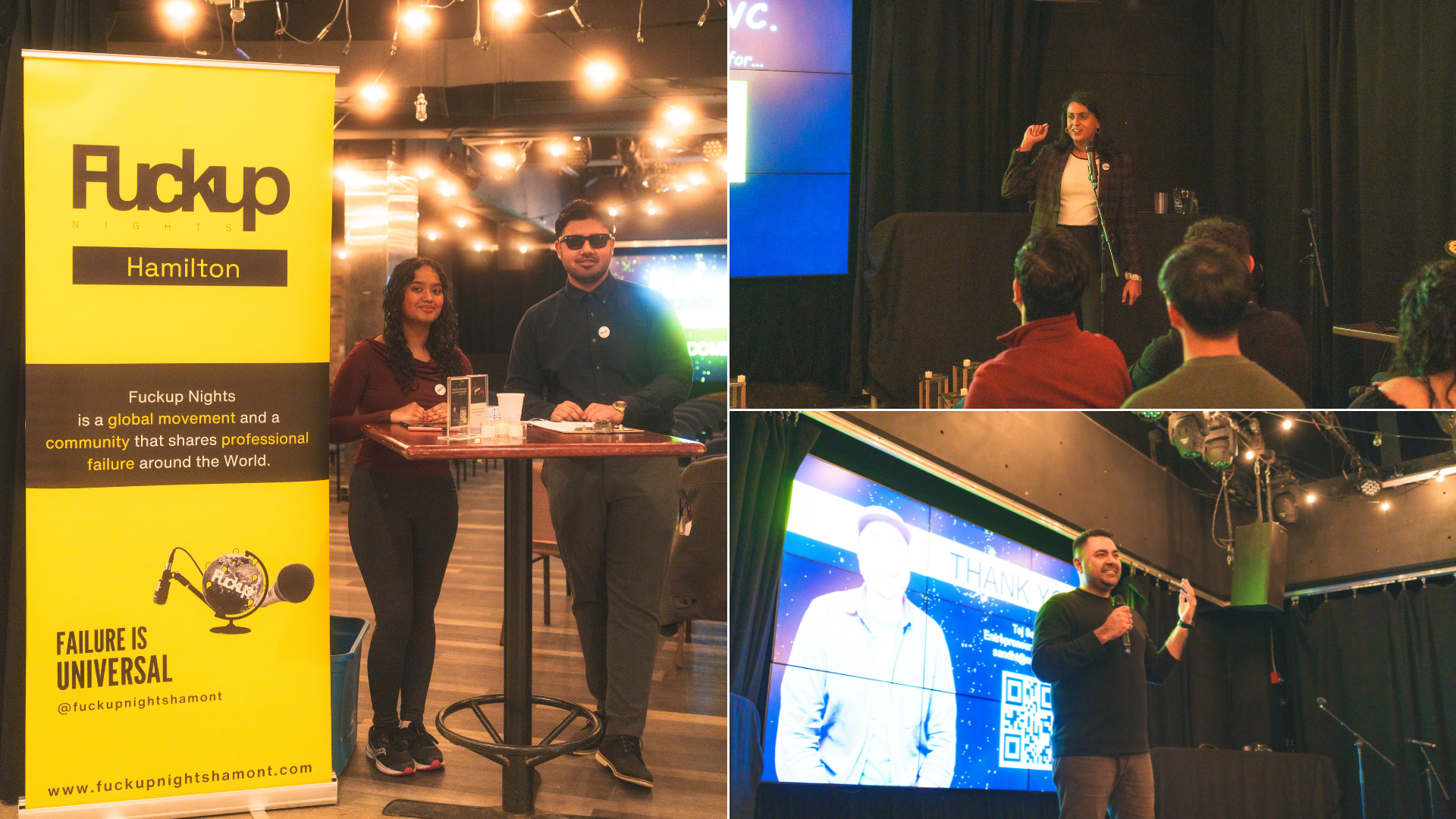
Here is what I saw in the room. Students know failure is part of the journey. They are not delusional about that. But there is still a gap between knowing it intellectually and being willing to step into it personally. The shift we need to make is simple but hard: stop treating failure like a verdict and start treating it like data. Events like this help carry that momentum forward because they normalize the reality and make it discussable without shame.
The other lesson students learned is that failure does not look the same for every founder.
Some failures are loud and explosive. Others are quiet: slow drift, avoidance, indecision or a string of small compromises that add up to a business that never becomes what it could have been. Some failures repeat. The same pattern, again and again, until you are finally honest about what is really happening.
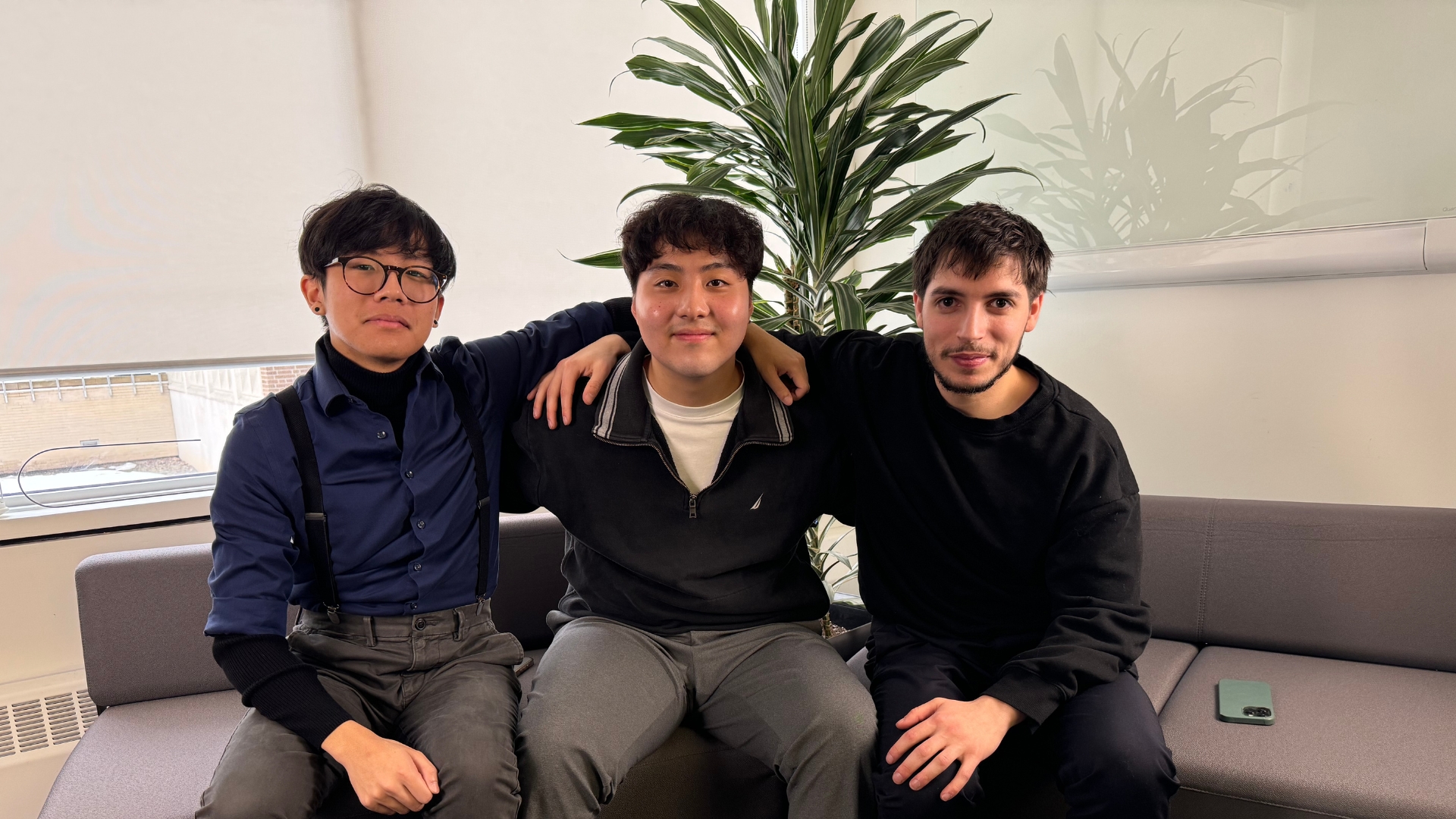
The three student entrepreneurs who shared their stories made that real.
Shreyas (B.Health Sciences ’25) described what he called “valleys of despair.” The phrase landed because it matched what many founders experience but rarely say out loud: entrepreneurship is not one heroic arc. It is multiple dips. You climb out, you get momentum, and then you hit another wall. The skill is not avoiding valleys. The skill is learning how to move through them without losing your judgment or your identity.
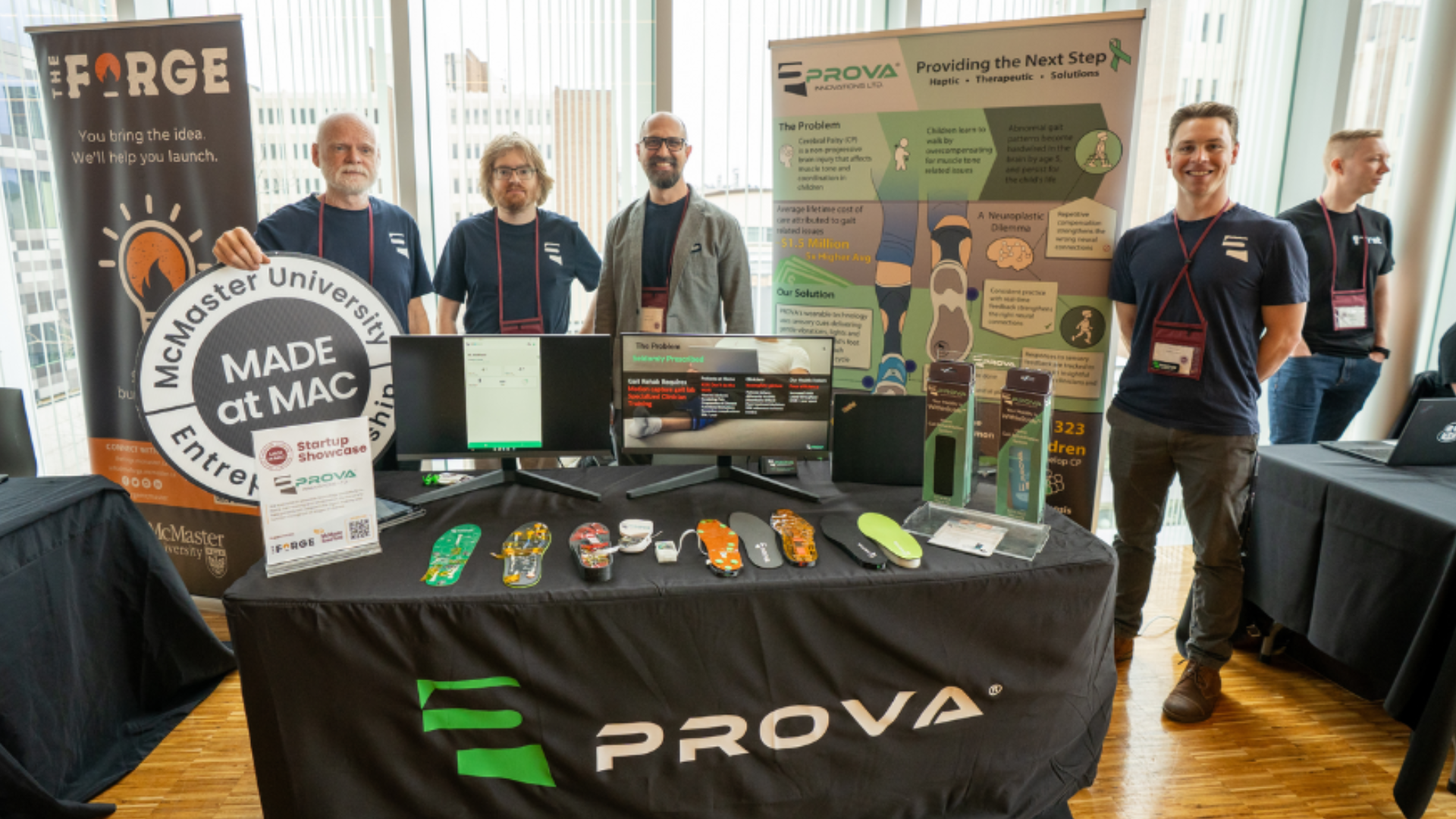
What made his story even more instructive was the environment he experienced those valleys in: a community at The Forge. He was not white-knuckling it alone. He had people around him who understood the problem, had seen versions of it before and could keep him moving when his own confidence dipped. This point resonated because McMaster students already understand community as a default. They live it in residence, in labs, in group projects, in clubs and in late nights on campus. The opportunity is to bring that same peer density into venture-building, so failure feels less like isolation and more like a shared, navigable part of the process.
Shashvi (M.Eng, Entrepreneurship & Innovation student) offered a different angle: failure as a leadership lesson. Not a market problem, not a product problem— but a leadership problem. When ego gets ahead of practicality, the business pays for it. That is the part of entrepreneurship students are not taught early enough. Leadership is not confidence. It is clarity, humility and the willingness to make the unglamorous decision that keeps the thing alive.
Ali’s (B.Eng ’25) story hit on the most common failure pattern in early ventures: insisting you are right while customers quietly tell you, in a dozen ways, that you are wrong. If you are paying attention, that is not rejection. It is the fastest route to clarity. Customers are not trying to hurt your feelings. They are doing you a favour by showing you what reality is.
Put those three together and the takeaway is sharp: failure is not one event. It is a spectrum. It can be dramatic, silent or cyclical. It can be the market, your leadership or your refusal to listen. And it is unavoidable if you are doing anything ambitious.
So what do we do with that?
We stop pretending the goal is to be the student founder who never stumbles. The goal is to build the capacity to stumble, learn and keep moving. That is resilience. That is innovation. That is problem-solving. That is leadership you can actually trust.
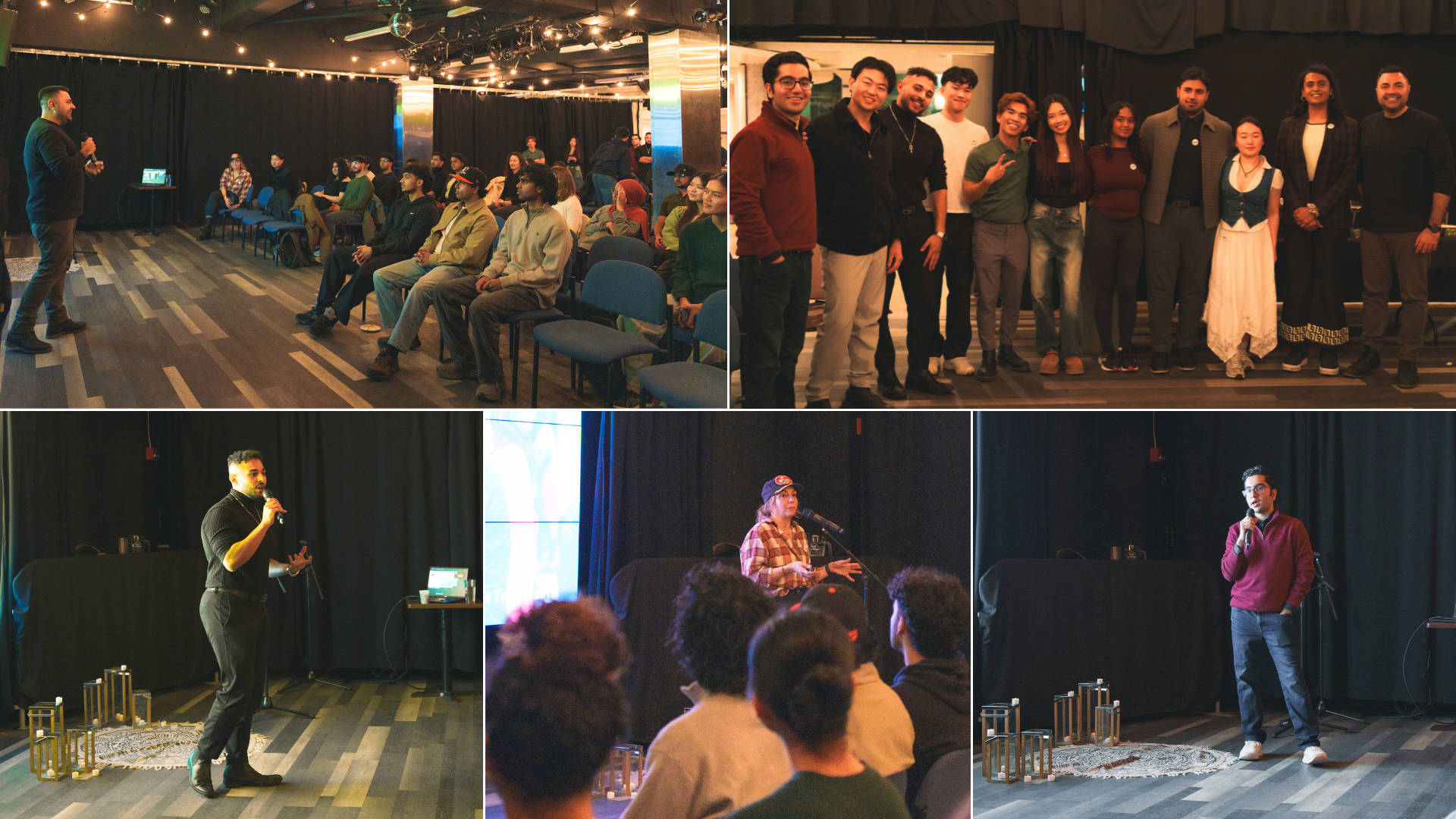
If you missed Fuck Up Nights, you missed a kind of learning that traditional business education struggles to replicate: real stories from people close enough to your stage that you can see yourself in them. If you were there, do not let it fade into “that was a cool night.” Carry it forward. Talk about what you are building. Share what is not working. Ask for help earlier. Take smaller risks sooner. Put yourself in communities where people will tell you the truth and help you recover faster. We can start building those kinds of community now, and when the Marinucci Entrepreneurial Bridge opens in the McLean Centre for Collaborative Discovery, we’ll have the people, programs and support that can help you recover faster and keep moving.
Entrepreneurship does not require you to be fearless.
It requires you to be honest, coachable and willing to learn faster than your fear.
Tej Sandhu is the Entrepreneur in Residence for the Marinucci Entrepreneurial Bridge at the DeGroote School of Business. The Marinucci Entrepreneurial Bridge, located on the seventh floor of the McLean Centre for Collaborative Discovery, will create an interdisciplinary home for entrepreneurship on McMaster’s main campus.