

RESEARCH SOCIETAL IMPACT STRATEGIC PLAN | ENGAGING COMMUNITIES STRATEGIC PLAN | RESEARCH AND SCHOLARSHIP
From the lab to Queen's Park
July 23, 2026 ·
Contributed by: Izabela Shubair
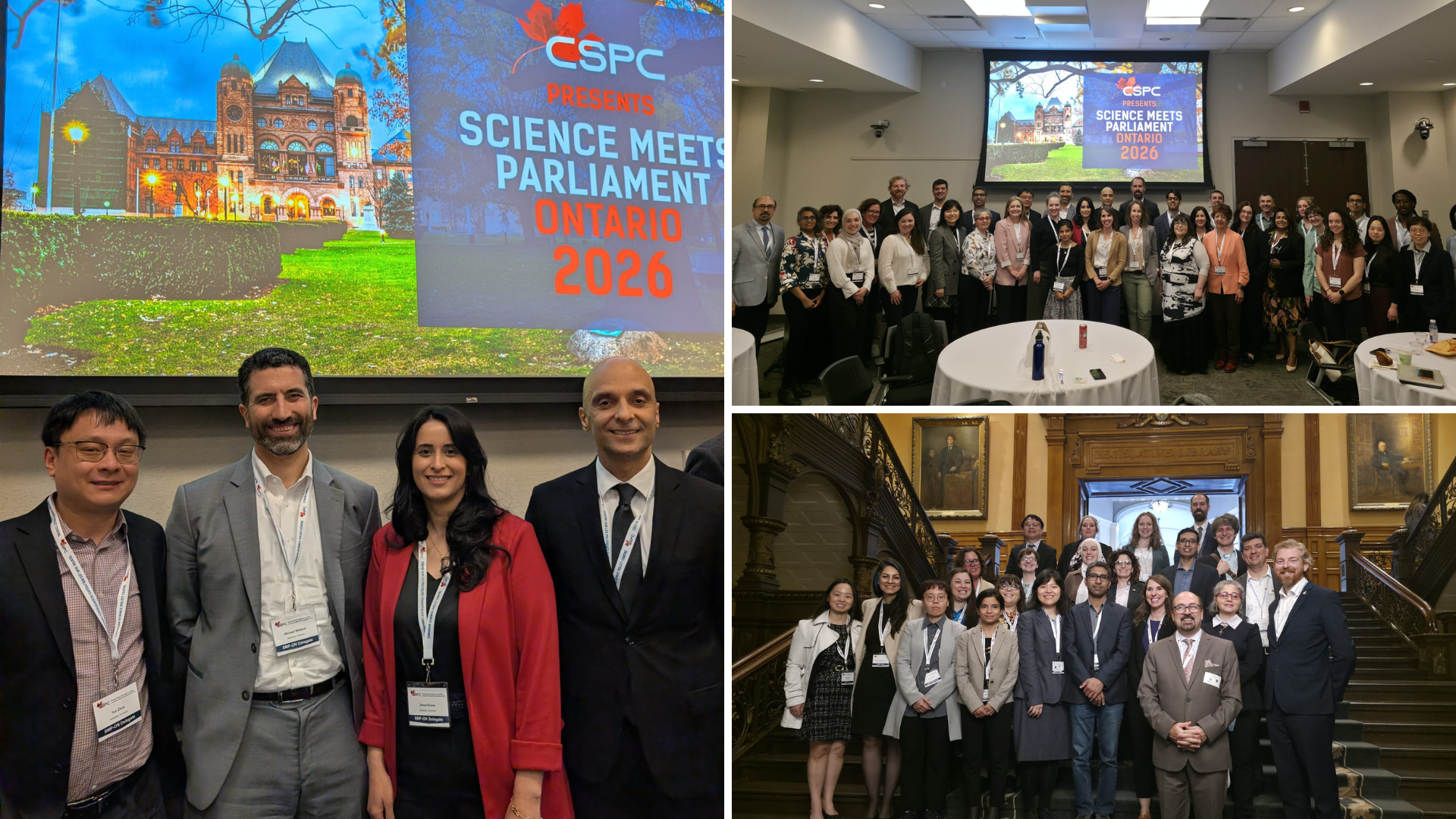
One researcher left with a new perspective on building relationships with policymakers. Another discovered new ways to make research more accessible and impactful. A third walked away convinced that business scholarship has an important role to play in shaping national policy.
Those insights emerged when three DeGroote School of Business faculty members participated in Science Meets Parliament Ontario 2026 (SMP-ON 2026).
In its second year, the event brought together 36 scientists and academics and 30 Members of Provincial Parliament at Queen’s Park to discuss some of Ontario’s most pressing challenges and opportunities. Organized by the Canadian Science Policy Centre, the program aims to strengthen understanding between researchers and policymakers by creating opportunities for direct dialogue.
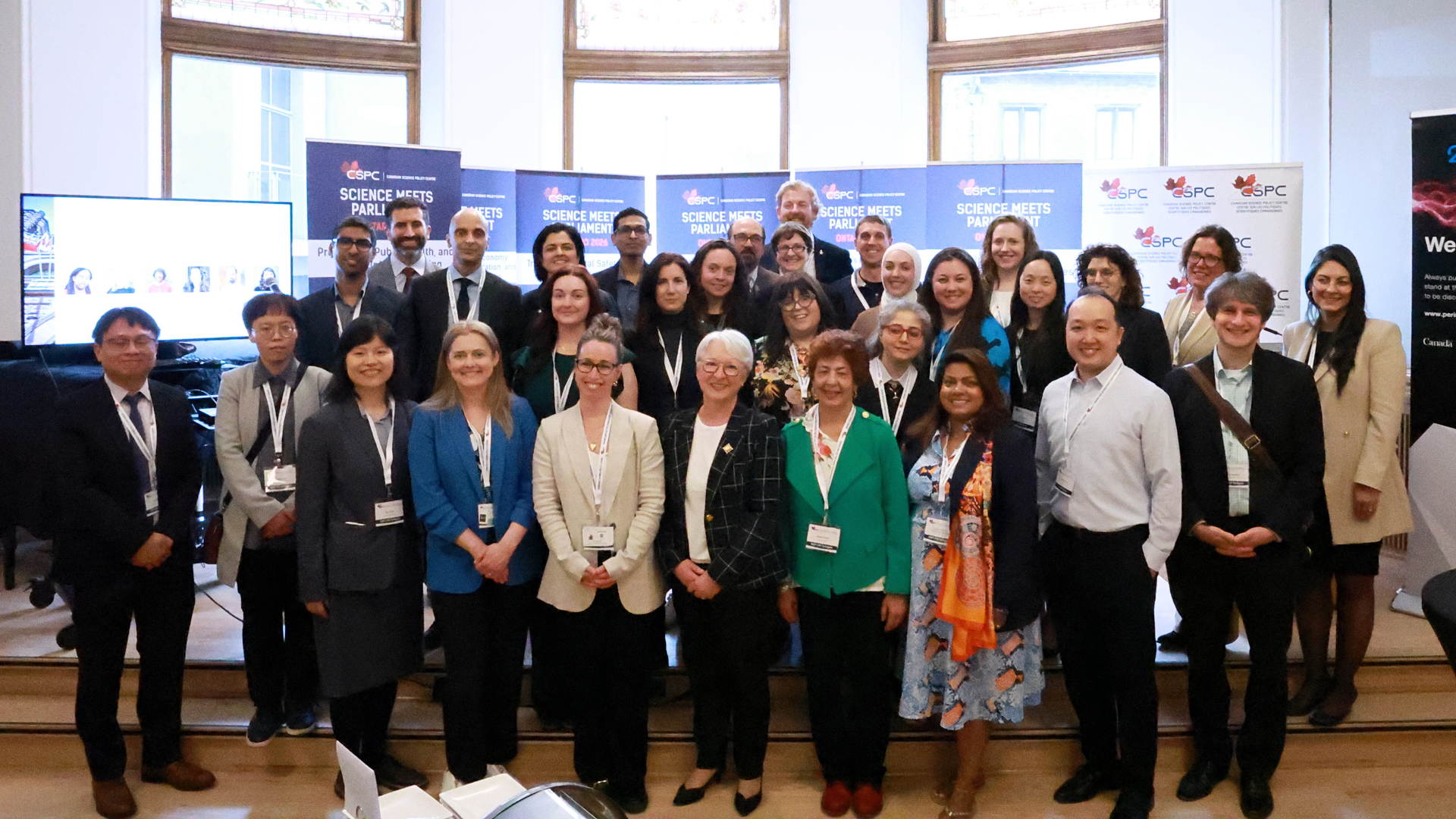
Science Meets Parliament members had the opportunity to speak with the Honourable Lieutenant Governor Edith Dumont (pictured front row, centre). During a meeting with her, Sash Vaid shared his journey of achieving tenure and citizenship in the same year he was invited to present at Queen’s Park.
Building relationships between research and policy
Jenna Evans, associate professor, Health Policy and Management
Jenna Evans studies performance management in health care, examining how health care leaders, clinicians and staff experience performance requirements. Her work builds theory and offers practical guidance for designing and using performance systems more effectively.
When Evans applied to participate in SMP-ON 2026, she hoped to deepen her understanding of how policy decisions are made and how evidence is interpreted within legislative and government contexts. Instead, she walked away with much more.
“I was surprised by how thoughtful and substantive the conversations were,” Evans said. “There was genuine curiosity about my research. Both MPPs I engaged with are physicians, and I found it particularly inspiring to see clinicians take on policymaking roles while remaining deeply engaged in health care delivery. They both expressed interest in continuing the conversation afterward.”
An important lesson was seeing how evidence can be positioned to inform policy change. Evans said conversations throughout SMP-ON 2026 — with everyone from MPPs to former and current policymakers and public servants — reinforced the importance of framing, timing and alignment with public priorities.
“They all emphasized that we need to think about public interest and how our work fits within that context,” she said. “It was a helpful reminder that this is a two-way, iterative dialogue over time. It shouldn’t just be, ‘Here’s my research and here’s what I found.’ We need to understand policymakers’ needs and priorities so they can inform the research questions we ask.”
Evans is already looking forward to engaging policymakers in future research. In addition to continuing conversations with the MPPs she met through SMP-ON 2026, she said future projects could bring policymakers into her research as advisors.
“I definitely feel more empowered to reach out,” she said. “It opened up new avenues of inquiry and dissemination for me.”
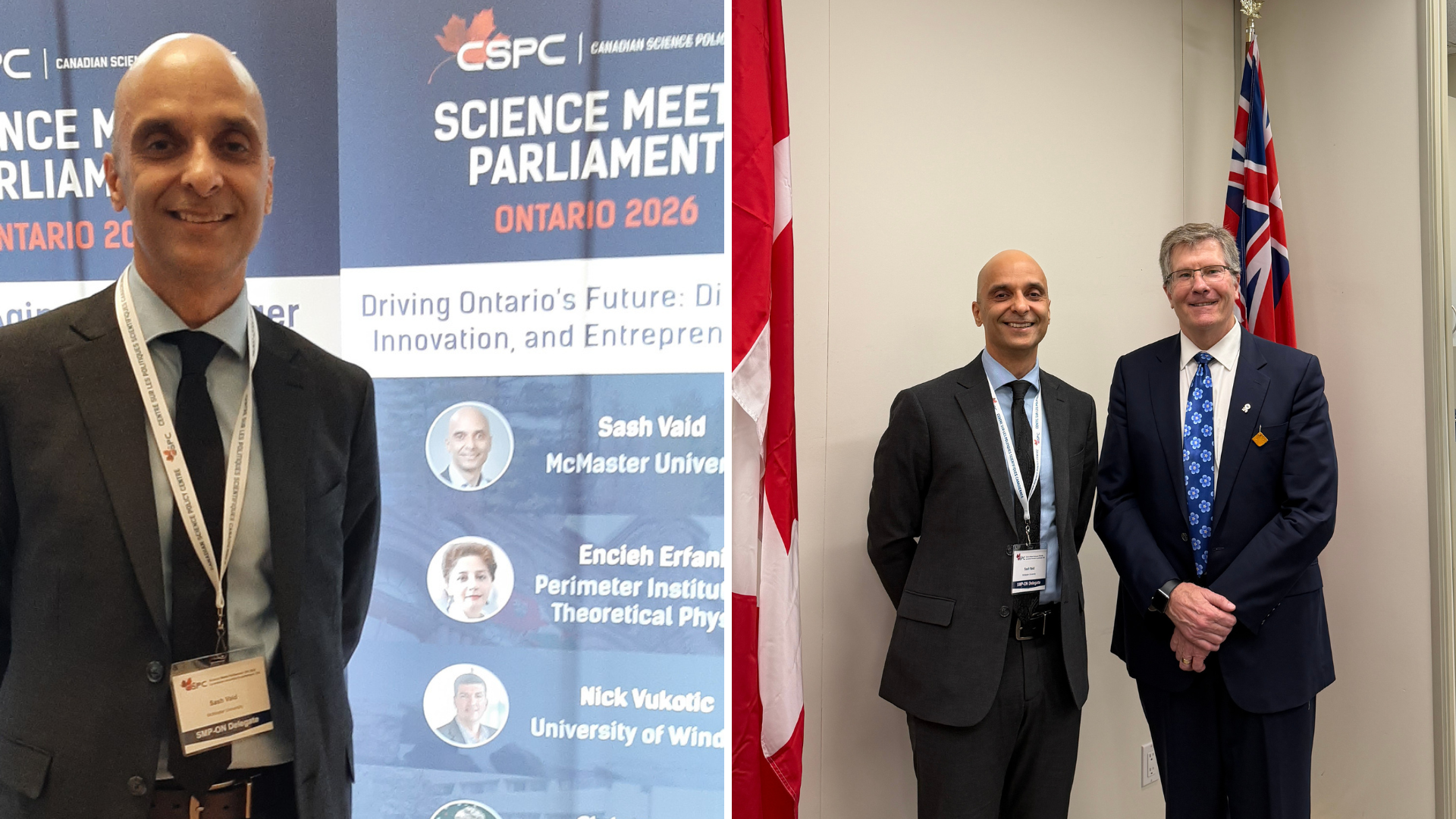
Sash Vaid poses in front of the Science Meets Parliament banner featuring his profile. He met with MPP Brian Saunderson who is a Parliamentary Assistant for Economic Development and a member of the Standing Committee on Finance and Economic Affairs. As Parliamentary Assistant, Saunderson is a high-level deputy to Vic Fedeli, Chair of Cabinet and Minister of Economic Development, Job Creation and Trade.
Shaping policy through business research
Sash Vaid, associate professor, Marketing
For Sash Vaid, the SMP-ON 2026 experience reinforced an even broader idea: research can create impact not only within academia, but also by helping shape public policy.
Vaid’s research examines Canada’s Defence Industrial Strategy and the commercialization of dual-use technologies — innovations that can serve both civilian and defence applications. He arrived at Queen’s Park expecting brief, formal meetings with busy parliamentarians. Instead, many conversations ran over time as policymakers asked thoughtful questions and explored how his research could inform their work.
“As a researcher, I wonder often, ‘What is the impact of my work?’” Vaid said. “Many times, I try to measure the impact of my work through publications. That’s the currency researchers deal in. But this visit to the Parliament really opened my eyes to the fact that researchers can hope to have a policy impact beyond just their publications.”
As Canada invests in its Defence Industrial Strategy, Vaid used his meetings with policymakers to discuss one of the key challenges in his research: the lack of a clear definition of what constitutes dual-use technologies. He says the issue resonated with the MPPs and policymakers he met, who recognized that clarity around dual-use technologies could inform future investment decisions. Vaid met with three MPPs and senior legislative staff.
“If we are not clear with respect to what we mean by dual-use technologies, then how are we going to do a reasonable job of allocating those investments?” Vaid said. “That’s a gap that needs to be addressed, and I think that is something that was received well in these conversations.”
For Vaid, the experience demonstrated that business scholarship as a whole belongs at the policy table. By helping governments think through, for example, how emerging technologies are defined and commercialized, business researchers can contribute to more informed public decision-making.
Expanding research through communication and collaboration
Yun Zhou, associate professor, Operations Management
Like Evans, Yun Zhou left SMP-ON 2026 with a greater appreciation for engaging directly with policymakers as another way of informing research. The experience also changed how he thinks about communicating that research.
Zhou, who is also the area chair for Operations Management, studies decision-making in operational systems under uncertainty. By providing evidence on how alternative operational designs can reduce inefficiencies and improve fairness, his work aims to support more informed decision-making in complex business systems.
During training sessions, participants were encouraged to move beyond academic language and explain their work in ways that are accessible and relevant to policymakers.
“I realized we sometimes need to avoid jargon and terminology and speak in plain terms to make our research more understandable,” he said.
“While scientific evidence is essential, the speakers emphasized that research must also be communicated in ways that are accessible, relevant and actionable for policymakers working within practical constraints and competing priorities.”
Beyond his meetings with policymakers, Zhou found another unexpected benefit: connecting with researchers from across disciplines. Conversations about dairy waste, transportation systems and artificial intelligence sparked ideas for future collaborations. They also highlighted that many public policy challenges require interdisciplinary solutions.
“I wouldn’t think I would have something in common with a chemist, but I did,” Zhou said. “These kinds of events really expand your network and help you learn perspectives from people in different roles. That is the right approach to making research more impactful.”