

HUMAN RESOURCES AND MANAGEMENT STRATEGIC PLAN | ENGAGING COMMUNITIES
Play to win: International Women’s Day event highlights how women should invest in themselves
March 9, 2026 ·
Contributed by: McMaster News
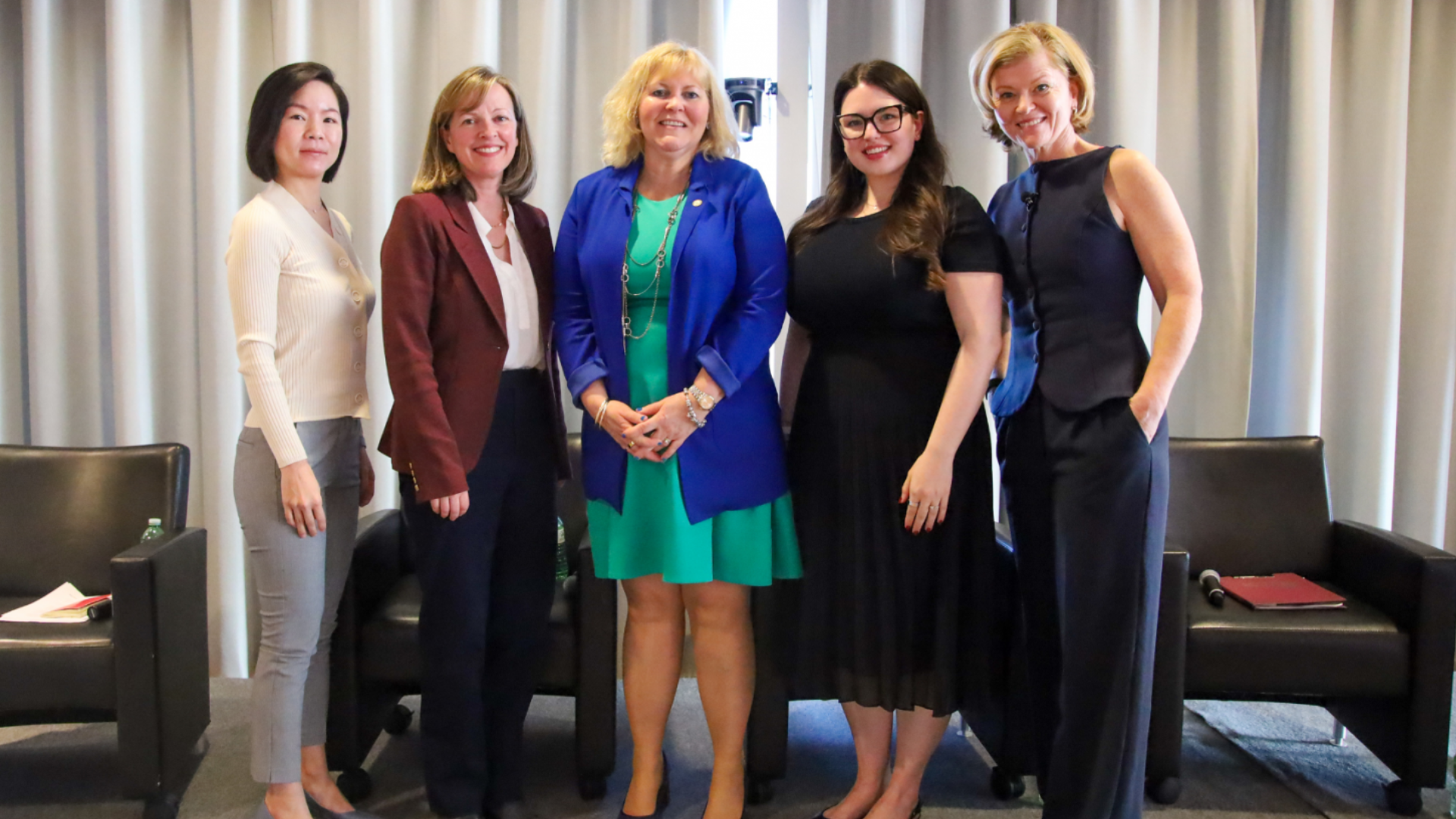
Play to Win event panellists, from left: Gloria Liu, Erin Reid, Susan Tighe, moderator Lauren McLean and keynote speaker Gillian Stovel Rivers
The workforce in Canada is about evenly split between genders, but women account for a very small percentage of business owners and senior business leaders.
Gillian Stovel Rivers wants to change that by helping women reinvest their time, their energy, their attention and their money in ways that will help them flourish, both collectively and individually.
Stovel Rivers, a senior wealth advisor with Assante Wealth Management, was the keynote speaker at Play to Win: Redefining Wealth and Peak Performance for Women, an International Women’s Day event organized by McMaster University and the DeGroote School of Business.
The event, held this week at the Ron Joyce Centre, also featured a panel discussion. McMaster President Susan Tighe, DeGroote professor Erin Reid and finance and strategy executive Gloria Liu joined Stovel Rivers to discuss personal, professional and financial well-being.
The event is the first in a planned series of events that bring together a network of women to facilitate discussion and foster leadership.
“One of our goals is to really bring the community back,” Tighe said, welcoming the roughly 200 attendees, “and I’m just so delighted to see all of you here with us.”
Educator and advocate Lauren McLean moderated the panel discussion, which highlighted women’s leadership, resilience and the importance of investing in the whole self.
On success
When you choose a path to success that someone else has prescribed for you, “you run the risk of living a life that is not authentically yours,” Stovel Rivers said. It’s important to reflect on your goals and what you’re working on, or “you may have wasted time on someone’s else’s goal.”
Liu, who was the first person in her family to go to university, was encouraged by her mother to become an immigration officer at the border. Ultimately, after trying and considering a number of paths, including law enforcement, Liu chose to work in a bank, and found it opened the door to a bigger world of opportunity for her. “Give yourself permission to try and to experience life and to maximize your full potential.”
“Let’s look at how we can do things better. That all wraps into this idea of success,” Tighe said. “And we’re going to fail, and we’re probably going to mess up and do things that we shouldn’t have. … But in my role, I’m willing to step into that space. ‘Yeah, we tried X. Didn’t work. But we learned something and moved on.’ And I think right now, what differentiates us makes us stronger.”

On scrutiny and expectations
Contrary to stereotypes, research shows women and men have similar professional desires and ambitions, and similar hopes for balance in their lives, Reid said. This tension between reality and stereotypes can spawn unequal decisions about who to hire and promote, and ultimately lead to inequity in the workplace.
Reid spoke of her own experiences in graduate school. “There were expectations that you would not have children in graduate school, if you wanted to be a full professor.” But she and many of her peers did have children, and when they finished their graduate studies, her university did a powerful thing: They let the grad students carry their kids across the stage when they graduated.
“I remember taking my two-year-old to my graduation. I carried him across the stage. The Chair of Doctoral Programs hugged him, gave him a hat and gave me the diploma. And it was such a powerful way for the organization to let us be our whole selves.” Whether it’s children, elder care, hobbies, interests, volunteer goals, “we all have these complete selves,” she said.
“Organizations can do so much to help people feed their whole selves and help them thrive and recognize that they have these complete ambitions.”
On investing in health
Recounting a time when she experienced burnout, Stovel Rivers realized the value of learning about and meeting simple yet essential needs: How much sleep you need to get, how much food you need to consume, how much muscle you need to be building.
“There’s much better messaging nowadays …when it comes to women’s health, and yet we still have so much more to do in that space,” she said. “But I think there’s really positive role modeling about what it takes to run the physical plant called a human being.”
On leadership
“It’s not like you leave yourself at the door when you come to work,” Tighe said. “When you lead people, you have to create pathways and opportunities that are inclusive. And people can be themselves, and they can be empowered to do good work.”
This article appeared first on McMaster News. Read it here.
Save the date: The next McMaster and DeGroote event for the women’s network will be The Motion of Change: Health, Resilience and Reinvention, on Oct. 26, 2026.