

STRATEGIC PLAN | OPERATIONAL EXCELLENCE STUDENT
Bridging the classroom and the boardroom
February 27, 2026 ·
Contributed by: Rogelio Cruz Gonzalez
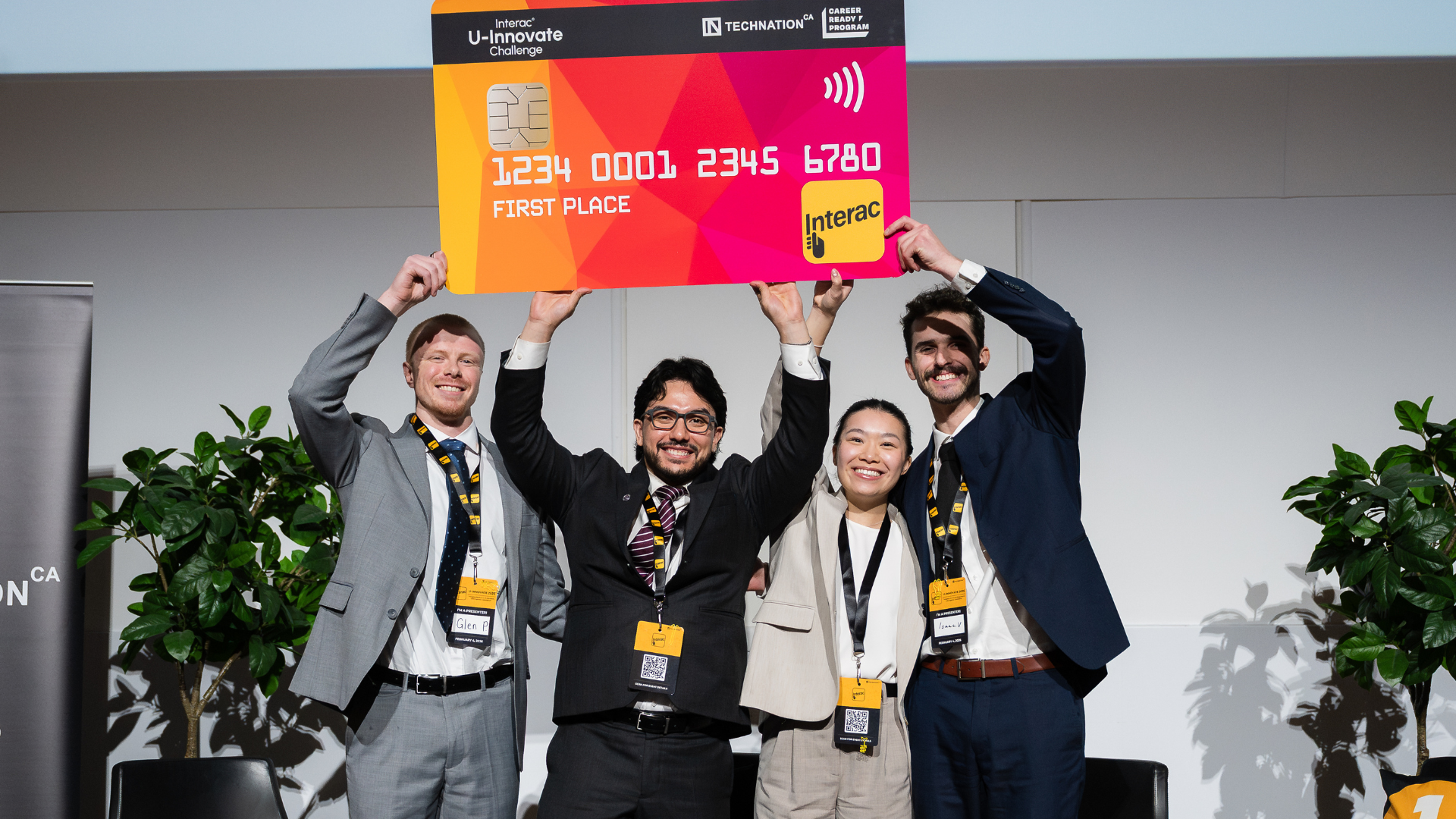
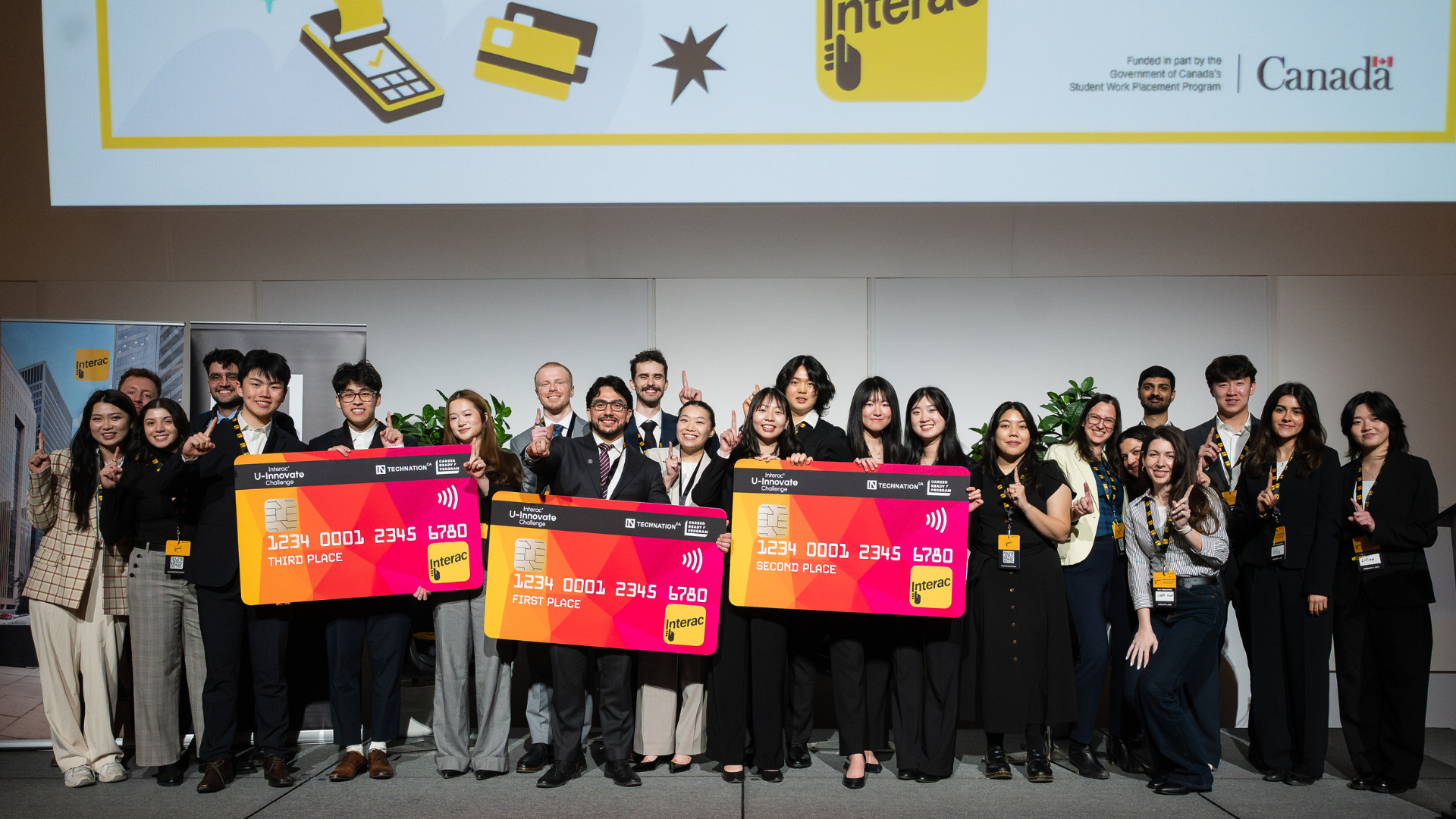
The winning team: Glen Phillips, Rogelio Cruz Gonzalez, Kelly Lau and Isaac Vestby
MBAi is an MBA student interest group at DeGroote School of Business looking to develop the next generation of AI business leaders. As part of our mission, Glen Phillips, Kelly Lau, Isaac Vestby and I set out to show that our team has the talent and innovative vision that it takes to lead Canada’s digital transformation.
Our opportunity came when TECHNATION, the leading technology industry association in Canada, announced their inaugural “U-Innovate” challenge series. This series will focus on connecting industry partners with innovative talent and ideas that highlight the practical and effective application of agentic AI in business to reshape our current business landscape.
Over seven weeks, 221 students across 88 teams from post-secondary institutions nationwide collaborated to explore how agentic AI could transform the future of payments.
Beyond the competition itself, we students developed the kind of skills that shape careers in technology and finance: presenting ideas persuasively, collaborating under pressure and building solutions that address real industry challenges.
As the world moves toward an AI-driven economy, intelligent finance has become a critical area of focus. AI agents are increasingly capable of executing transactions at a scale and speed that existing monetary infrastructure simply cannot support. Building the systems to match that potential — ones that are scalable, secure and trustworthy — is one of the defining challenges of this technological transition.
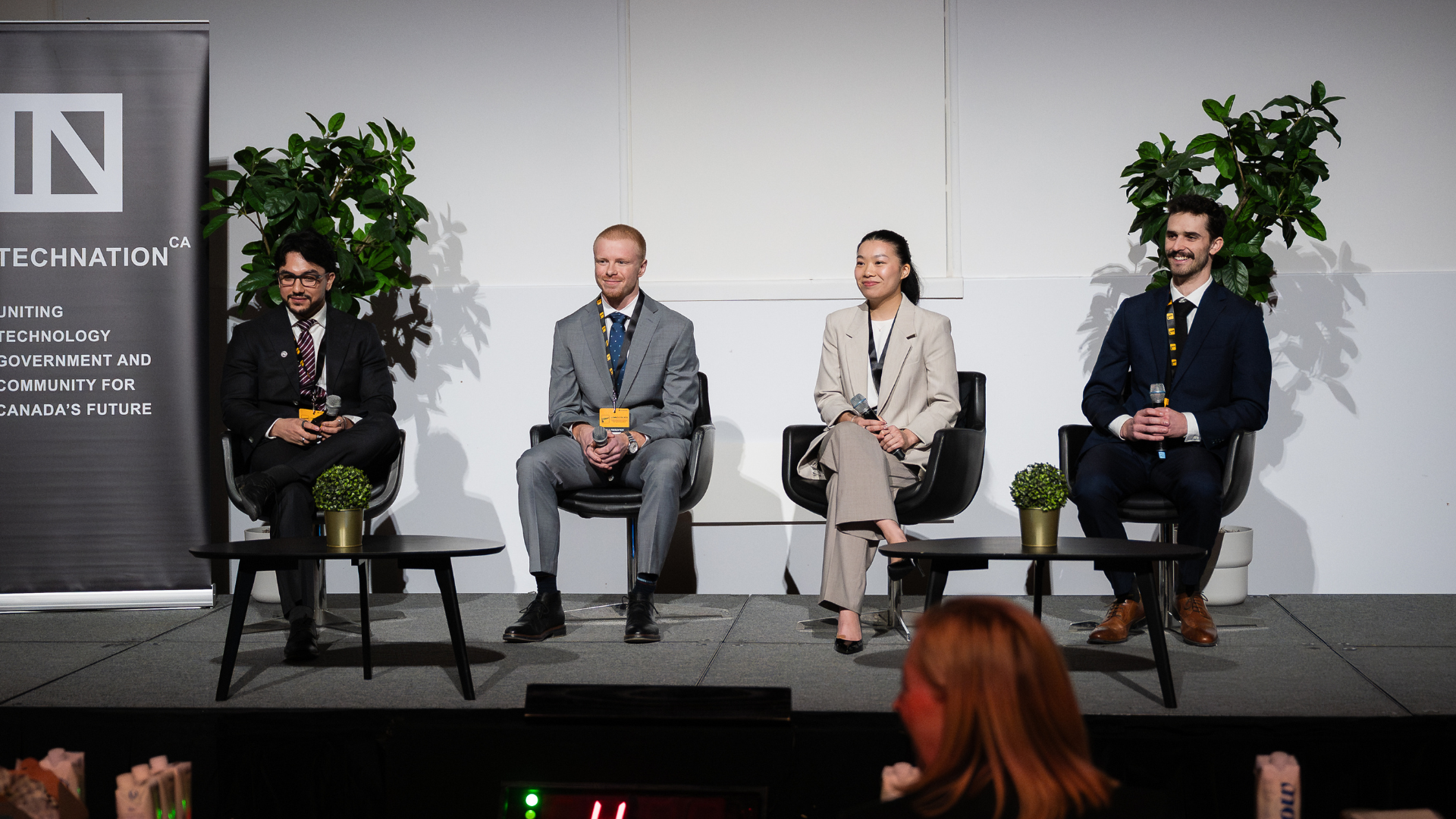
Our team addressed this challenge head-on with Interac TrustRail: a solution designed to resolve the barriers of trust and scalability in autonomous AI purchasing. Our concept won first place by focusing on capturing a large economic market through B2B solutions and combining digital solutions with physical hardware to create autonomous and secure systems.
Here’s how it works. By coupling Interac’s technology with Blockchain technology, funds are held within a smart contract until delivery is confirmed using IoT sensors. This protects buyers while enabling smaller suppliers to compete for large contracts without absorbing the financial strain of 60- to 75-day payment cycles. This solution would help eliminate human bottlenecks in manufacturing procurement, unlocking billions in working capital for Canadian manufacturers, and could be a crucial step towards 24/7 manufacturing.
The most defining moment of the event was the opportunity to present genuinely disruptive ideas directly to senior leadership — and then engage with them in substantive conversations about strategic implementation and real-world feasibility. That kind of exchange is rare.
There is a persistent gap between the boardroom and the classroom, and it rarely gets bridged in any meaningful way. For students, access to that level of dialogue is not just motivating, it is formative. It shapes how we think about the problems worth solving and what it takes to bring an idea to life inside a complex organization.
What made this experience particularly powerful was the mutual investment in the conversation. Senior leaders were engaging with us as contributors to a broader dialogue about Canada’s economic future. In a moment where disruptive technologies like Agentic AI are reshaping entire industries, having students at that table matters. Fresh perspectives, unburdened by institutional inertia, can surface ideas that experienced teams may overlook.
For our team, being part of an initiative deliberately designed to close that gap — to treat student innovation as a genuine input into Canada’s economic strategy — was the most meaningful takeaway of all. It reinforced something important: that bridging the distance between emerging talent and established leadership isn’t just good for students, it’s good for the organizations and ultimately for the country.
One of our team’s most significant challenges was operating under real-world constraints. As co-op stream MBA students, we were balancing active work placements alongside personal commitments — leaving little margin for the kind of deep, collaborative work that a competition of this calibre demands. Finding the time to conceptualize, develop and prototype a competitive solution required deliberate coordination and a disciplined approach to working together.
In many ways, however, those constraints proved to be the lesson. We were forced to leverage technology not as a convenience, but as a genuine enabler — finding smarter ways to collaborate, iterate and deliver under pressure. It was a practical reminder that innovation rarely happens in ideal conditions, and that the ability to execute responsibly and effectively within real limitations is itself a critical skill. That experience will stay with us long after the competition.