

ACCOUNTING FINANCE AND BUSINESS ECONOMICS HUMAN RESOURCES AND MANAGEMENT MARKETING STRATEGIC PLAN | RESEARCH AND SCHOLARSHIP
Four DeGroote researchers on the research questions that matter most
March 5, 2026 ·
Contributed by: Julienne Isaacs

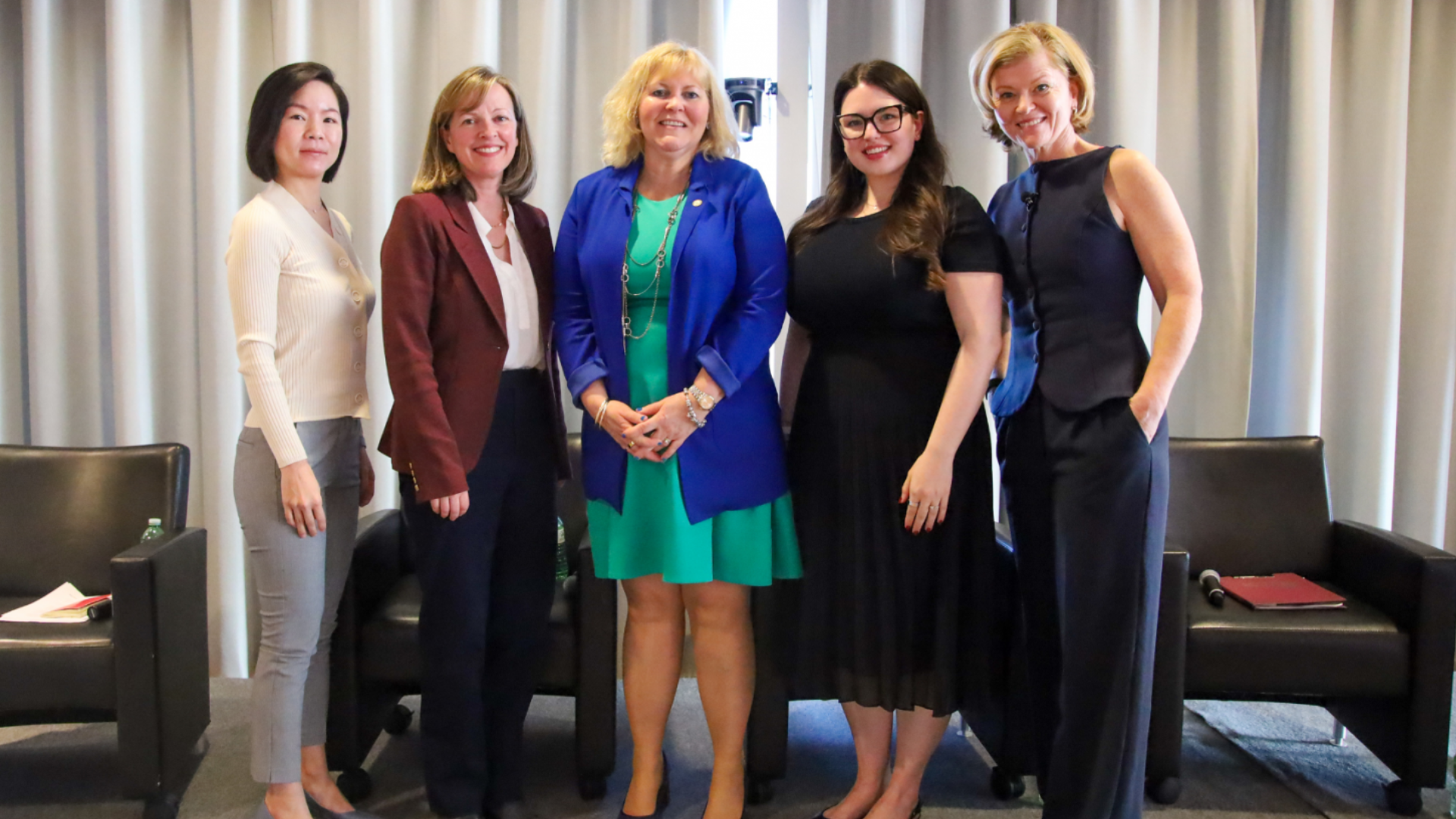
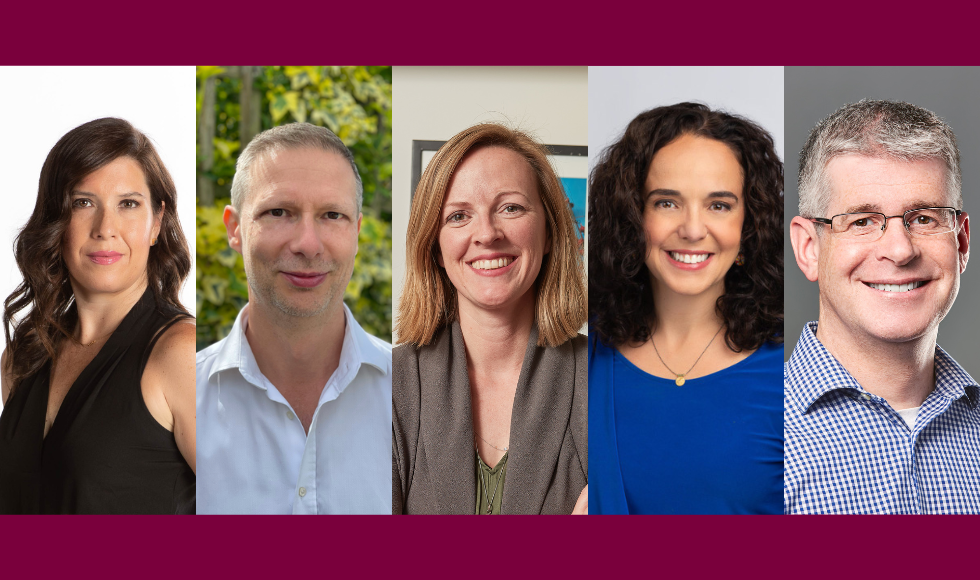
To celebrate International Women’s Day, we asked four leading DeGroote researchers —Anna Danielova, Kai Christine Lesage, Ala Mokhtar and Erin Reid — to identify urgent and exciting questions in their field, and tell us how their research tackles those questions.
 The question: How will AI tools restructure jobs?
One of the most urgent questions in my field is how the infusion of AI tools will restructure employment arrangements. As AI becomes capable of taking on more routine tasks, will workers be able to reduce their workloads and work fewer hours? Or will the expectations that employers have of them actually intensify to include more productivity? The history of technology suggests the latter is most likely to occur.
A related issue is whether and how AI will affect the distribution of jobs. We hear so much about jobs disappearing because of AI; it seems like entry level jobs are the first to disappear in many industries. A big question that remains then is, in the absence of the stepping stones provided by entry level roles, how will new workers gain access to existing organizations — and how will those organizations identify, recruit and train new employees? My post-doctoral research associate Youngrong Lee and I are thinking through how our shared definitions of ‘ideal workers’ are likely to shift as a result of these changes, and what that means for inequality in the workplace.
—Erin Reid, Canada Research Chair in Work, Organizations and Careers and professor of Human Resources and Management
 The questions: How will AI and advanced analytics reshape managerial decision-making? How should management controls function in a time of remote/hybrid work? And how can companies use new technologies to ethically recruit talent?
Management accounting is all about helping managers in companies make decisions and motivate employees. As such, the urgent questions in management accounting are the urgent questions the world at large faces. One central question is how technologies such as AI and advanced analytics will reshape managerial decision-making, as well as the implications of these new technologies on employee motivation.
Another important question is how management controls can/should function in a time of increased reliance on remote/hybrid work. Yet another important question is how companies can employ new technology to recruit and keep talent, and how they can do so ethically.
I’m excited to continue working on how management controls can lead to unexpected outcomes such as employee overwork, as well as how professional work, including audit work, is impacted by how these professionals are treated. I’m also excited to work on my newer topics of interest, like employee recruitment and workplace distractions.
—Ala Mokhtar, assistant professor, Accounting and Financial Management
 The questions: What role should marketing play in driving sustainable consumption? And what are the ethics of AI-driven marketing?
Consumers often express concern about the environment, yet good intentions don’t always translate at checkout. The challenge is whether marketing can move beyond “selling green.” Can it actually reshape norms, habits and behaviours?
Second, AI is transforming how brands reach consumers, from personalized recommendations to automated content. These capabilities are powerful, but without ethical boundaries, influence can easily shade into exploitation. As AI-generated content proliferates across channels, where do we draw the line on disclosure and consent?
Both questions force marketing scholars and practitioners to rethink what marketing is ultimately for, and who it should serve.
I am excited to conduct research at a time when marketing is at the crossroads — caught between geopolitical tensions and technological transformation. You don’t get this kind of moment often as a researcher. It opens up questions that wouldn’t have surfaced even five years ago.
My research sits at the intersection of marketing, sustainability and innovation, and at the moment, all three seem to be colliding in ways that are more apparent than ever. How do brands navigate sustainability commitments when supply chains are politically volatile? How does emerging technology shape green-conscious consumers’ choices? These tensions enrich the research and make it more exciting. I find it energizing to work on problems that evolve in real time rather than theorize in a vacuum.
—Kai Christine Lesage, assistant professor, Marketing
 The questions: How do financing decisions, governance structures and labour markets interact? And how does technological change influence corporate decision-making and market structure?
I work in corporate finance, which sits at the heart of the real economy. It examines how firms raise capital, allocate resources, manage risk and create long-term value. Today, the field faces several urgent questions with direct implications for economic growth, financial stability and innovation. Rapid shifts in interest rates, technological disruption and evolving labor market institutions are reshaping how corporate financial decisions affect real economic outcomes.
For many years, very low interest rates made borrowing inexpensive, allowing some weak or inefficient firms to survive longer than they otherwise would have. As interest rates have risen sharply, these inefficiencies have become more visible. Some firms invested in low-return projects, while skilled workers may have remained in positions where their talents were underused. Understanding how financing decisions, governance structures and internal labour markets interact is essential for assessing long-term economic performance.
Second, technological change in finance, particularly AI and financial technology, is transforming corporate decision-making and market structure. These tools can improve efficiency and access to capital, but they may also introduce new forms of risk.
Capital and labour misallocation at the firm level is increasingly shaped by contractual frictions in labour markets, particularly the use of non-compete agreements (NCAs). By restricting worker mobility, non-competes can insulate firms from competitive pressures, allowing inefficient firms and projects to persist while constraining the reallocation of talent toward more productive uses. As a result, less efficient companies or projects may continue longer than they should, while growing firms struggle to attract the talent they need. The objective of my current research is to investigate how the legal enforceability of NCAs shapes corporate risk, cash flows and liquidity management, thereby influencing firms’ capacity to invest, innovate and withstand economic shocks.
I am particularly excited about this research because it bridges labour law and corporate finance, two areas that are often studied separately, and offers a novel way to understand how workplace regulations can shape firm value and economic resilience.
—Anna Danielova, associate professor, Finance and Business Economics










Great perspective. Marketing today has a real opportunity to do more than just promote products — it can help shape responsible consumer behaviour and encourage more sustainable choices. As technology like AI continues to evolve, the importance of transparency, ethics, and trust becomes even more critical. Thought-provoking insights on where marketing and innovation are headed.