

HUMAN RESOURCES AND MANAGEMENT STRATEGIC PLAN | OPERATIONAL EXCELLENCE STRATEGIC PLAN | RESEARCH AND SCHOLARSHIP
Is the "ideal worker" a myth?
October 21, 2026 ·
Contributed by: Julienne Isaacs
Canada has a productivity gap. Over the last 50 years, Canada’s productivity has decreased relative to other G7 nations.
What will it take for Canada to catch up?
Erin Reid is the Canada Research Chair in Work, Careers and Organizations and a professor of Human Resources and Management. Her research examines work and organizations through the lens of the worker. She asks how companies might build inclusive workplaces and how people might build careers that allow them to thrive.
In Reid’s view, investing in workers is the smartest move organizations can make to drive up productivity and create a more competitive future.
We asked her about her latest research on the “ideal worker” and why updating it for the 21st century is a critical first step for building globally competitive Canadian companies.
When thinking about the challenges facing Canada’s productivity, what ideas are top-of-mind for you?
The importance of valuing the people in companies and the people who work in organizations.
Organizations are, in many ways, humanity’s greatest technology. At their best, they’re a tool for people working collectively to achieve ambitious goals. In our focus on innovation, STEM, natural resources and competition we can’t forget about the people who are the true engines of organizations.
What are some concrete ways you believe Canada could improve its approach to productivity?
One concrete area where I think we could make improvements in Canada is investing in training for our existing workforce.
We don’t have to focus solely on getting students to pursue particular skill sets, such as the focus on going into STEM, or develop AI skills. We can invest in supporting our existing workforce in upskilling.
That might require short-term costs, like paying for people to take training programs or allowing people to take time away from work to pursue education. But I think the needs of the country are such that it’s time to make these investments, and it will take government coming together with industry, employers and the post-secondary sector to make that happen.
We also have a skills mismatch in Canada. There’s a lot of talk about Canada needing individuals who have specialized STEM skills. And then at the same time, many people are underemployed for their skill sets, or are bogged down in routine work that might be better done by digital tools. Smart investment in digital technologies could allow people to do work that is more connected to their skill sets.
How does protecting workers, or investing in workers, generate strong economic performance?
It can be tempting to achieve productivity gains by exploiting workers intentionally or unintentionally, taking them for granted and giving them more work without giving them more power or opportunity.
But decades of research shows that when people feel undervalued, when they feel burnt out and when they feel that they’re not really a part of the organization, their motivation drops and turnover rates go up.
Thinking carefully about the people who are in organizations — and thinking about them as people, not human resources — is essential to deliver on leaders’ promises and additional goals.
Can you talk briefly about your research on the “ideal worker,” and how digital technologies like AI are changing our expectations for workers?
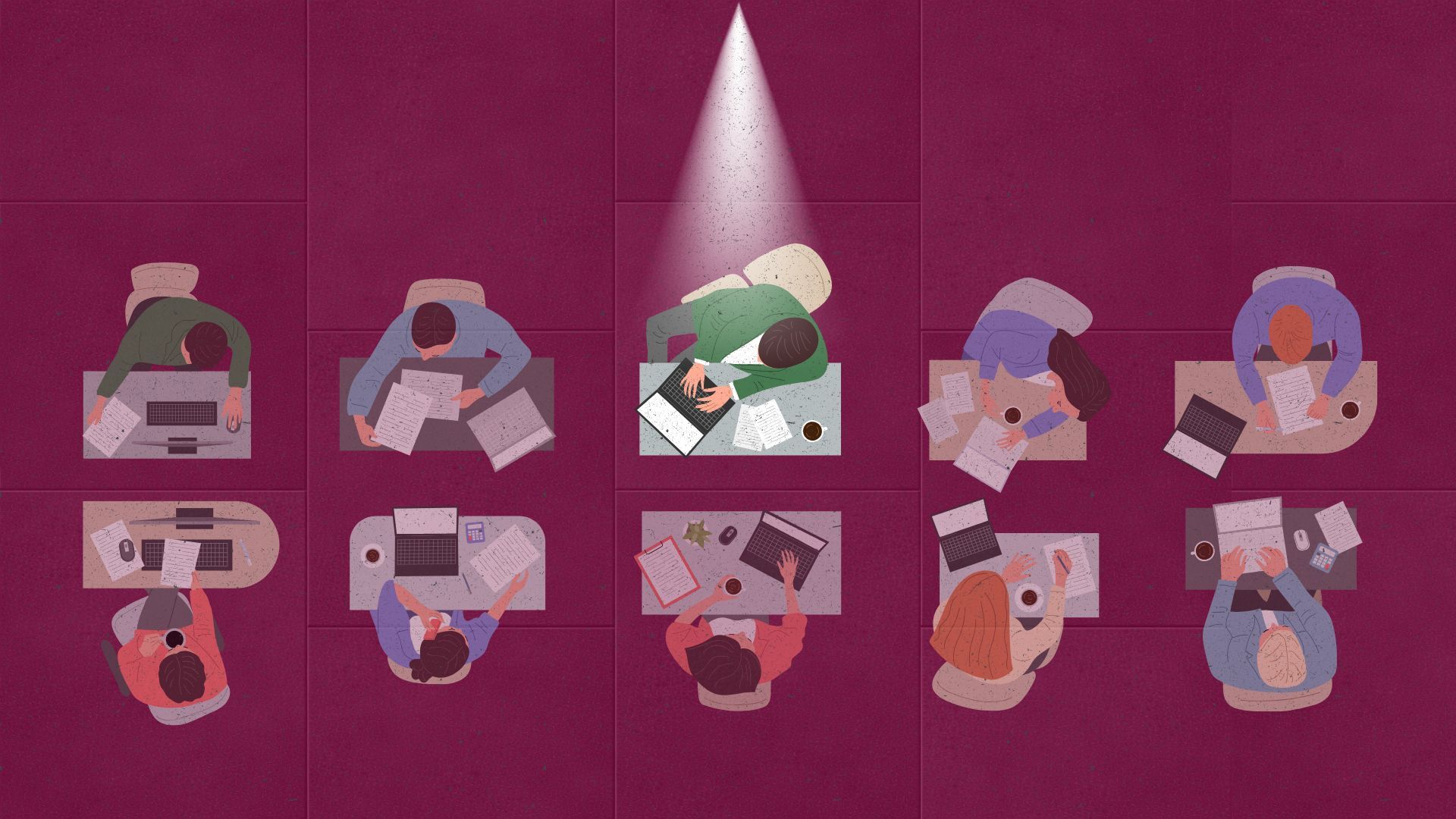
My postdoctoral fellow Youngrong Lee and I wrote a paper looking at the concept of the “ideal worker” that is commonly used to structure work environments. Jobs are often designed around the assumption that the ideal worker is an able-bodied person, generally a man with a wife or another woman who looks after his family responsibilities so the worker can be fully available for and committed to work. Everyone is held to this standard, and obviously it’s easier for some people to live up to than others.
This “ideal worker” image is the basis of expectations that workers are always available, that they will willingly work long hours and weekends and will minimize vacation time, and that they will have continuous full-time employment over the life course.
Digitalization of the workplace, such as the push to incorporate AI into all of our work, has shifted expectations of workers to the point that some of the expectations associated with the ideal worker are in many ways exacerbated.
For example, because we have digital technology, in a multinational organization you will be working with people synchronously and asynchronously in different time zones and you may be taking meetings outside of your business hours. There’s also a multi-dimensional expectation of your availability and your presence in the workplace. You’re toggling between in-person meetings and virtual meetings. You’re managing your LinkedIn profile and your social media profiles. You have to be present in all these different places, and you have to be smart about it. And so, in some ways, those ideal worker expectations of availability are now stronger and more complex due to digital technology.
How should Canadian companies be thinking about the “ideal worker”?
As we move toward a more productive economy, it can be tempting to fall back on these basic assumptions that the worker is someone who’s always available for work, that they have someone else who can look after their families for them. But we have to remember that assumption is false, and it can lead to burnout, to turnover and lack of commitment.
We need to be thoughtful about the people who are within our workplaces, and how we can best engage them and help them thrive and help them feel that they can contribute, that they belong and that they’re valued, and not assume that they will all easily conform to this old model.
And we have to recognize that new ideas and innovations come from the people in organizations. If you listen to the people who have been working for a long time in your organization, they have a lot of ideas for how to improve things. Sometime the best ideas come from inside the house, from the people who intimately know the inner workings of the organization. We need to empower people to share those ideas and work together to find ways to act on them.